
We left Tobermory on a grey day, with wind blowing from dead ahead along the Sound of Mull and rain clouds chasing each other across the sky. It was a wet and blowy last 25 miles to our destination, the island of Kerrera on Oban Bay, where we’ve rented a mooring for a year.

Since we left Cowes, we’ve covered more than 1,100 sea miles in 31 days, according to the boat’s log, excluding the pause near Ipswich which allowed a diversion to Venice for the Transadriatica Race. Draw straight lines between ports of call and it would be just over 1,000 miles
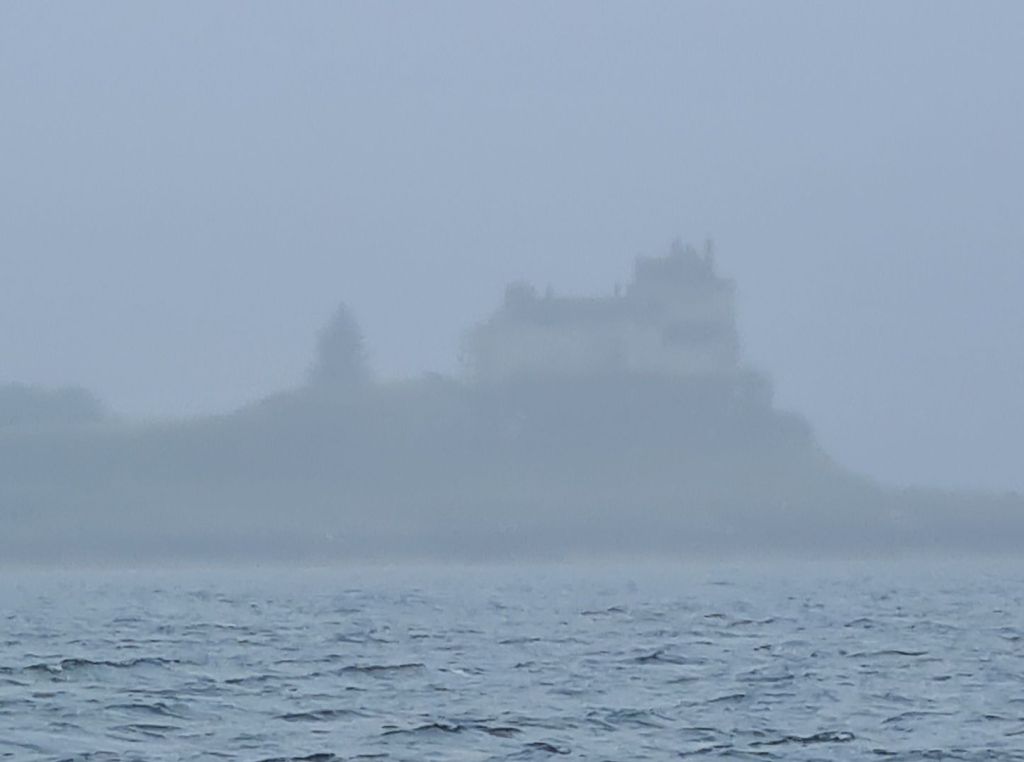
We kept a strict look out through the murk for ferries and saw several emerge. After crossing the Firth of Lorn, we crept round the edge of the narrow entrance to Oban Bay, as strongly advised by the harbourmaster. Oban is the main hub for the Caledonian MacBrayne network of ferries to the islands. They pop out suddenly from behind a hill as you enter from the other direction.
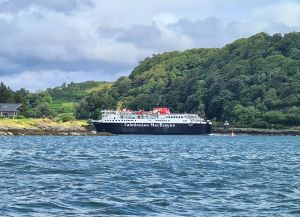
Oban Bay is beautifully sheltered from all directions, protected by the long thin island of Kerrera, where we have rented a mooring.
We tied up in the rain to the sound of a pair of bagpipers, though sadly not heralding our triumphant arrival. Instead they were welcoming Sir Robin Knox-Johnston to a party in the marina restaurant for the crews of the Clipper Round the World yacht race, which he founded.
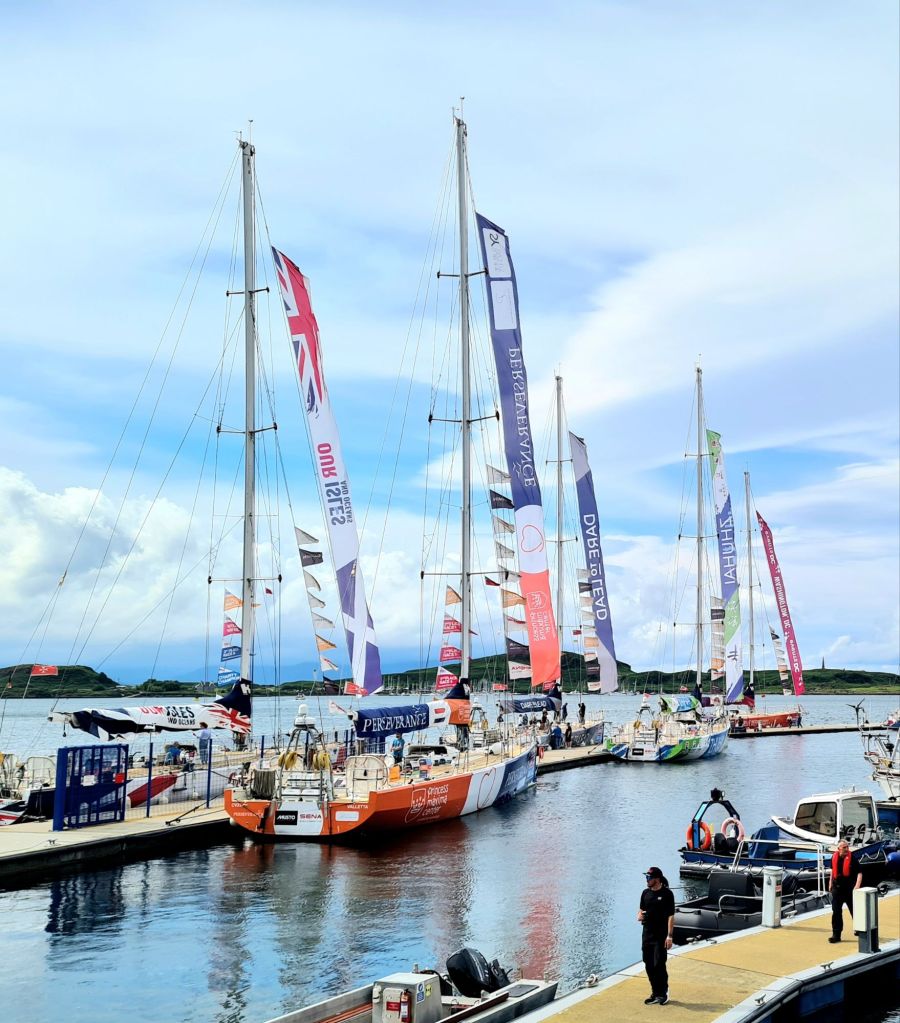
After crossing the Atlantic on the final long leg of the race, the 11 strong fleet was stopping in Oban for the first time in the race’s history, before heading off the following Sunday to the finish in Portsmouth. Sadly, it was race participants only, and other crews were not on the guest list.
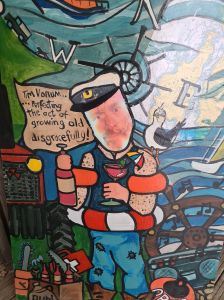
The restaurant, we discovered the next evening, was excellent, with a short but interesting menu of fish, shellfish and venison, and a cheerful atmosphere, in keeping with the portrait at the entrance of Tim, the co-owner.
Next day we headed for Oban on the marina’s little ferry, to say farewell to Michael at the railway station and also to sample the delights of the best shellfish stall I know anywhere.
The stall sells perfectly cooked local mussels to eat standing up or on benches on the quayside. There were scallops, oysters, dressed crabs, langoustines, clams, lobsters, whelks, salmon poached and smoked – all local and cooked in the shed behind or sold raw.
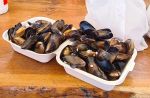
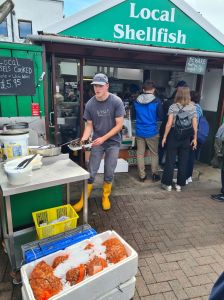
The oysters were the best I could remember in recent years, and the scallops, though pricey, were delicious. As for the crab, prawn and salmon sandwiches, they are perfect for lunch on the train to Glasgow from the station 100 metres away. They have more filling than bread. (I have to explain that my sampling was spread over three meals….)
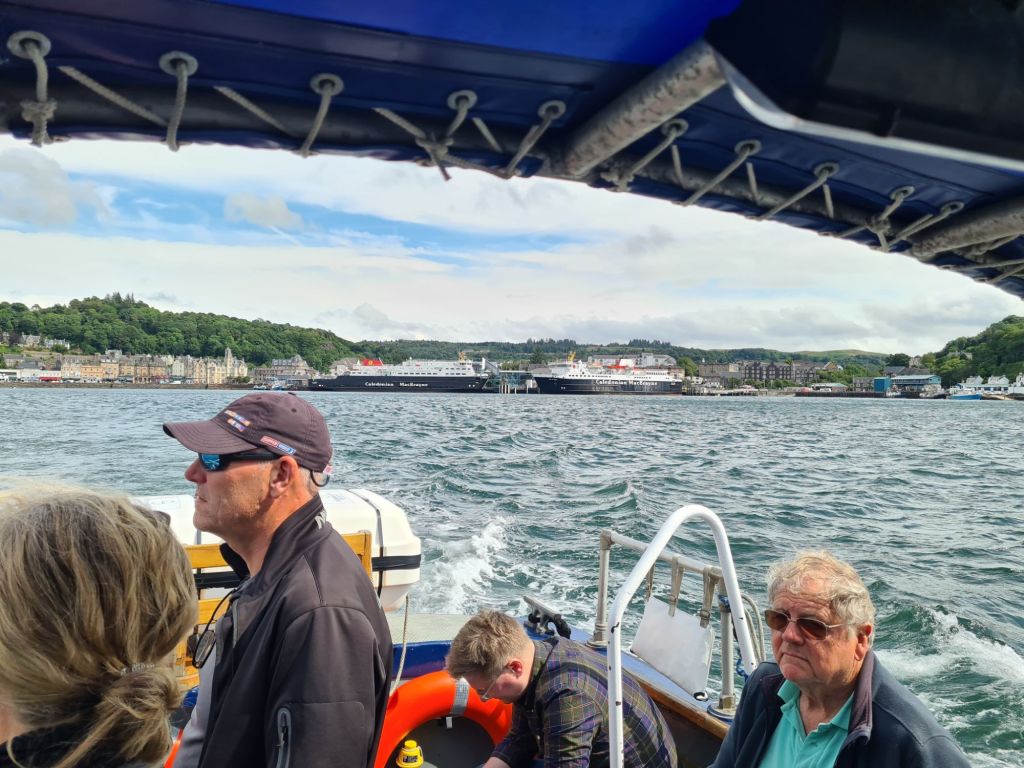
The next day, Tony left by train clutching sandwiches, as Michael had the day before. I was to be on board for a couple more days to put Spring Fever on her permanent mooring once the previous occupant had left.
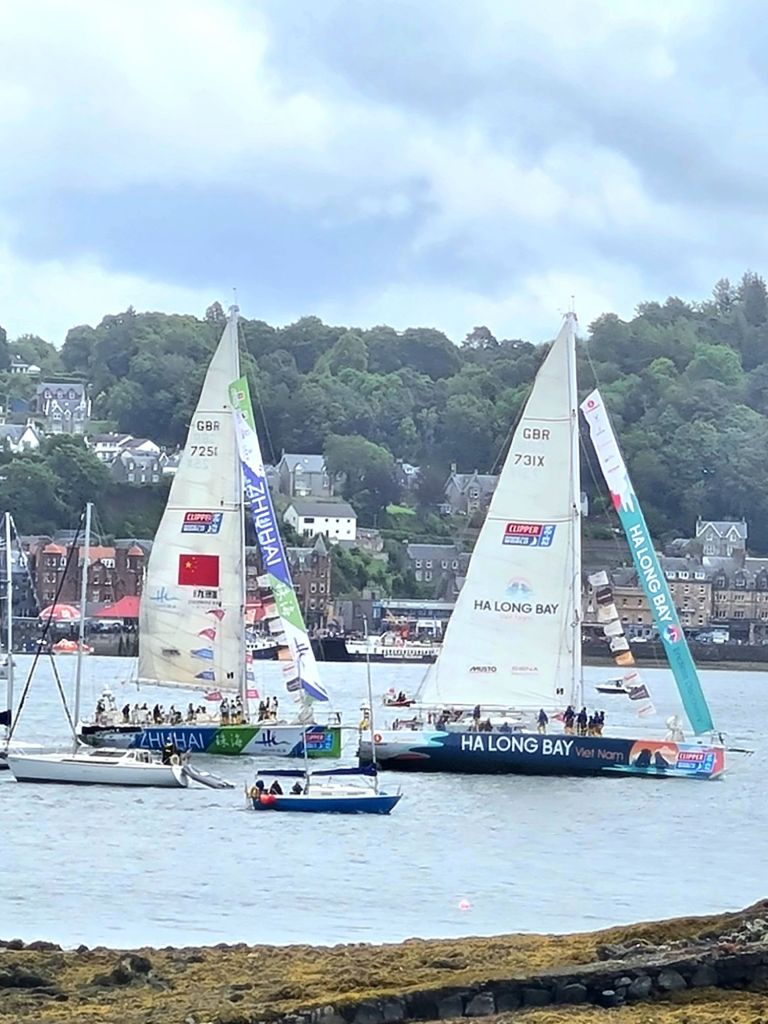
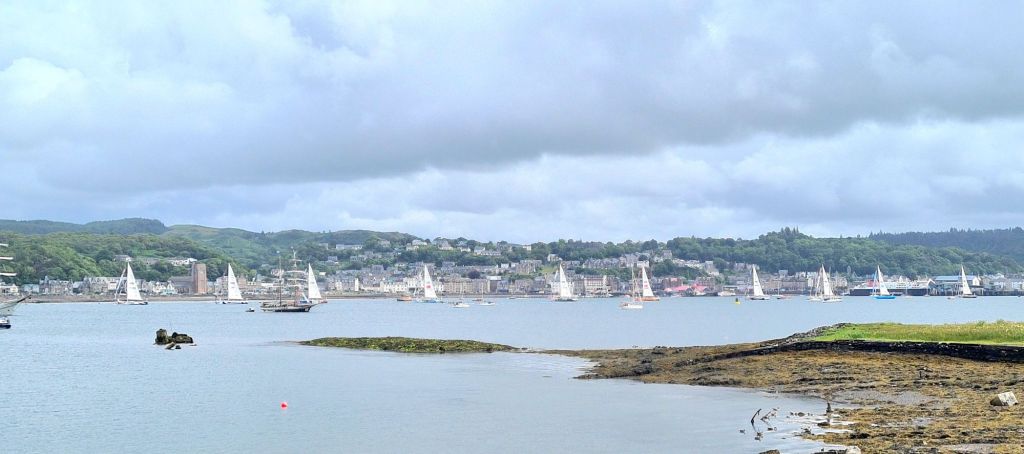
That meant I was there for the departure of the Clipper Fleet, which formed up for a follow-my-leader circular sail round the bay, then a sail past the crowds looking on from the town, then exit from the bay in line astern. The actual race start was just outside in the Firth of Lorn.
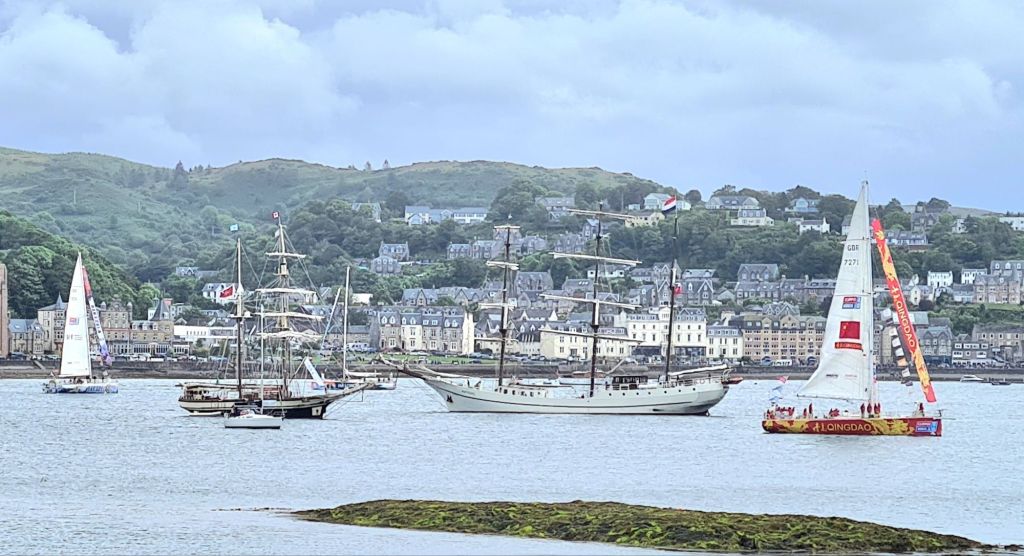
registered in Malta, crewed by 6 members of a family called Haynes, taking paying passengers; next to it is Artemis, a square-rigged Dutch barque, which also cruises with paying passengers; then another Clipper race boat.
Joining the challenge is not cheap. A single one of the 8 legs can set you back £6,000 to join, including a month’s crew training. The price may be why quite a lot of the crew we saw seemed to be well into middle age, perhaps in search of a break in which they can do something truly memorable before too late.
The publicity says some crew start as complete novices. Reading up on the race, especially a long article in the Guardian last year, there have been some pretty terrifying times for crews in past races, particularly in the southern ocean.
For some years the race had only one professionally qualified and experienced sailor on board, as skipper. Now there is a second professional. All but the skipper and deputy are paying customers, many with no more experience than the Clipper training month, so it’s brave of them.
Later that day, I took Spring Fever out to her mooring, tidied up, did a bit of relaxingly therapeutic canvas sewing (making a new outboard cover), and got the boat ready to leave till September, when we plan to be back on board.

The next morning, after 32 nights on board, I caught the ferry to Oban for the 3 hour train journey to Glasgow, along one of the most scenic routes in Britain, and then home.

 tide by tide