'in that bow of the boat is the gift of another world.' John Ruskin
Postscript – Autumn sun around Mull, Ulva, Coll, Tiree and Treshnish
After waiting all summer for summer, it finally arrived in Scotland last week, with sun, light winds, and calm blue seas.
Heading across the Firth of Lorn past the lighthouse to the start of the Sound of Mull
We were back for the first time since late July. The wind was generally from the east, so it was a good week to see the little islands west of Mull – Treshnish, Ulva, Coll and Tiree, plus a night in beautiful Loch na Droma Buidhe and another in a sheltered gap in the rocks near Iona called Tinkers Hole. For this week, captioned photos tell the story.
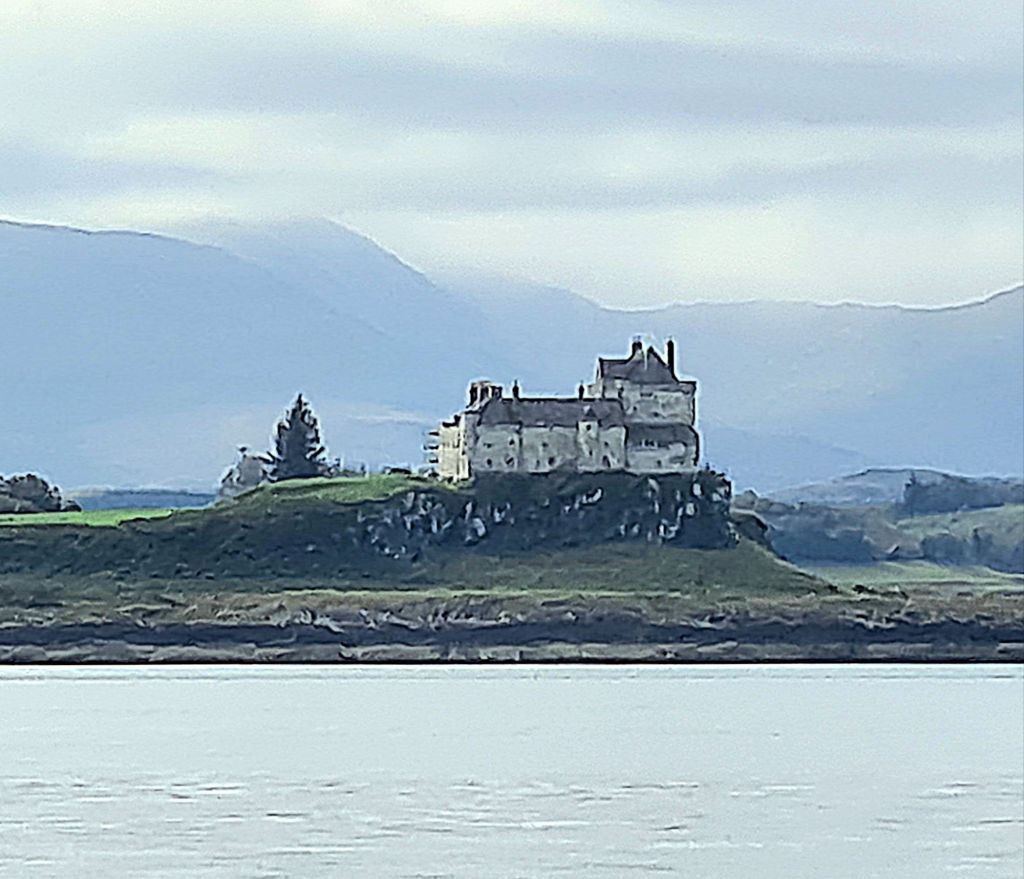
Duart Castle, by the entrance to the Sound of Mull, barely visible in the murk last time we passed
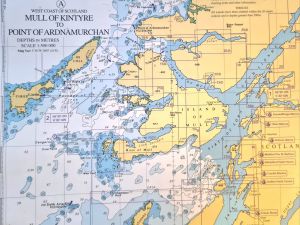
Mull, separated from the mainland by its Sound, with Tiree and Coll to the north-west
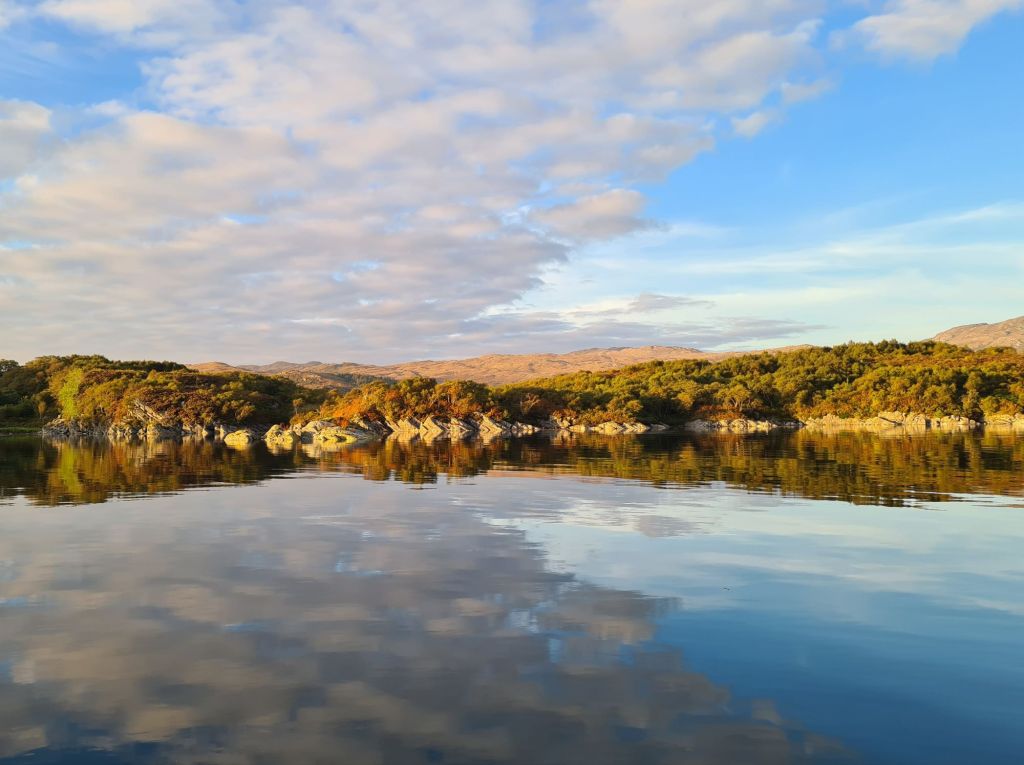
Late afternoon in Loch Na Droma Buidhe, by the entrance to Loch Sunart, near the north end of the Sound of Mull.
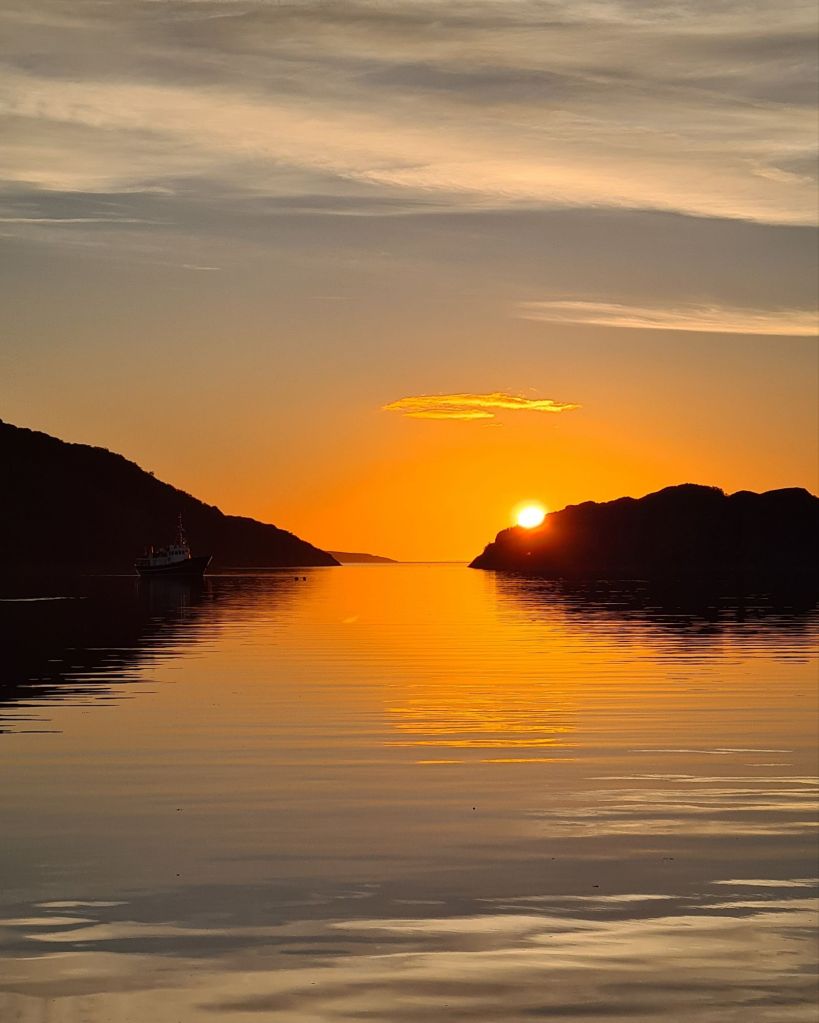
The sun goes down over the narrow and protective loch entrance, which keeps out all swell. There’s a submerged rock in the middle of the entrance but the Antares very large scale charts make it easy to avoid.
The moon takes over.
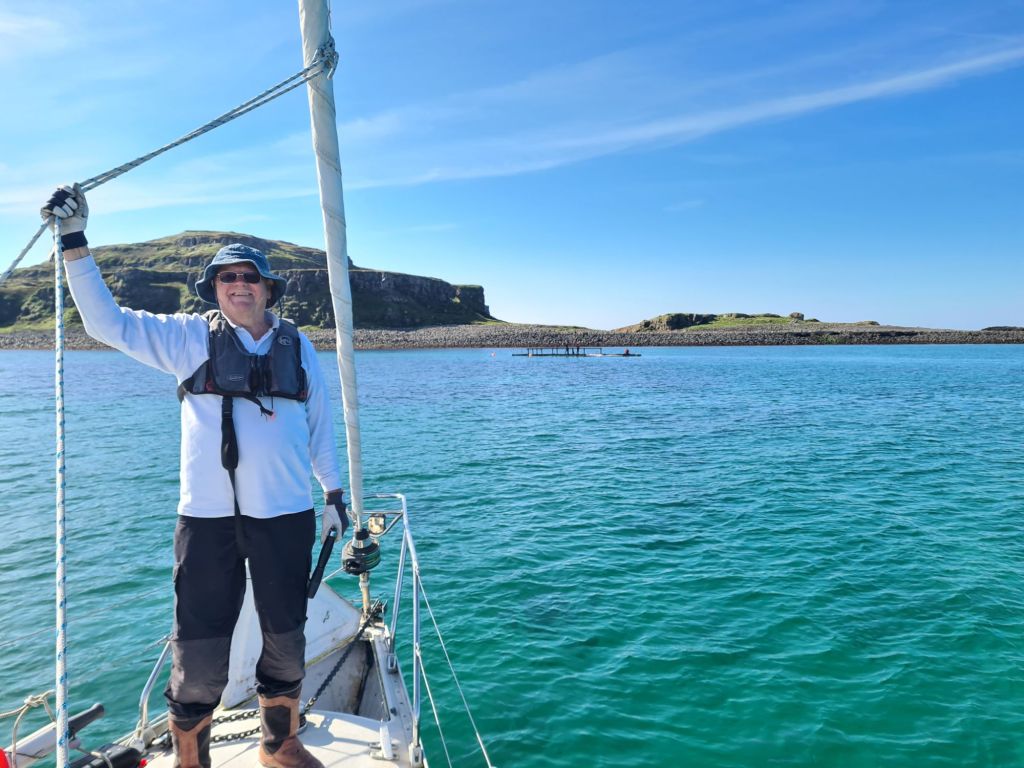
Next day we motor-sailed round the north of Mull in light, warm winds andanchored off Lunga in the uninhabited Treshnish Isles – a lunchtime stopover, again guided by Antares. The tide was low and going ashore would have meant a risky scramble over exposed boulders, so we relaxed on board
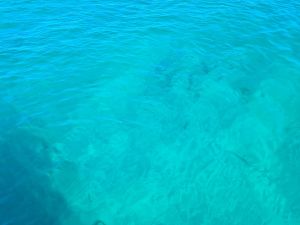
Sandy bottom – good for anchoring
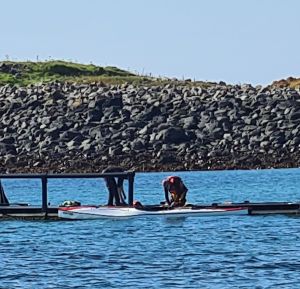
Kayakers stop for a rest on a floating pontoon, which wasn’t linked to the shore – tripper boats visiting the island manoeuvre the pontoons to make a temporary landing stage.
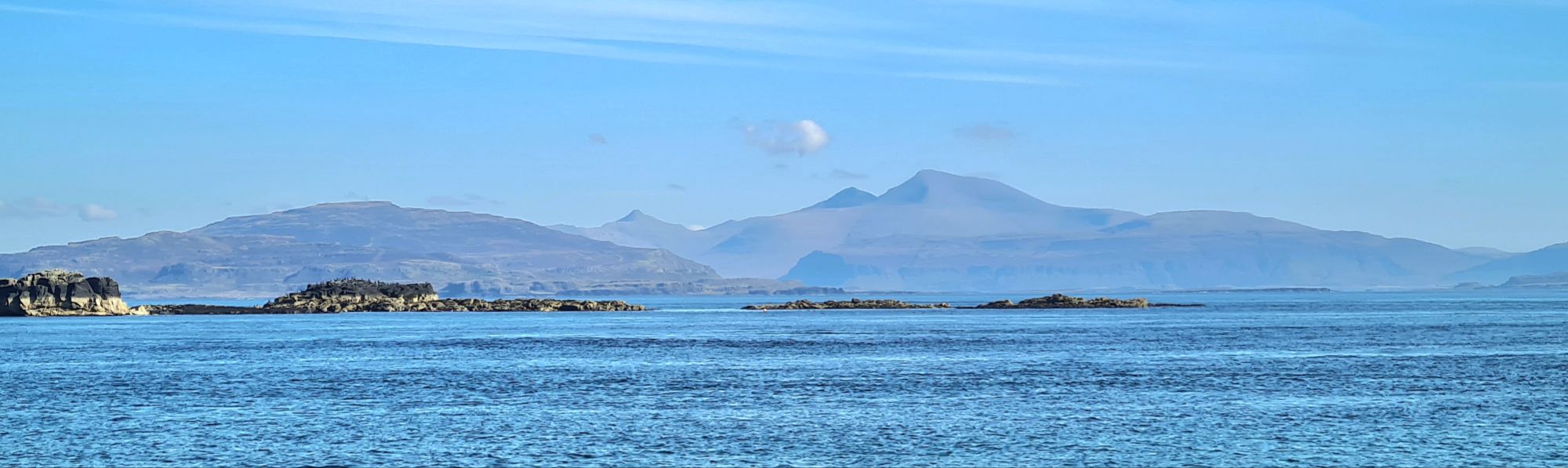
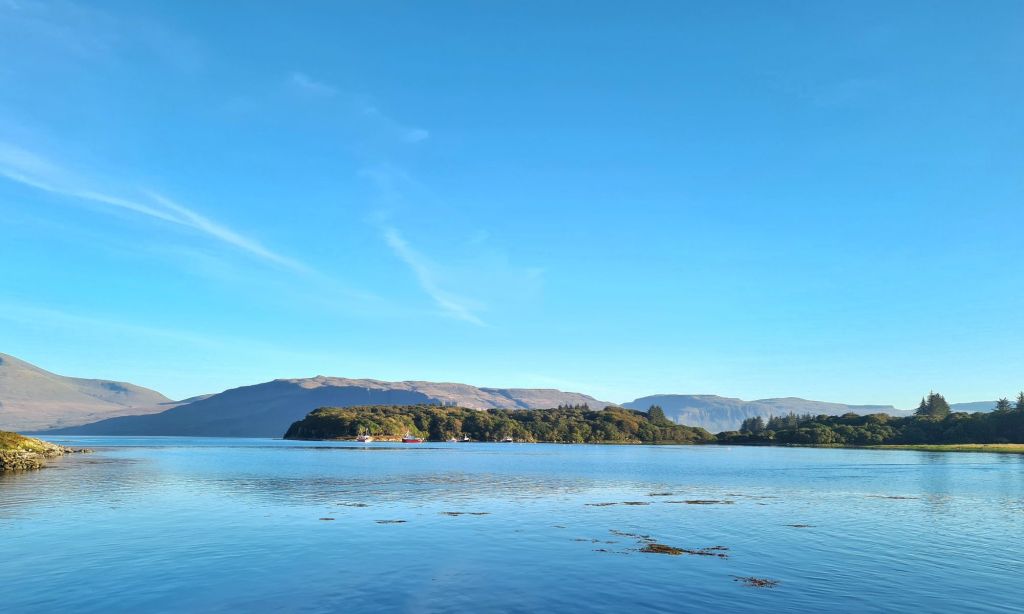
Ulva and Mull from the Lunga anchorage
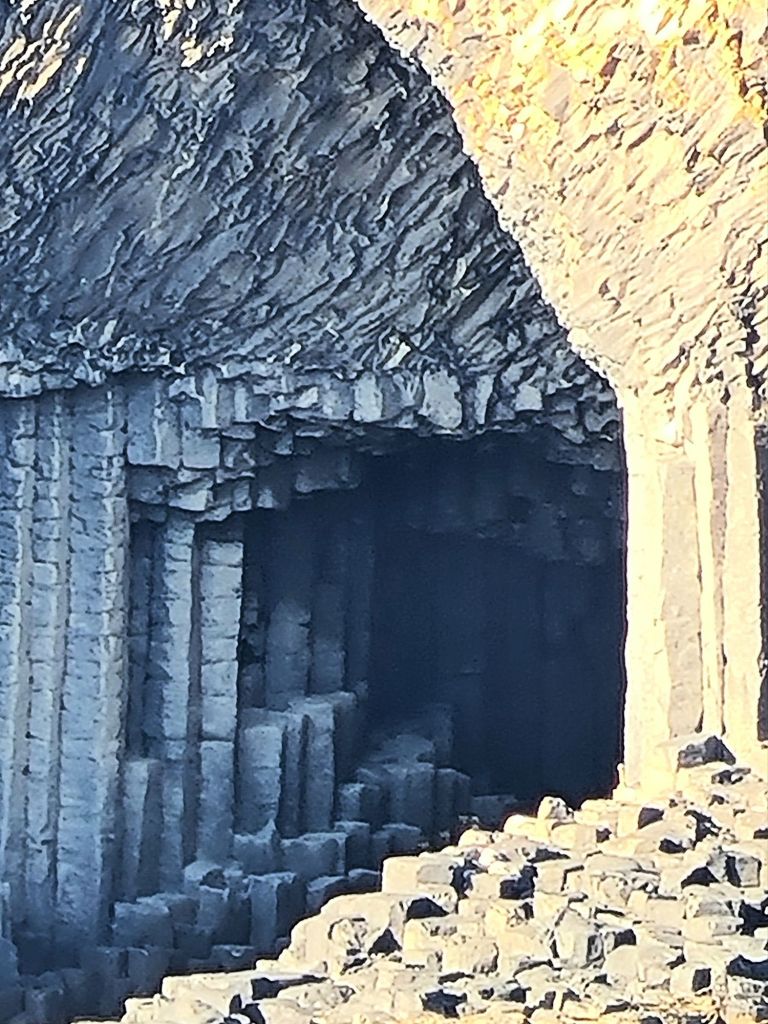
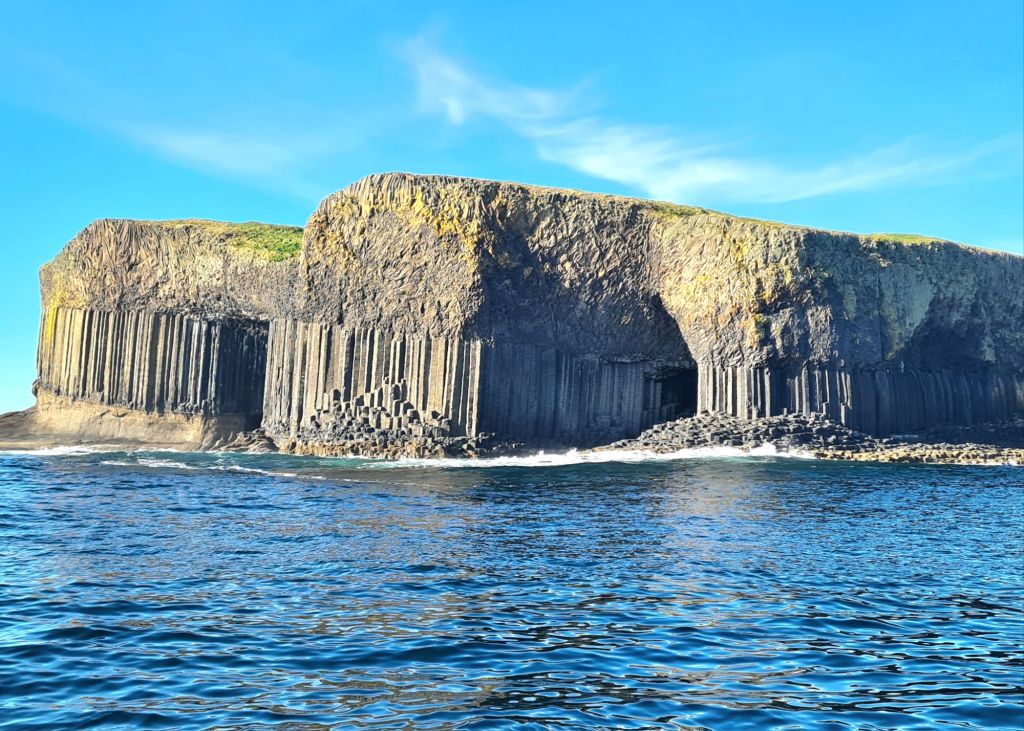
We detoured past the famous Fingal’s Cave on Staffa but didn’t contemplate going ashore – best done two at a time, with a crew of four, because the anchorage is not good enough to leave a boat unattended. We were two up.
Fingal’s Cave on the right
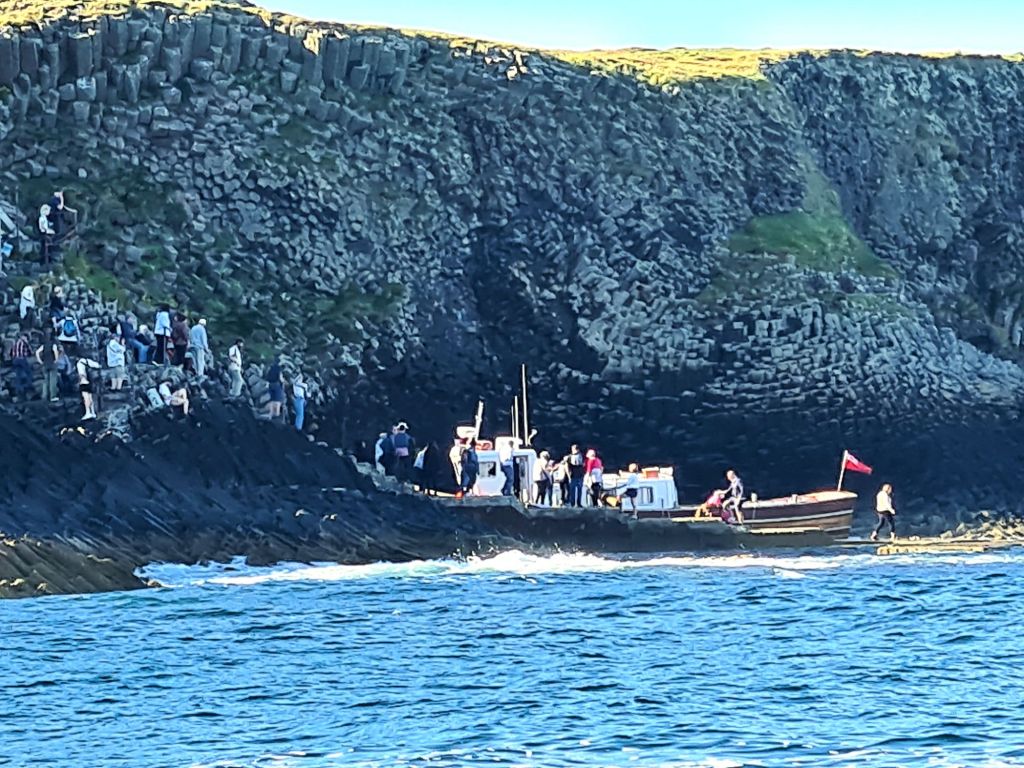
A tripper boat landing visitors at a stone jetty
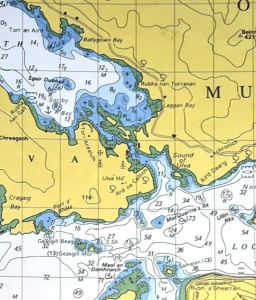
Afterwards, we motor-sailed in almost zero wind across to the Sound of Ulva.The Sound is the narrow gap between Ulva and Mull
Approaching the sound, which starts on the left – Antares chart again very helpful
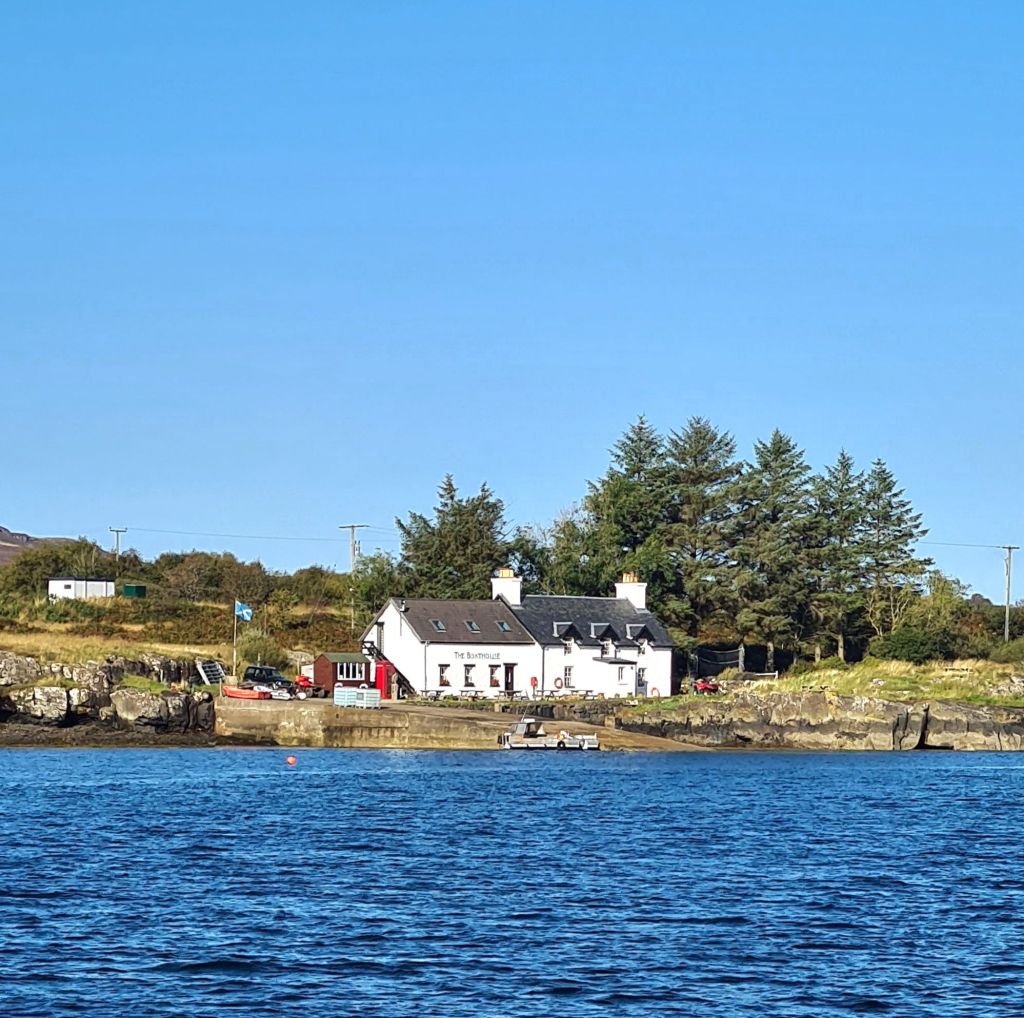
The cafe on Ulva
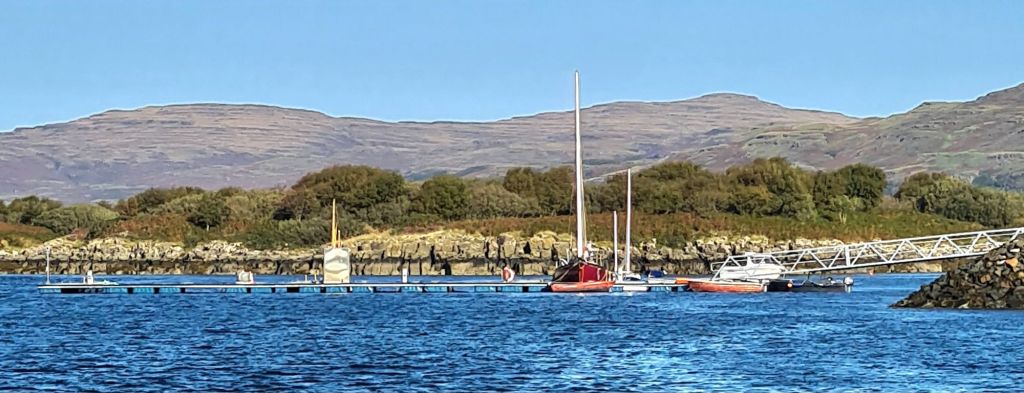
A quiet night on an Ulva Sound pontoon. The harbour master said they’d had few visitors this summer because of the weather. Access routes to the west side of Mull are exposed to the Atlantic, so this quiet, generally easterly, weather was a perfect opportunity to visit.
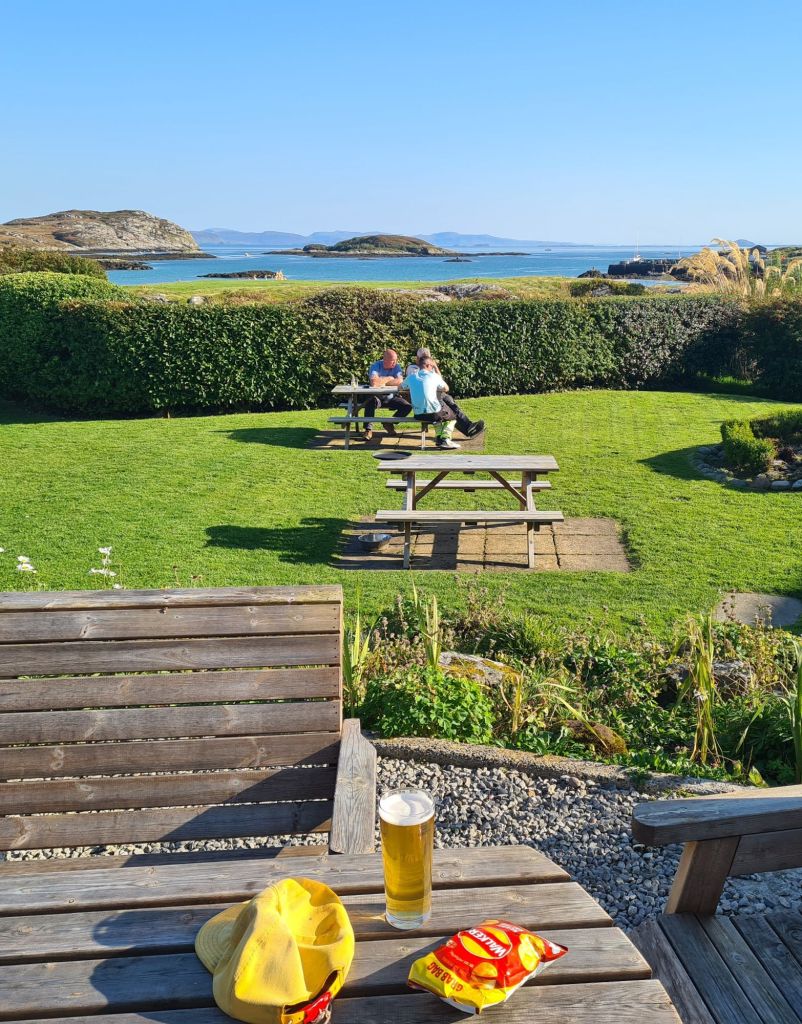
A pint at the pleasant Coll Inn, after retracing our steps past the Treshnish Isles to the low-lying island of Coll, where we picked up one of the visitor moorings laid by the community trust.
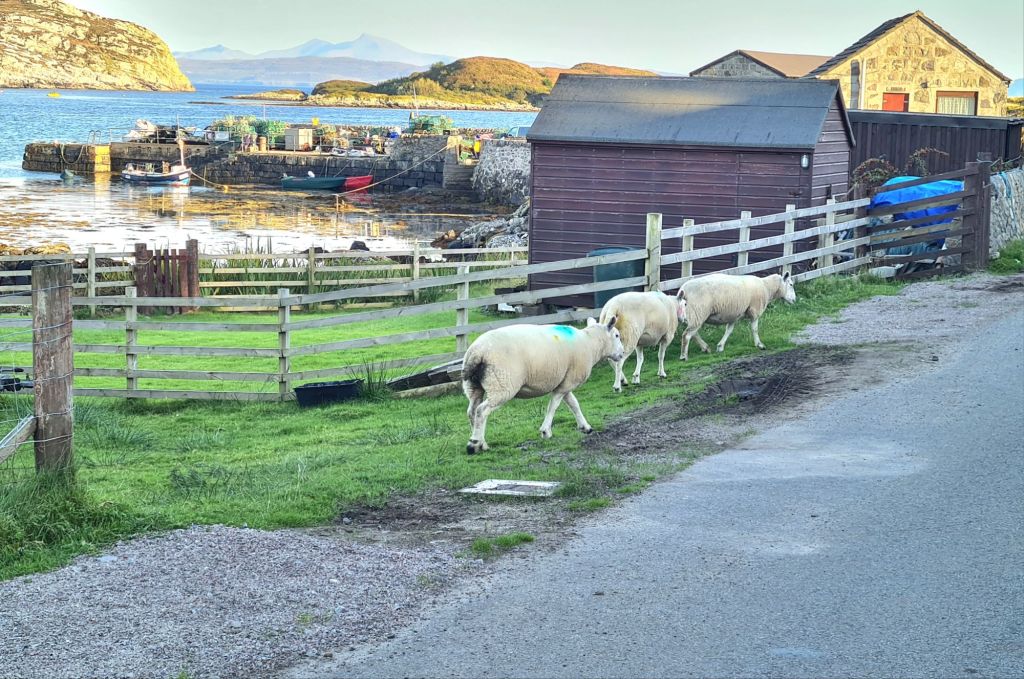
The stone landing jetty at Coll is beyond the grass
This amphibious craft came chugging past the Coll moorings and wandered round the bay.
We rarely tow the dinghy because it can be such a liability if the wind gets up – no problem going down the few miles to Tiree, though. Running low on time, we made only a fleeting visit to the island, famous for its stunning beaches, and did not go ashore. We relaxed for a few hours on a visitor mooring.
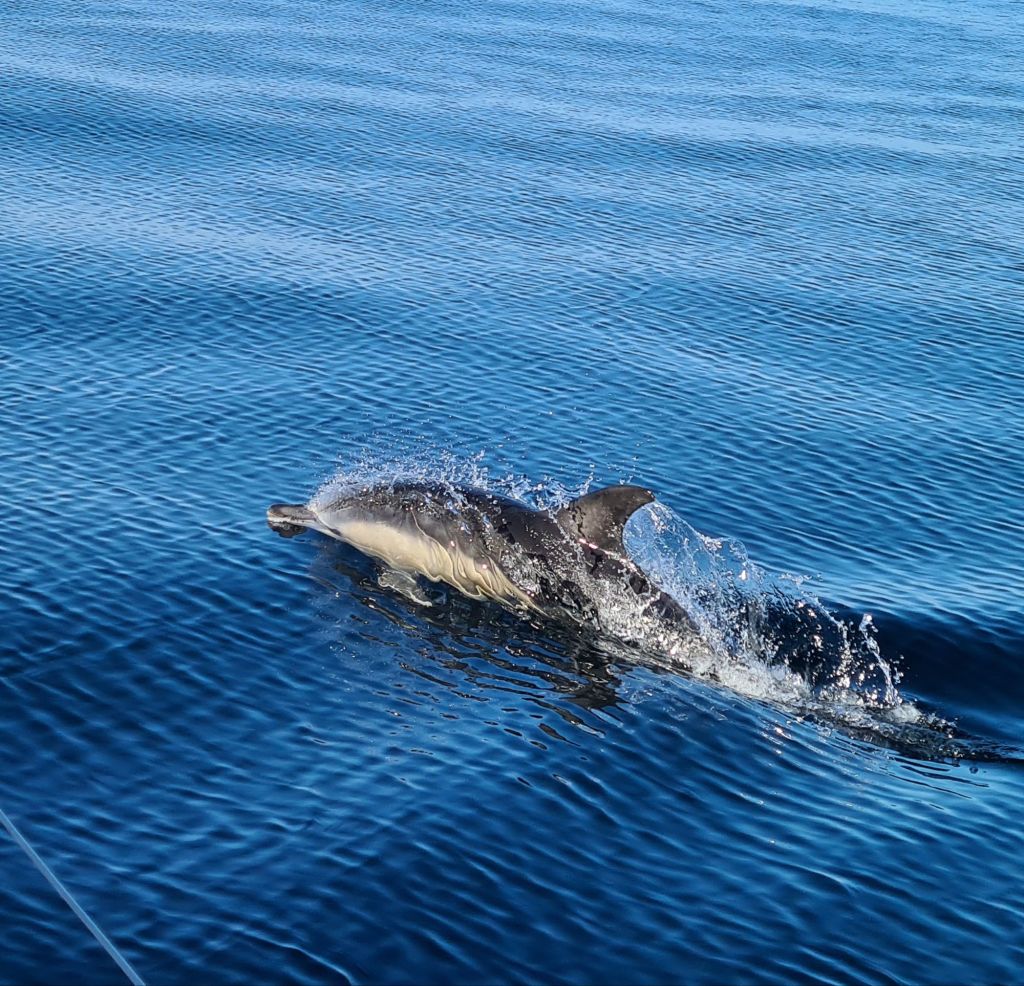
A treat of a sight on the way to Tiree. It was part of a school of half a dozen.
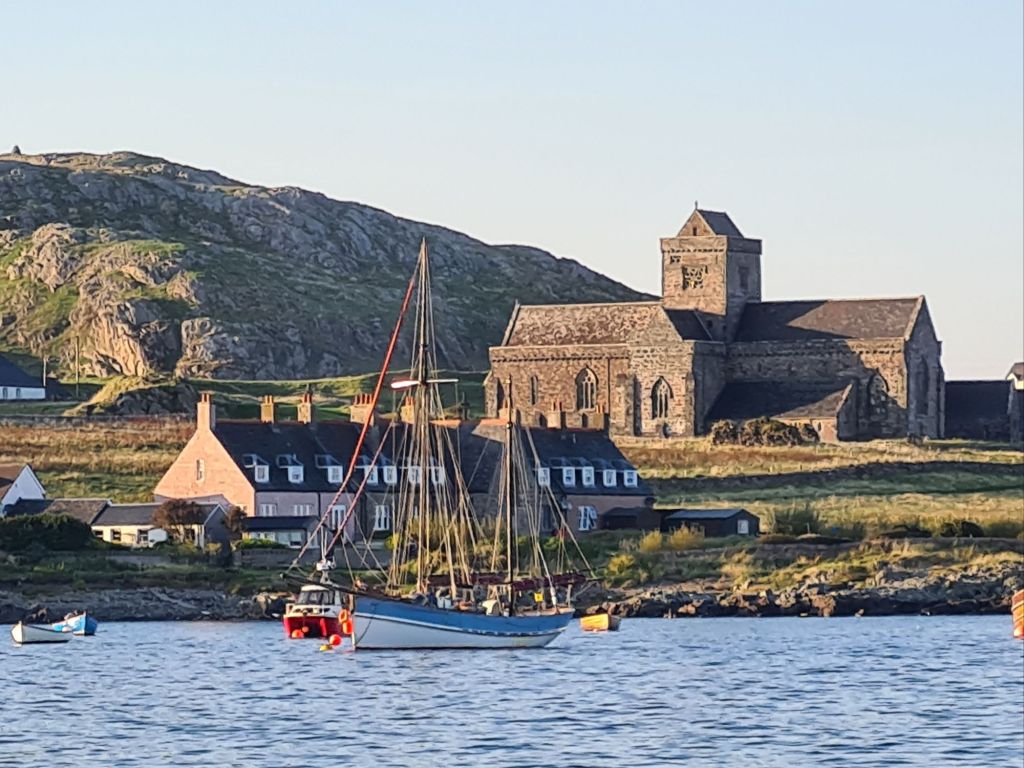
From Tiree we motored to the Sound of Iona, but it was towards sunset and sadly we had run out of time to stop, because of an unavoidable commitment at home. This is the cathedral as we passed. We’ve explored Iona on a previous cruise to Scotland.
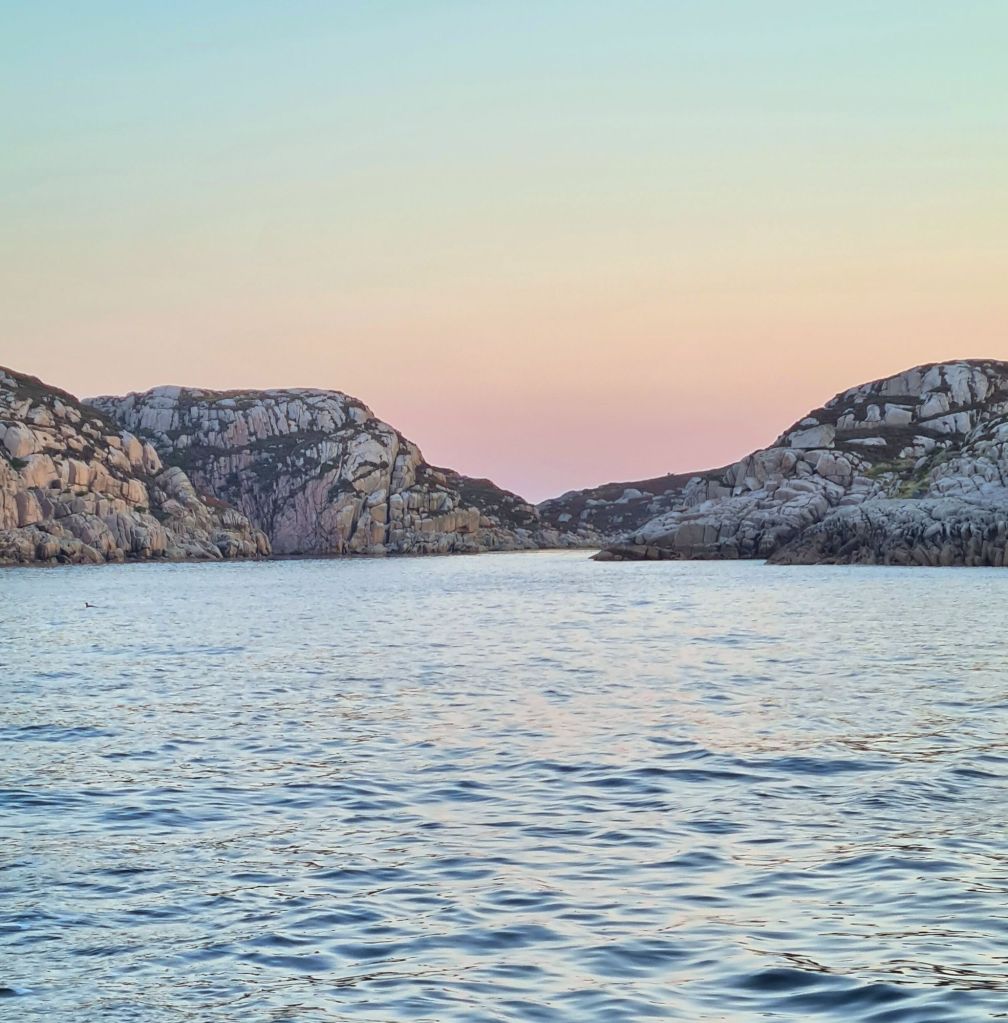
Tinker’s Hole in the south-east corner of the sound, where we have anchored before. The approach is rocky, but simple enough in fine weather with the help of Antares charts. Once in, the shelter is almost complete, from any direction.
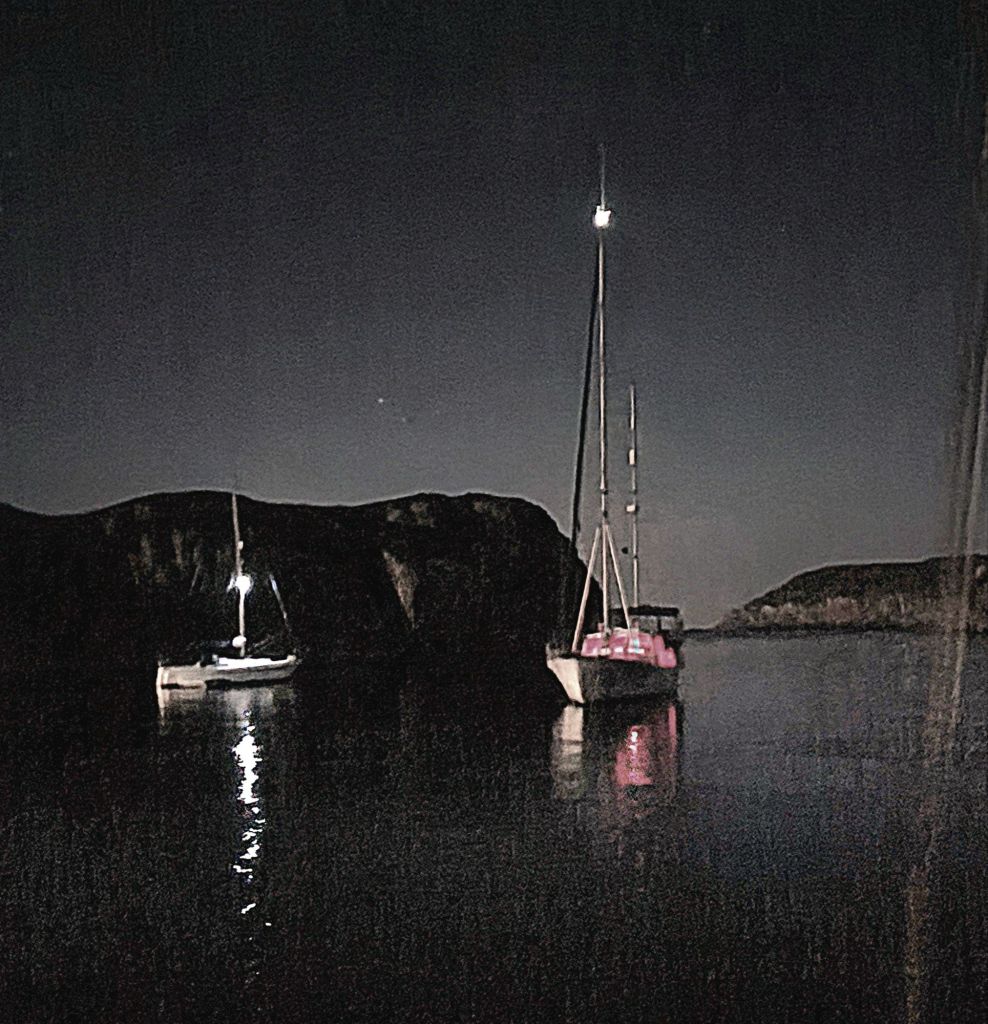
Extraordinary what can be done with a phone camera – with the naked eye we couldn’t see much more than the lightsthat night. The entrance to Tinker’s Hole is behind the right-hand boat.
Tinker’s hole entrance seen after we left at dawn. On the way back up the Firth of Lorn to Oban and Kerrera, the wind got up to Force 4 for a while and we had our first proper sail to windward. It didn’t last: well before we reached the Sound of Kerrera, between the island and the mainland, it died away completely.
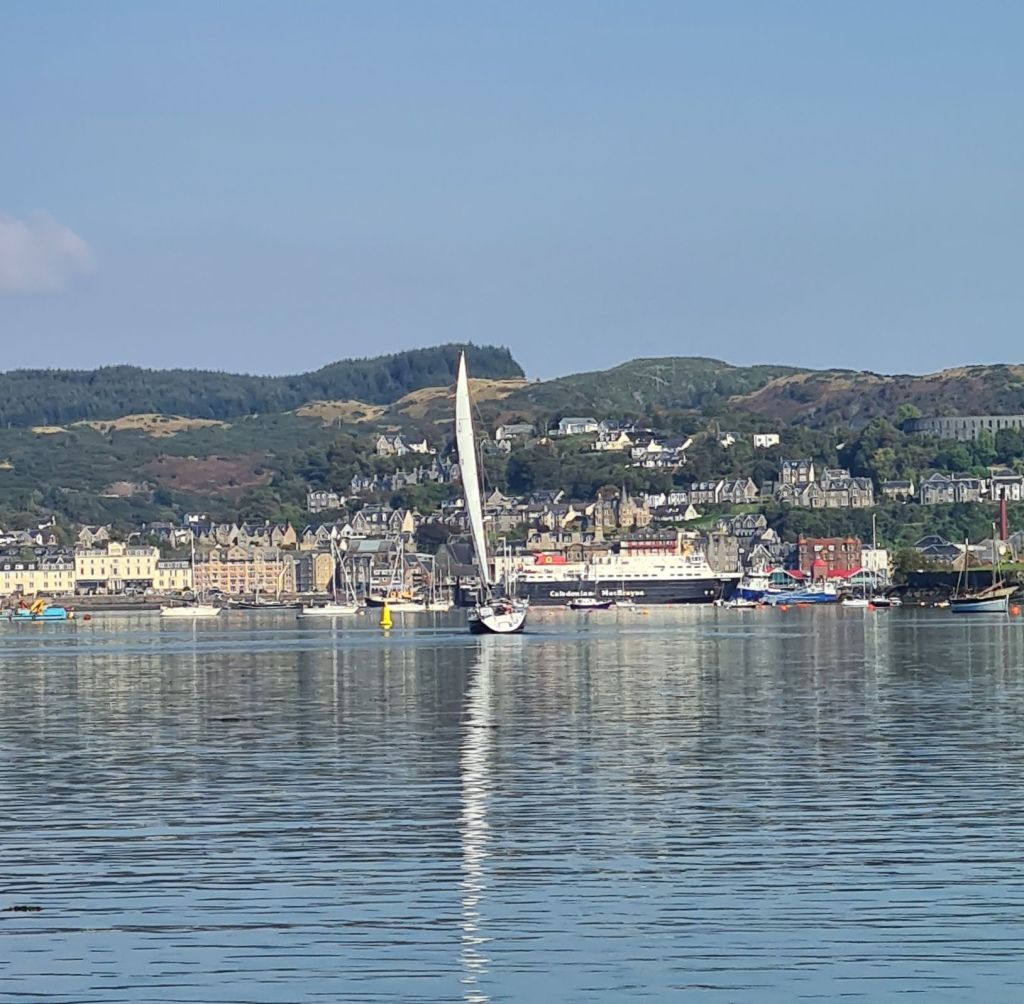
Oban on another warm afternoon
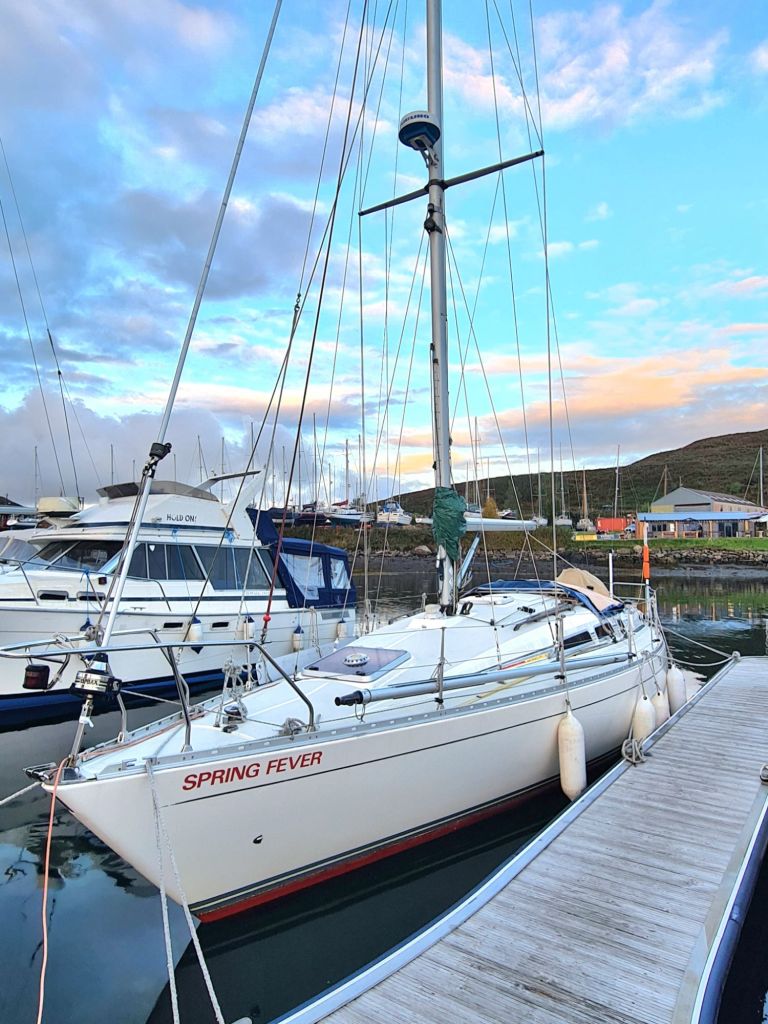
Tidied up, sails and sprayhood off, instruments protected, ready to go ashore for the winter. She was lifted out two days after we left.
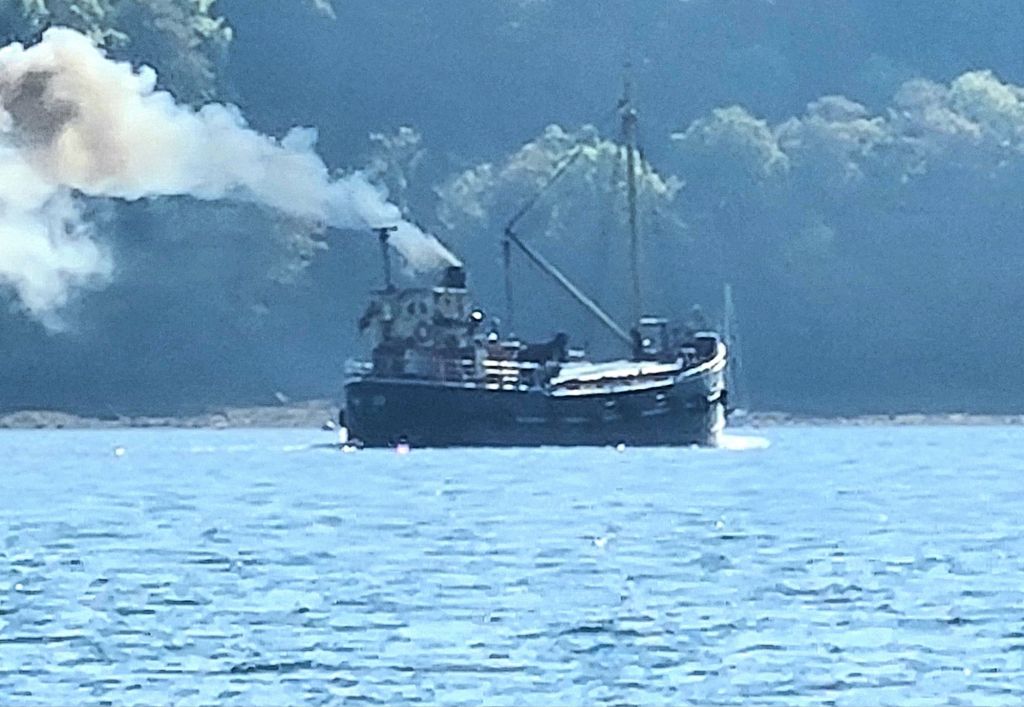
A Clyde puffer was steaming down the Sound of Kerrera. The little ships were built ruggedly so they could take the ground at low tide, like a barge, when they were delivering goods to the islands. Puffers were made famous a century ago by Neil Munro’s Para Handy stories, about the wiley skipper of the Vital Spark. There have been two films and most recently a 1990s TV series.
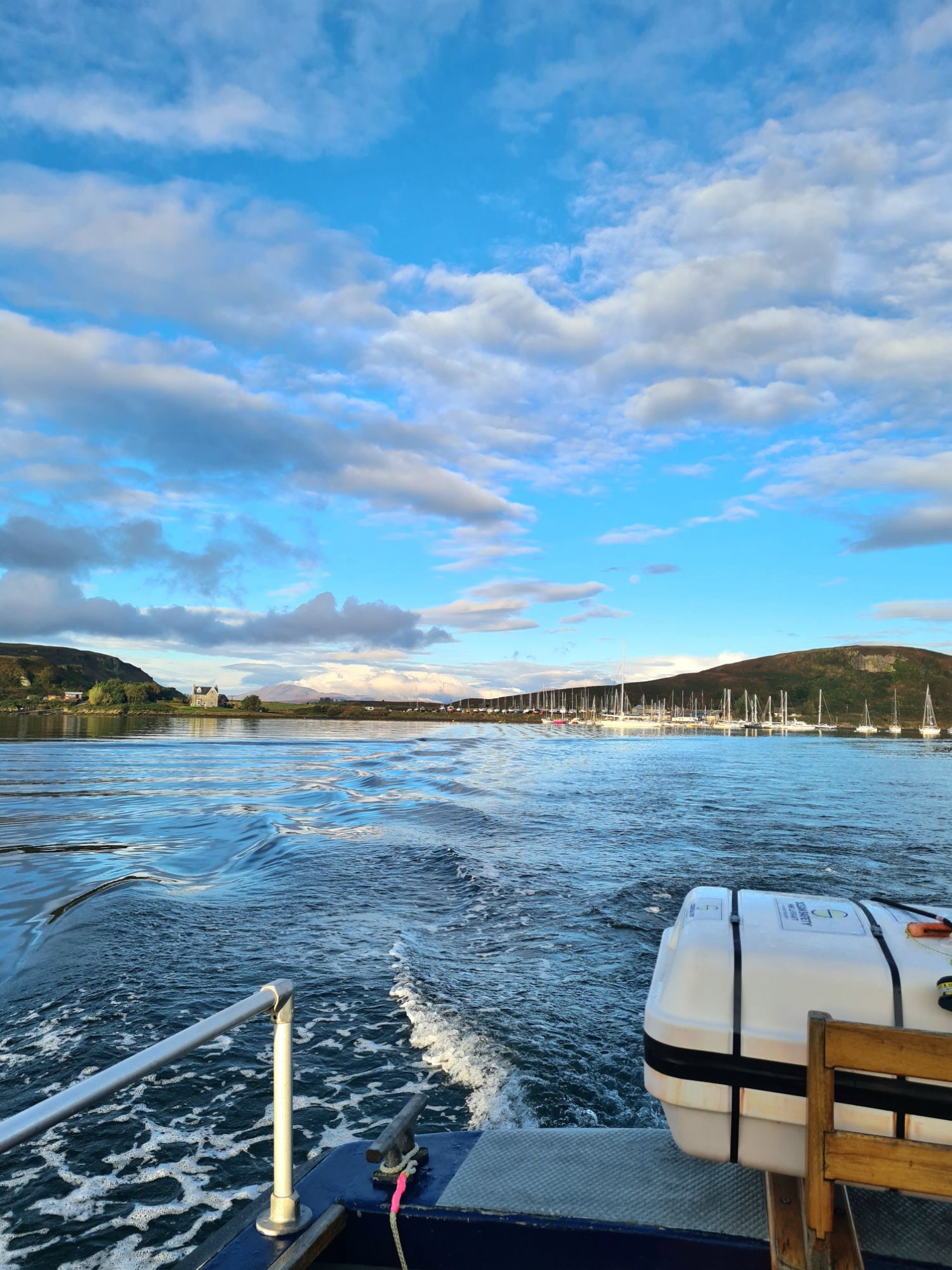
Kerrera Marina as we left on the little ferry to Oban



 tide by tide