
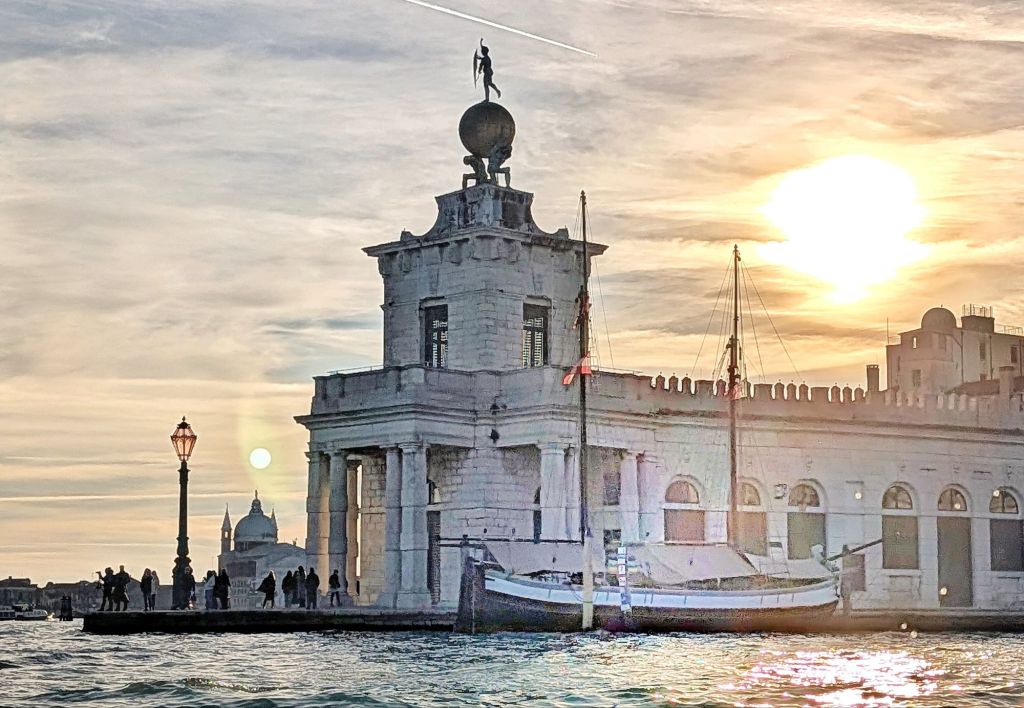
I’m glad to see a famous old Adriatic trading boat, a trabaccolo, is securely afloat again on its mooring by the Dogana, the old customs house at the entrance to the Grand Canal in Venice.
In 2016 Classic Boat commissioned me to write a piece about the rescue of the Nuovo Trionfo, built in 1926 and one of very few trabaccoli that have survived. I spent several enjoyable days talking to people involved in fund-raising and repairs, inspected the boat, which had had a major restoration in 2012, and even sat in on a discussion with the deputy mayor of Venice about fund raising.
I had pre-sold the idea to the magazine as an up-beat piece about a successful project. But a nasty shock came for the enthusiastic restoration team and its backers: part of the keelson – a huge timber down the centre of the ship above the keel – was discovered to be rotten and cracked and needed major repairs ashore. There were years to go – nine as it now turns out – before this could be called a successful restoration, so the magazine lost interest.
The trabacolo was repaired but that wasn’t the end of the saga. In 2020 it was only saved from sinking on its Dogana mooring by the prompt arrival of a fireboat which pumped it out so it could be taken to a yard for more urgent repairs. See this post I wrote at the time.
The good news is that from February 2024 till a few days ago the Nuovo Trionfo was ashore at the Casaril yard, on the northern tip of Venice, this time for a really thorough rebuild, which is described and photographed in detail on the website of the Amici del Nuovo Trionfo. (In a Chrome browser the translate function gives a readable account in English).
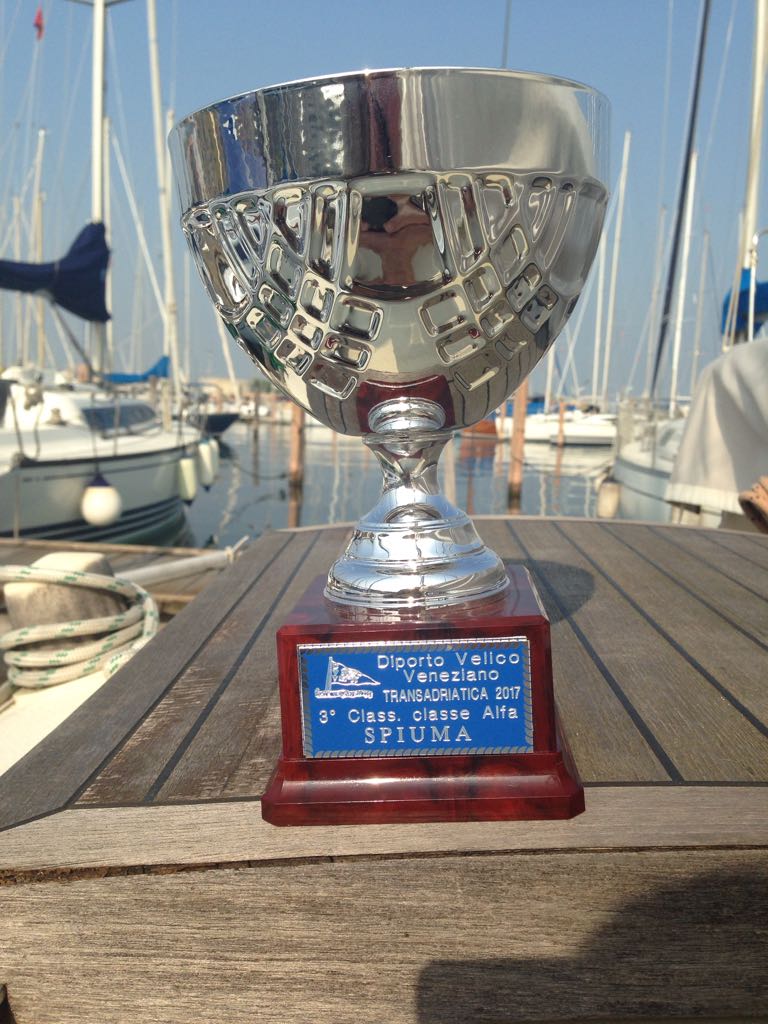
This second link is to the website of Compagnia della marineria tradizionale Il NuovoTrionfo . The spars were taken for checking to Diporto Velico Veneziano, the yacht club in Sant’Elena which organises the annual Transadriatica race.
The Nuovo Trionfo was put back on its Dogana mooring on the 20 November. As well as the structural repairs, much attractive detailing has been restored, including the pair of bright red traditional eyes at the bow.
She has been used in recent years to give tourists a short ride on the lagoon, to raise money to keep the project going. With substantial extra funding secured for the latest restoration and the boat in seaworthy condition at last, there are plans to go to sea properly, and retrace her old trading routes in the northern Adriatic.
The impressive team of Venetian traditional shipwrights and craftspeople was helped for a time by two French trainees and later by two graduates of the master shipwrights school at Douarnenez, Brittany, famous as the home of an annual traditional boat festival.
There is international solidarity between traditional boat builders, and some have many enthusiastic on-line followers. One of the best known is the complete rebuild in the US of the British yacht Tally Ho by The Sampson Boat Company. The 7 year project was led by a British shipwright who bought the damaged hull for $1.
The rebuild went viral with a huge following on U-tube that did much to help fundraising and attracted shipwrights and apprentices from far and wide to help. There’s a teaser here for amateur philosophers: every bit of Tally Ho had to be replaced in the end. Is she still the same boat? I say yes.
Tally Ho is actually on the way back to Britain where she was built in 1910. The plan is to compete in the 2027 Fastnet, the 600 mile offshore race starting in Cowes, which she won in 1927.
Spring Fever will be back home from Scotland by then. We must save the date so we can go out to watch the start. Sadly our own Fastnet race days are long over – I last did one in 1997.


 tide by tide