Some people race non-stop round Britain. Others sail 2,000 miles in a frantic six weeks cruise over one summer. We left Cowes a few days ago and won’t be back before autumn 2025. With so much to see, what’s the point of rushing?

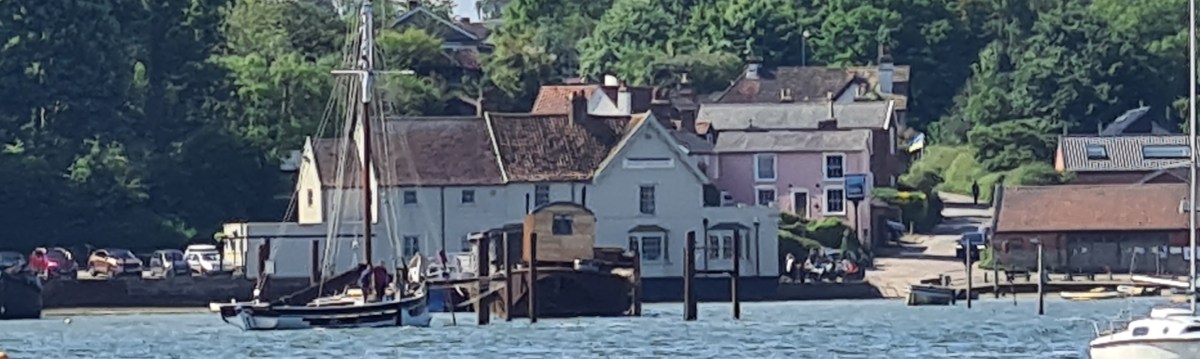
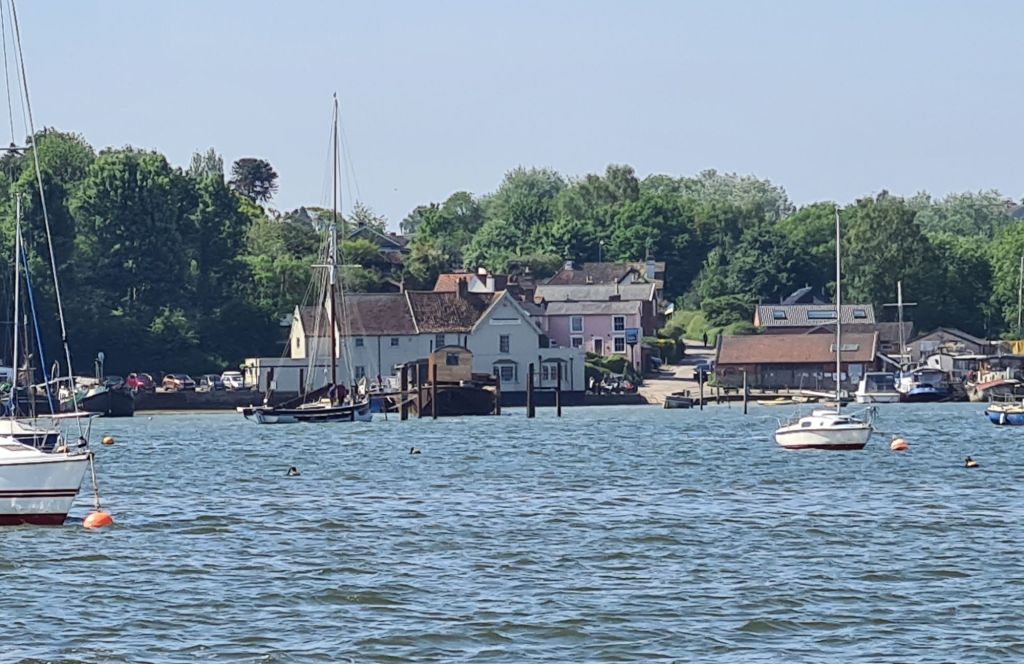
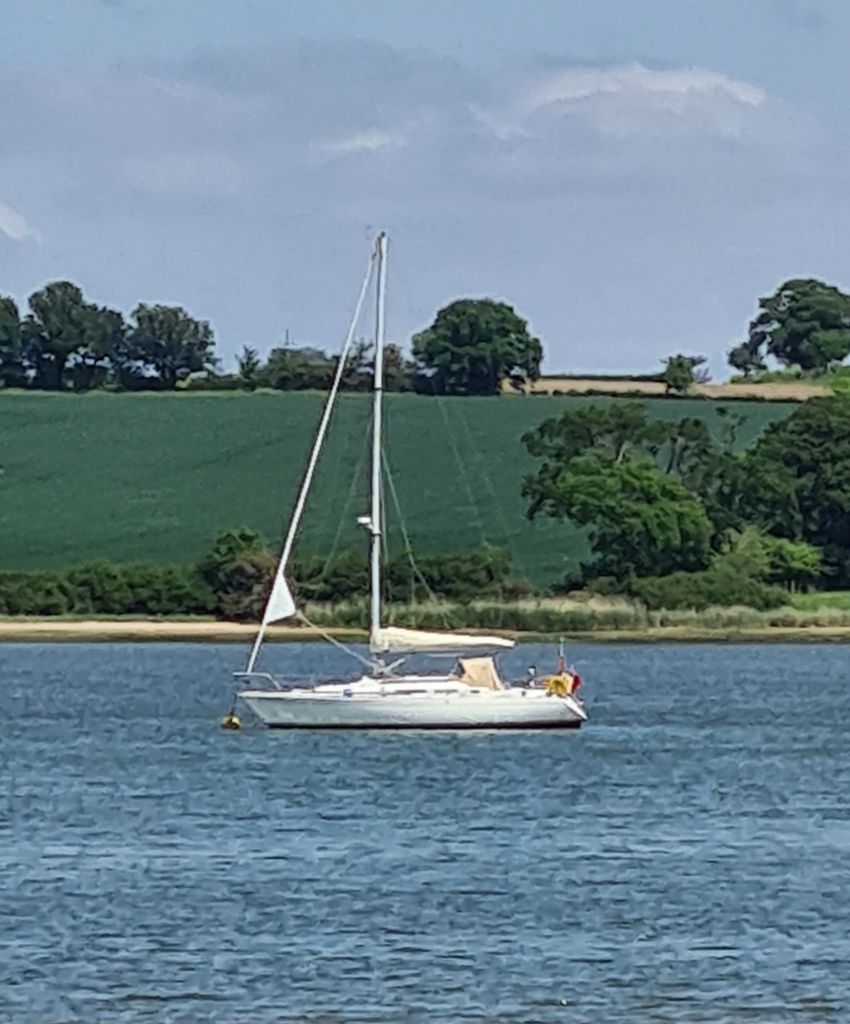
Our home port looked attractive in the dawn light as we left the harbour at 0445 on a still, calm morning, with our destination Harwich Harbour, and then up the River Orwell to Woolverstone.
This passage eastwards up Channel from the Solent is always navigationally satisfying, because the tidal patterns work very much in the boat’s favour, and make it faster heading east than for a boat going back westwards.
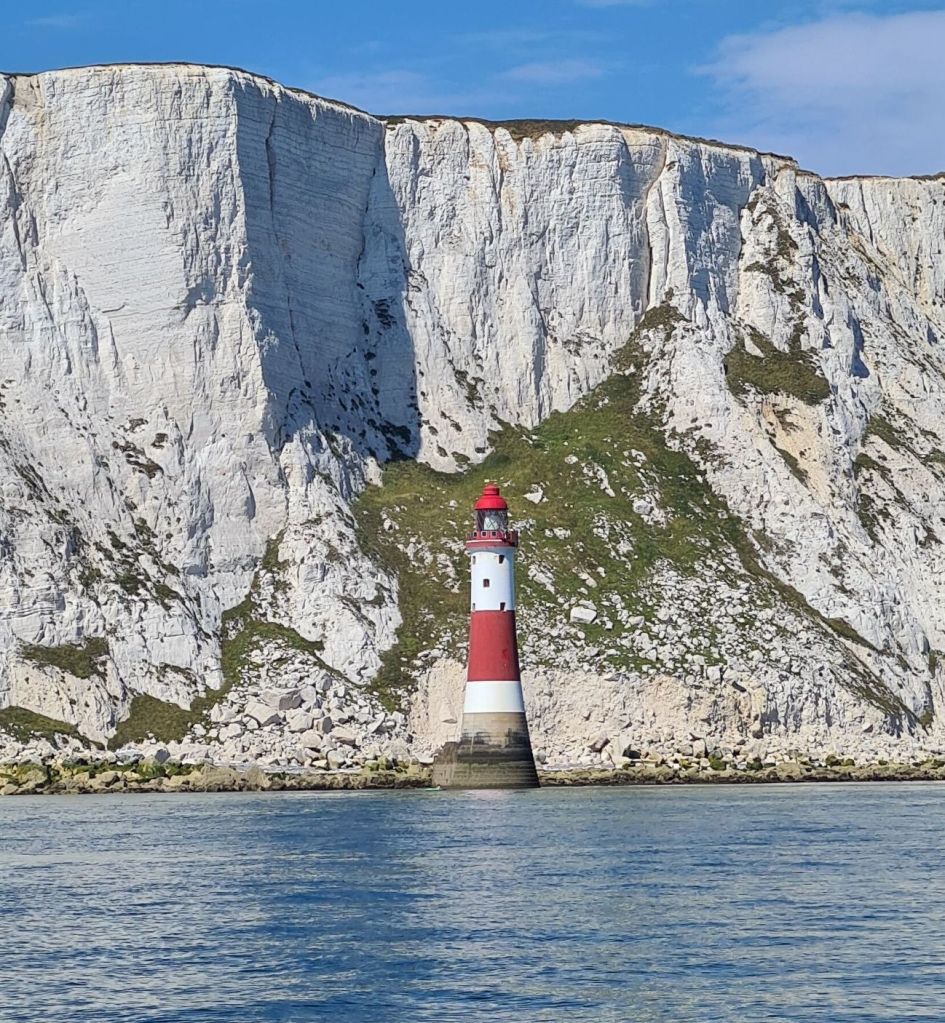
From Beachy Head onwards, you can ride the top of the tidal wave as it runs up the channel, so that the eastward current stays with the boat as far as North Foreland, the headland at the entrance to the Thames Estuary. Depending on the speed of the boat and its position when the tide turns east, the current may be favourable for as long as 11 hours.
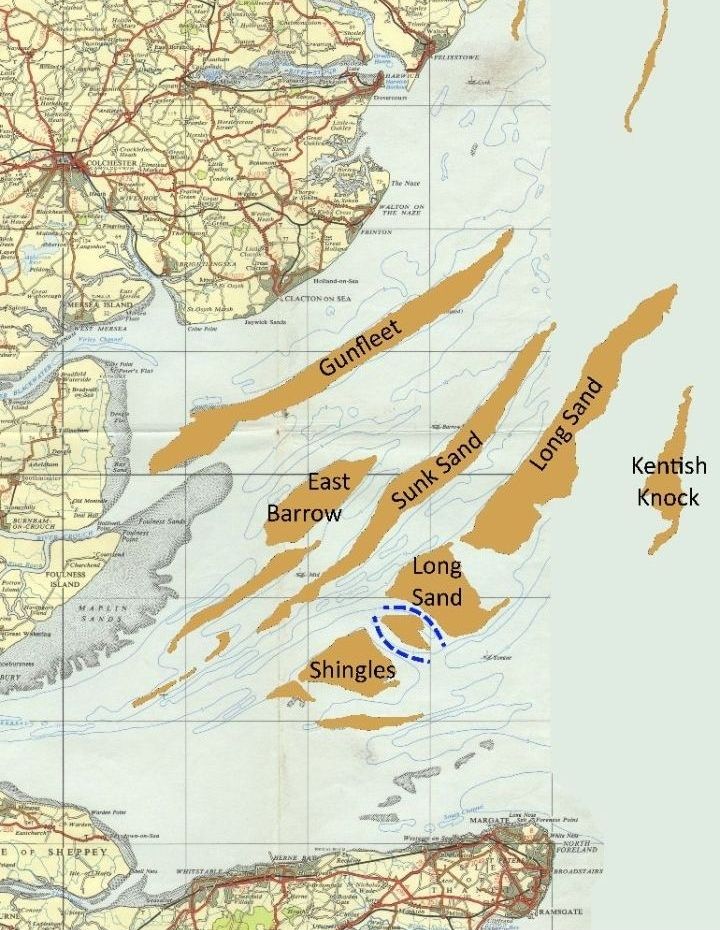
The Thames Estuary is fascinating, though it needs a bit of imagination and a chart to see why, because the surrounding land mostly looks low and featureless from the sea. The estuary is packed with long finger-like sandbanks pointing mainly north-eastwards, so that crossing it in a small boat is like threading through invisible islands, finding short cuts, guided by a large number of buoys and beacons.
On this trip our first few hours after we reached the estuary were at night, in good visibility. There were lights everywhere: red, white, yellow and green navigation lights on buoys and beacons; lights on ships following the deep water channels; other ships were anchored and lit up like Christmas trees, because the big ones are obliged to keep on all their deck lights so they can’t be missed. For a while there was moonlight, and then great arrays of white and red lights marking the wind farms.

The shortest route crossing to Harwich is through the huge Thames Array windfarm, where they have helpfully marked a channel between the towers with the red and white buoys that show safe water. The giant rotors are set so that at their lowest point they are about twice the height of Spring Fever’s mast. There are exclusion zones 50 metres round the towers, but who would want to get that close anyway?
The estuary is always busy with shipping, but it’s less of a worry than when crossing the English Channel, because in most places it is easy to get to somewhere they can’t reach. The estuary channels are relatively narrow and, if in doubt, the solution is to nip over into shallow water on the edge of a bank, where a deep-draught vessel would run aground. With a depth sounder and a good chart, it’s also straightforward to do the same in the estuary in poor visibility and, in bad weather, the lee side of a bank gives some protection from the waves. The collision risk is more from fishing boats and other small vessels.
We had plenty of time to relax and think about these issues, because from the start the sea was flat and the wind was light and variable. We motor-sailed with just the mainsail, because no breeze appeared until we reached North Foreland and the Thames Estuary; when it did arrive it was a light Force 2 to 3 from the north, more or less dead ahead. A purist might have enjoyed spending 20 hours crossing the 40 miles to Harwich under sail in light headwinds, but not us. We ended up motorsailing the entire distance from Cowes.
That gave us plenty of rest, thrummed to sleep off watch by the steady noise of our 30HP diesel. We were still fresh enough to go straight on past Ramsgate instead of pausing there for a while, to finish the whole 170 mile passage in one go.
We’ll be staying at Woolverstone for a while, because there are other commitments to fulfill, not least crewing in the Transadriatica from Venice to Novigrad and back to Venice, which is in June. And anyway, this is meant to be a slow voyage round Britain (though in what’s actually a rather fast boat for its size)….
 tide by tide