I’m a member of the excellent Cruising Association, whose headquarters is in Limehouse Dock, a short step from the Thames in east London.
We have regular winter talks and seminars about yacht cruising. Because of where we are, we have also had some fascinating lectures over the years about the history of our river, and its ancient and modern docks and historic shipyards.
That’s my excuse for putting a link here to a story about docklands and the Thames which I wrote a while back, after I was reminded of the old river by a visit to one of my all-time favourite pubs, The Grapes in Limehouse. It happens to be a couple of minutes walk from the CA.
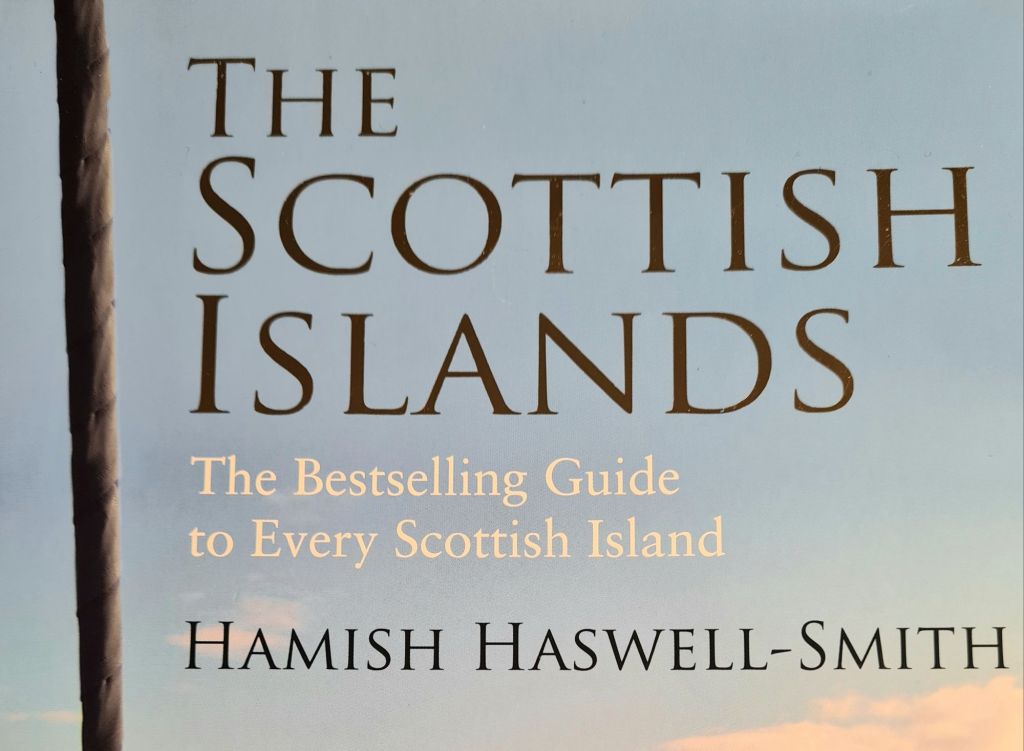
The days are longer, the pilot books have been taken off the shelf, and it’s time to think of this year’s cruise. As a first step in planning, there is nothing better to browse than Hamish Haswell-Smith’s Scottish Islands*.
Haswell-Smith has visited and written about the geology, people and history of every Scottish island, 169 in total by his definition.
The book includes brief mentions of safe anchorages, though not with the essential details of a pilot book or chart. His mission mirrors and complements that of Bob Bradfield, with his personally surveyed Antares Charts of 755 Scottish anchorages.
Haswell-Smith is an excellent preparation ahead of reading up the practical details with our copies of the Clyde Cruising Club pilot books.
With five seasons sailing in Scotland so far, we still have many island omissions, of which the most glaring is the long chain of the Outer Hebrides. We’ve called there only once, mooring for several days a few years ago in the marina at Stornoway on Lewis, where bad weather gave us time to explore by bus before we left for Orkney.
The sensible advice given at the Cruising Association’s excellent Celtic Day meeting in January was that firm plans are a bad idea, given the unpredictability of weather. We’ll decide where to go when we are on board, forecast by forecast, and of course tide by tide.
However, in the right weather, the Outer Hebrides from Mingulay and Barra up to North Uist are where we’d most like to cruise, so that’s what we are reading about at the moment. A secondary objective is to visit the west coast of Skye.
A gleam in the eyes if we are fortunate enough to have a good weather window is St Kilda, 40 miles west of the Outer Hebrides.
A much less ambitious subsidiary plan is to visit Canna any day of the week from Wednesday through to Monday: when we arrived last year on a Tuesday we discovered that was the closing day of the much-praised cafe-restaurant.
We have an extra consideration when planning, with neither co-owner in the first flush of youth: creaky joints.
I enjoy the peace of being at anchor. At the seminar I detected a slightly negative view, which I used to share, of those who seek out marinas, pontoons and official moorings.
However, we do not have an electric windlass, which is quite hard and expensive to fit on an old cruiser racer design. The arm-powered anchor winch is the best we can do. It makes sense not to push our luck and our joints too hard. While anchoring is always an option, buoys and pontoons will also be welcome when we find them.
We left Tobermory on a grey day, with wind blowing from dead ahead along the Sound of Mull and rain clouds chasing each other across the sky. It was a wet and blowy last 25 miles to our destination, the island of Kerrera on Oban Bay, where we’ve rented a mooring for a year.
After watching the European Cup final we stayed, in a not particularly cheerful mood, on the harbourmaster’s pontoon at Kyle of Lochalsh, just across from Skye. Next morning there was some cleaning to do, because Loch Ewe mud from the chain and anchor had left sticky traces on the deck.
Spring Fever was anchored for two nights in Camas Glas, a little bay with landing steps for visitors to Inverewe Gardens. It’s an astonishing place, with many plants that if you didn’t see them, you’d never believe would thrive in the far north-west of Scotland. Photos are the best way to tell this story.Continue reading “Inverewe Gardens”
We’ve done our main delivery trip: after passing Cape Wrath, Spring Fever is now cruising among the lochs and islands of the west of Scotland on the way down to Oban, which will be the boat’s home for a year.
There are hundreds of anchorages and dozens of harbours, with shelter from any given wind direction always in reasonably easy reach. We’re no longer trying to maximise the sea miles every day and are looking instead at a less strenuous 30 to 50 miles a day.
By great good fortune, the wind started coming from the east just as we were planning to head for the famous headland of Cape Wrath away to the West. What could have been a hard-working 90 mile battle into the wind to Cape Wrath and south to Kinlochbervie became an exhilarating down-wind ride.
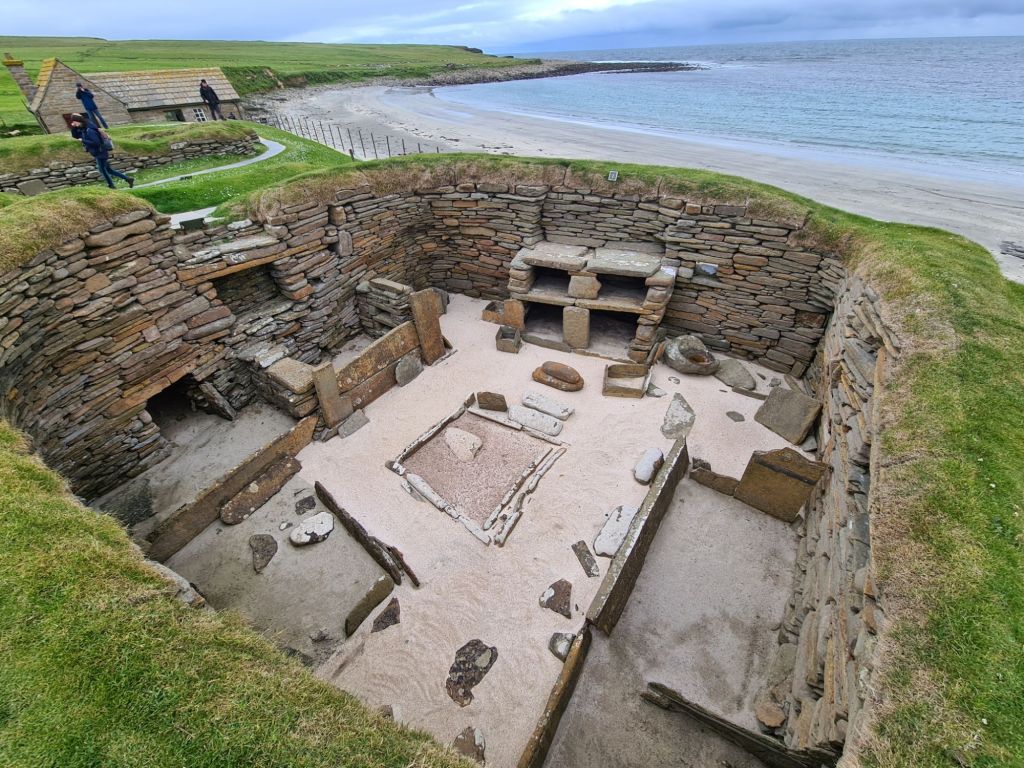
Skara Brae, a fishing and farming village more than 5,000 years old, is a must on any visit to Orkney. The houses have stone furniture, and the winding paths between them were roofed. It can be reached easily from Kirkwall on an hourly local bus service.Continue reading “Kirkwall, Skara Brae and Ness of Brodgar”
The next leg from Wick to Kirkwall in Orkney required careful preparation, because we needed to cross close to the Eastern end of the notorious Pentland Firth.
This has ferocious tides but, more seriously, is peppered with rocks and deep underwater reefs that create enormous turbulence. Ships, even the navy, are wary of the Firth. In some conditions it can be deadly for small craft.
The 75 miles across the Moray Firth from Peterhead to Wick was a reminder of how long the North Sea has been a source of energy wealth. We passed close to a huge deep-water wind farm and near another big one under construction. Close by there was an old oilfield from 1980, called Beatrice, which was exhausted and shut down 7 years ago. Nearby Captain, a small field discovered in 1977, is still operating.
After leaving Whitby, we had more light winds on the Yorkshire and Northumberland coasts as far as Amble in Northumberland. However, we arrived just before the first strong winds of the cruise – too strong, in fact, because they kept us there several days.
Warkworth castle
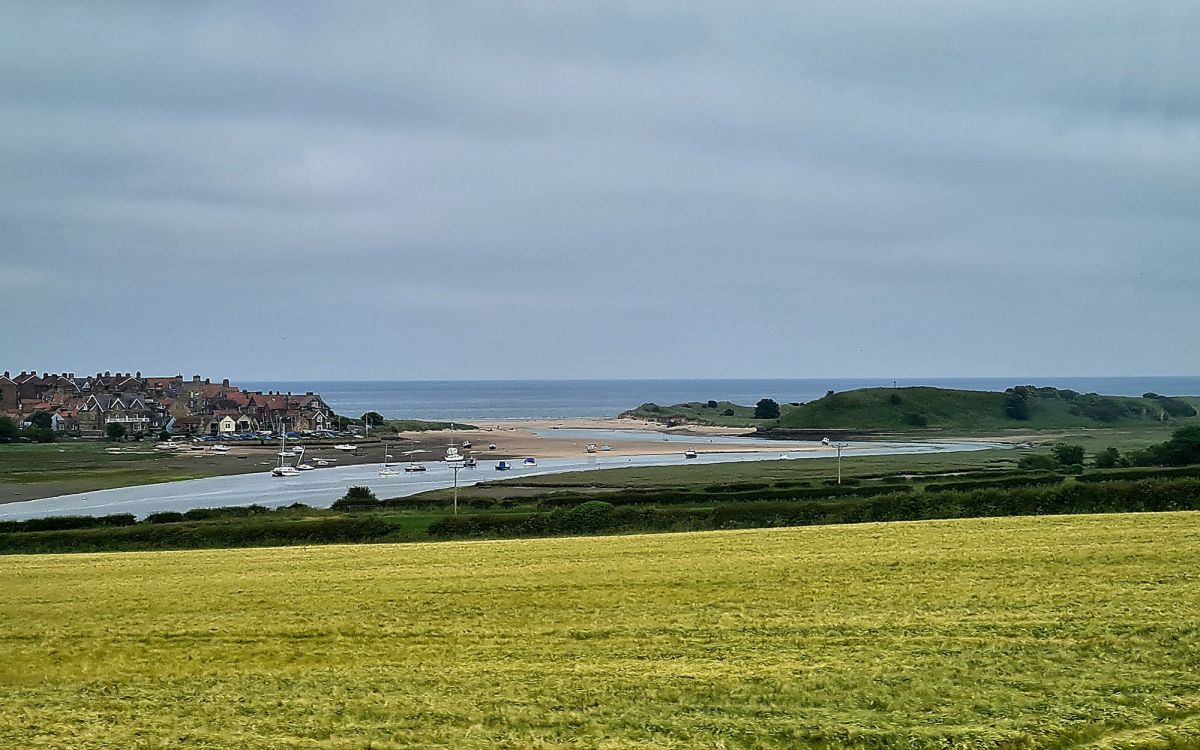
It was no penance, because the countryside is beautiful and we found plenty to do. Warkworth castle is well worth visiting, and there is a lovely coastal path to the seaside village of Alnmouth, with a frequent bus back to Amble.
Tiredness is dangerous at sea, and it creeps up faster as we grow older, so we need to think hard about how best to avoid it. Having good equipment is obviously vital, but top of my list of priorities is not hardware but changing our attitude to the challenges of weather and sea. We must take the lazy option, and stay where we are if it looks too much like hard work out there.
And following up my last post, here’s what we’ve been thinking about for next year’s cruise: a third round-the-British-Isles voyage, at an even more leisurely pace than before, giving time to explore places we missed and revisit some of the most memorable.
Just realised with a bit of a shock that at the weekend I will be the same age as Spring Fever’s last proprietor when he gave up sailing because he was getting on a bit, and sold the boat to us.









 tide by tide