How to avoid a May heatwave

While the south sweltered in May, we went sailing in the Hebrides, where it was so cold and wet most of the time that we wore full winter thermals. That summary doesn’t do our mini-cruise justice, though, because we had some good sailing to interesting places.

We started with a vague idea of trying for the third time to get to St Kilda, 45 miles out in the Atlantic. So we planned to go to the Outer Hebrides in the hope that a weather window would emerge later in our fortnight on board, when the warm high pressure over the south of the UK moved north. In the event, it pushed a weak ridge north for the briefest of spells, then retreated again.
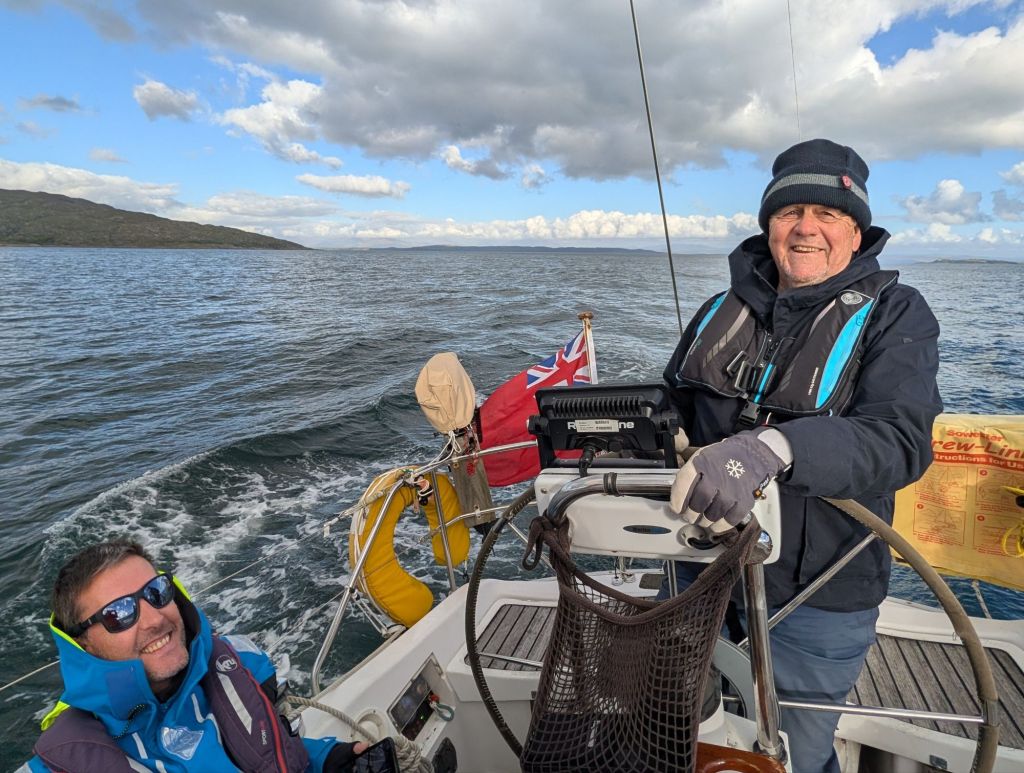
The sun came out for a while in the Sound of Mull, but lots of warm clothes were still needed.

Since it was the first cruise of the season, we drove the 500 miles to Oban, instead of taking the train, and loaded the little ferry to Kerrera with a pile of boat gear and clothes. We then spent the first couple of days fitting out Spring Fever in between the showers, before heading up the Sound of Mull in alternating sun and rain for a brief stop at Tobermory.

We were beating and then motor-sailing into a northwesterly headwind whose direction bore little relation to the southwesterly everywhere else. Sometimes the wind blows one way at the south of the sound and the opposite way at the north, as it bends round the hills.

After a night on a buoy at Tobermory we headed for Canna, the most attractive of the Small Isles, just west of Skye, on a murky morning with an initially strong southwesterly Force 5 to 6 on the beam, giving us a good turn of speed.
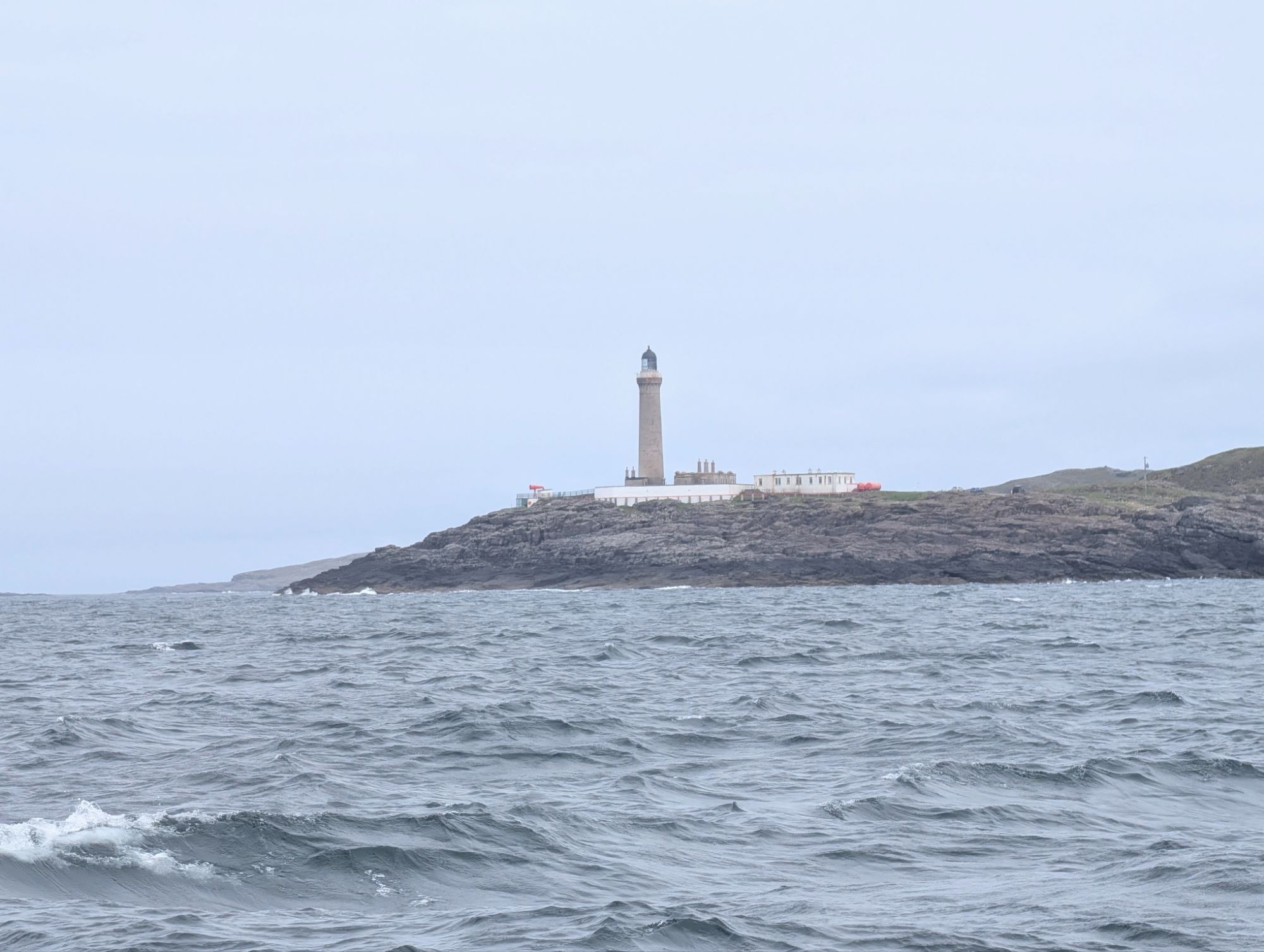
Ardnamurchan lighthouse on the way to Canna

As at Tobermory, we did not fancy the idea of inflating the dinghy in the rain, so we spent another night on a buoy, which sadly meant spurning the delights of the Canna Cafe’s sea-weed rich food. (Their recipe book is full of information about how to gather and cook different types of seaweed).

Next morning we left in a murky southerly Force 6 with gusts of 7 at times, with visibility down to less than half a mile, and headed north for Carbost in Loch Harport, Skye, home of the Talisker Distillery. There seemed no point in working too hard when a reefed Genoa alone got us going at 6 to 7 knots, so we did not bother raising the main.
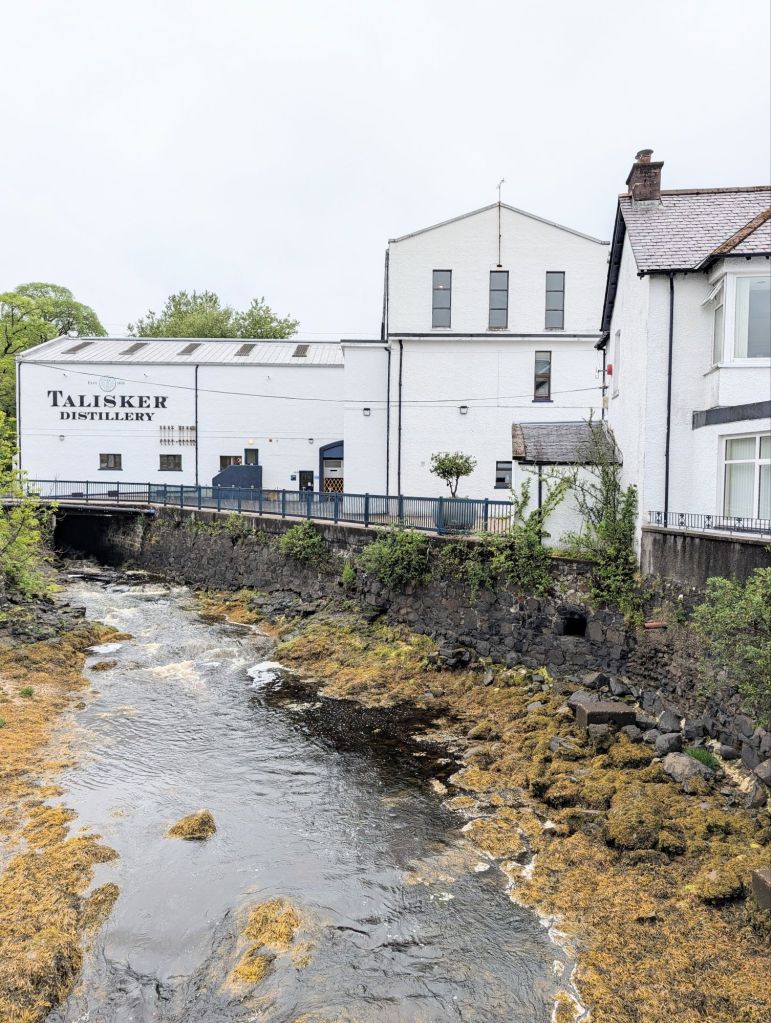
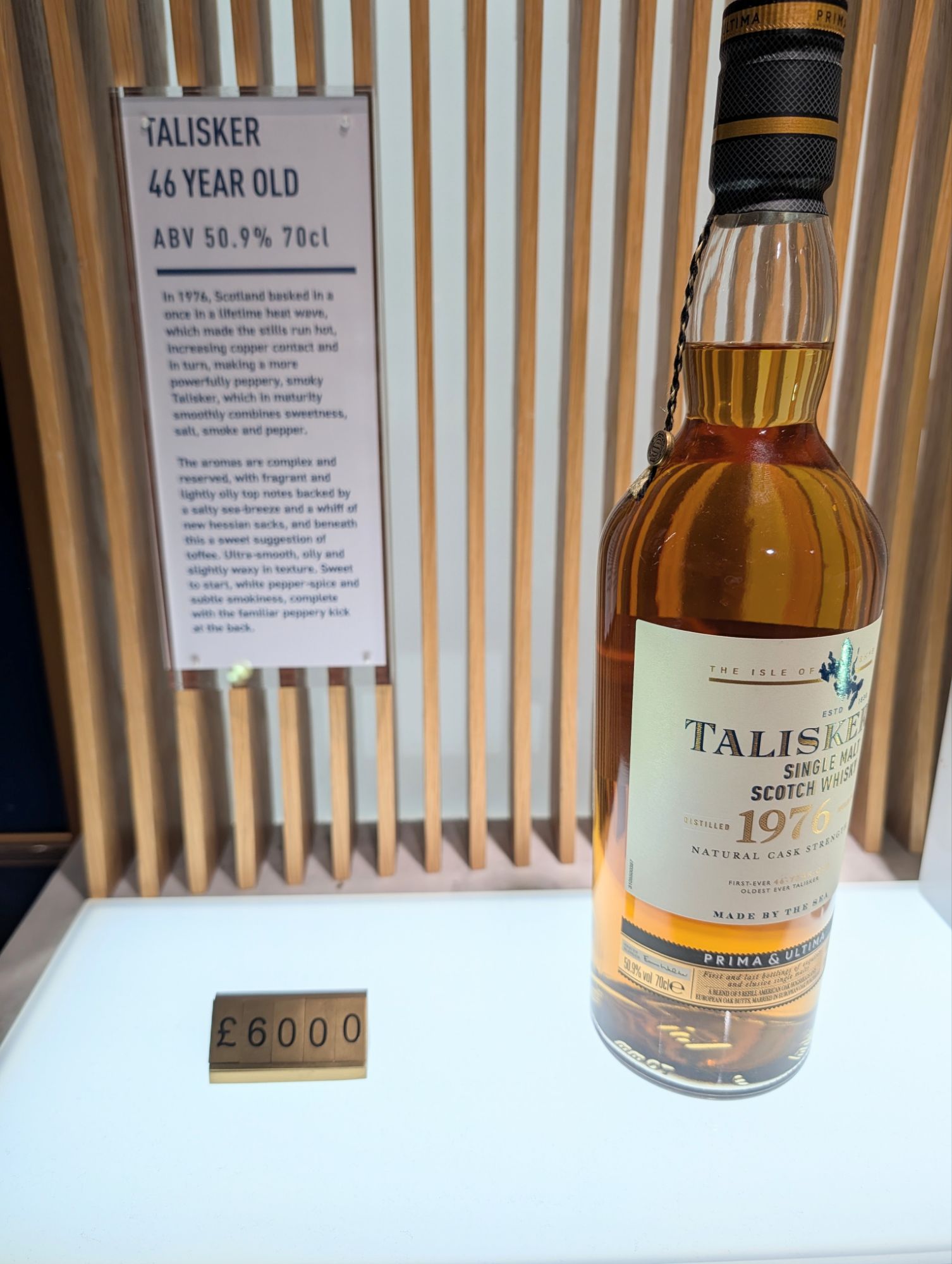
Talisker Distillery, Carbost
A pricey malt

Carbost has a long pontoon with finger pontoons attached. Facilities on them are non-existent, with no pontoon lights, water or electricity. There are showers in the village but they were out of order. That all sounds bleak, but the local volunteers who manage the pontoons are very helpful.
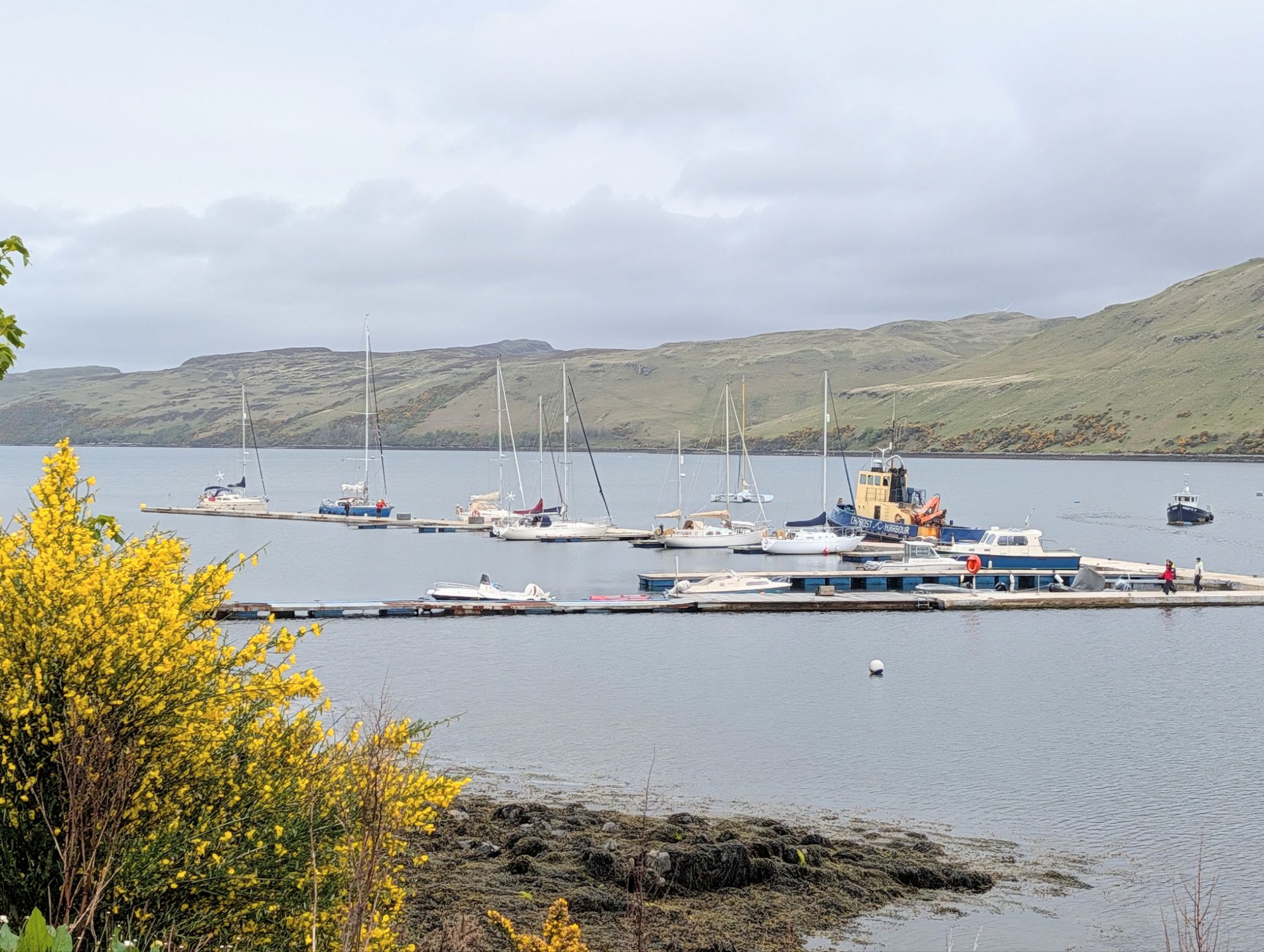
Pontoons at Carbost

The village has a nice old fashioned pub, which we discovered over dinner had rather average food. During the day, the Talisker visitor centre was packed with tourists from all round the world; it sells Scotch from £46 a bottle up to £6,000.
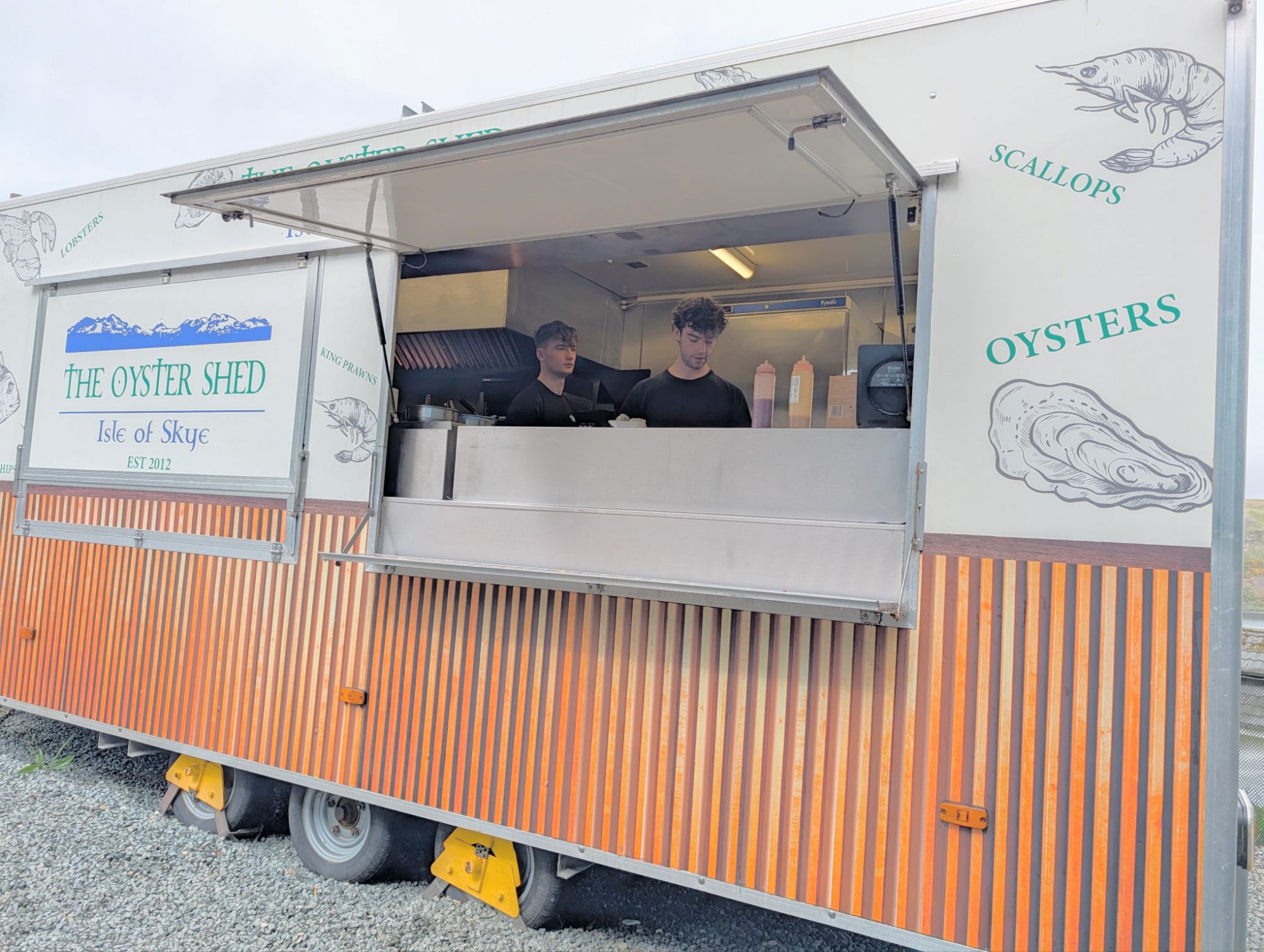
The Oyster Shed cooking and serving van. The big main shed where shellfish is prepared and sold is next to it.

There’s also an expensive restaurant run by the distillery, which was booked several days ahead, and the Oyster Shed 10 minutes walk up the hill, which suited us a lot better. The owner used to run an oyster farm that was wiped out by disease, and switched successfully to retail. The Shed sells raw or cooked oysters, soft shell crab, scallops with garlic, lobsters, langoustines, prawns and kippers. We went two days running for a delicious lunch, sitting at benches.
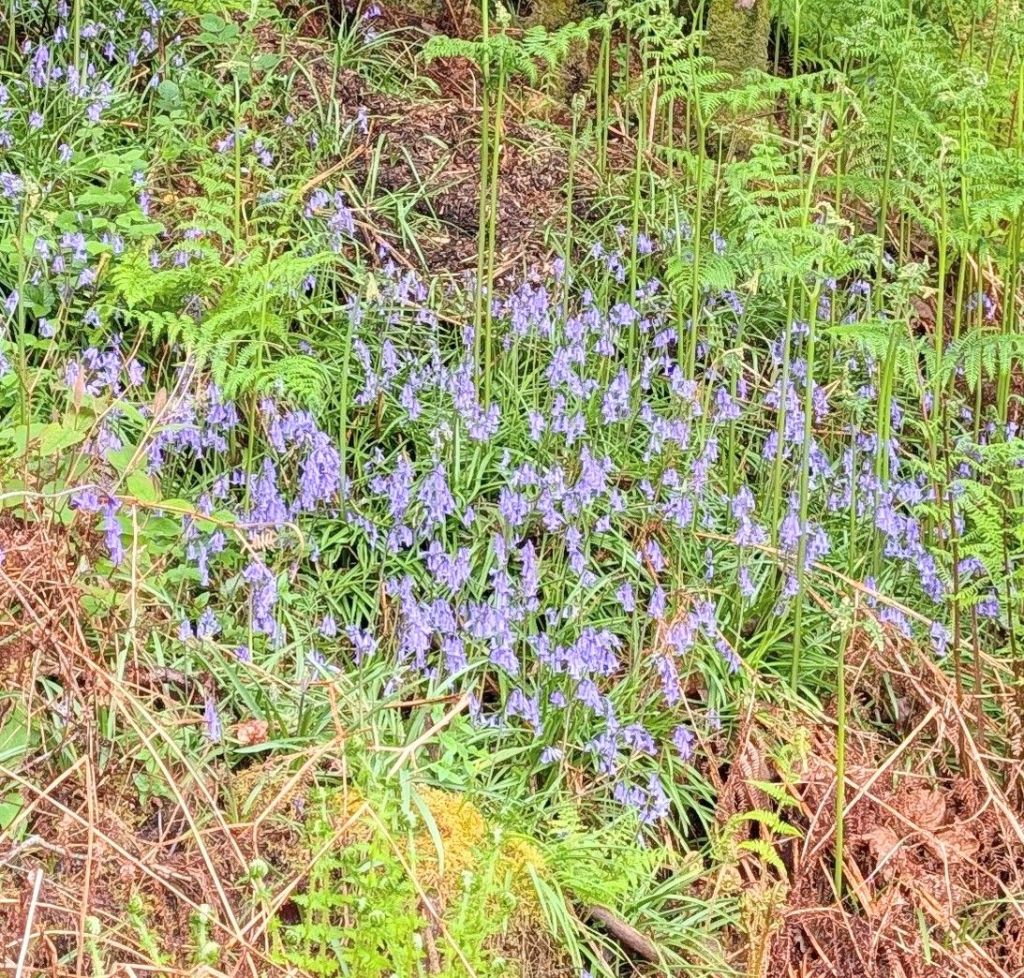
There were bluebells everywhere in the lanes near Carbost, and we also noticed that wherever we stopped in the Hebrides there was always a persistent cuckoo near our mooring.

Finally, on a cold, damp and windy Sunday morning, we decided to wait in Carbost no longer, because the brief forecast window of good weather for St Kilda had shrunk, and was now only from Tuesday to Thursday. Monday’s weather forecast looked worse than Sunday’s, so there was no point in waiting. We needed to be in Lochmaddy on North Uist to be in easy reach of the Sound of Harris, the passage through to the Atlantic.

The south-westerly wind would be funnelling straight into the Loch Harport entrance as we left, so we had no illusions about what it would be like – banging into short steep waves, hit by strong gusts off the cliffs, of which the worst were registering Force 7 apparent over the boat. That’s a true Force 6 plus our 6 to 7 knots speed to windward. As an old but fast cruiser-racer, Spring Fever leaps into action with that sort of weather, double reefed on main and genoa.

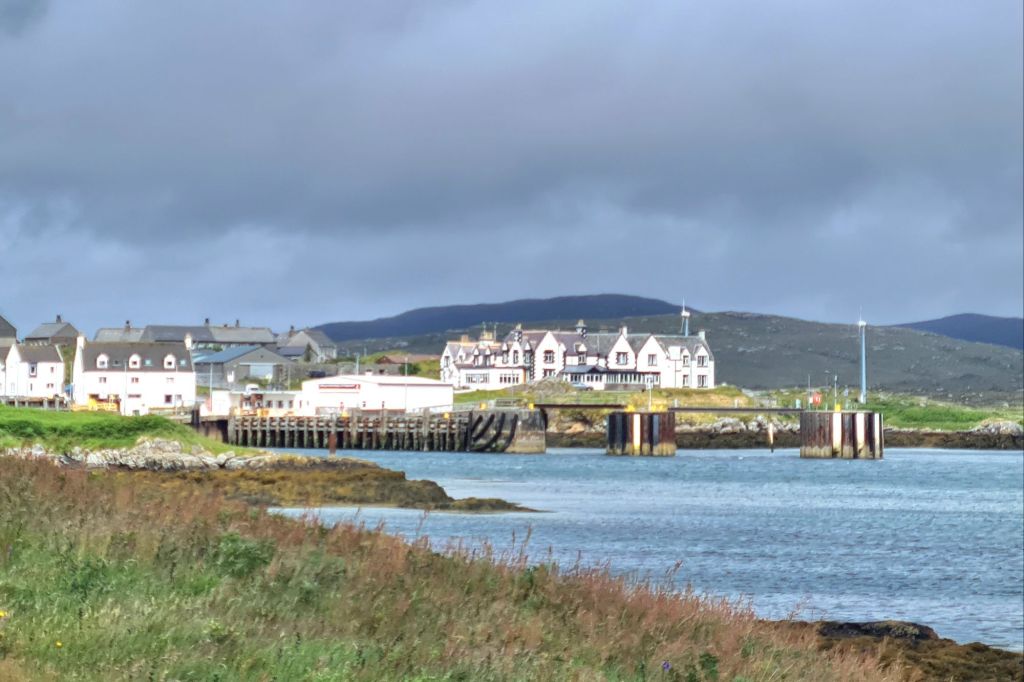
Once we were out, and well clear of the entrance, we were away from the funneling effect of the cliffs, and we settled down for the rest of the lively 45 miles to Lochmaddy. It was another murky day with poor visibility, and we arrived at a time of sudden violent gusts. We moored on a pontoon next to the ferry terminal.
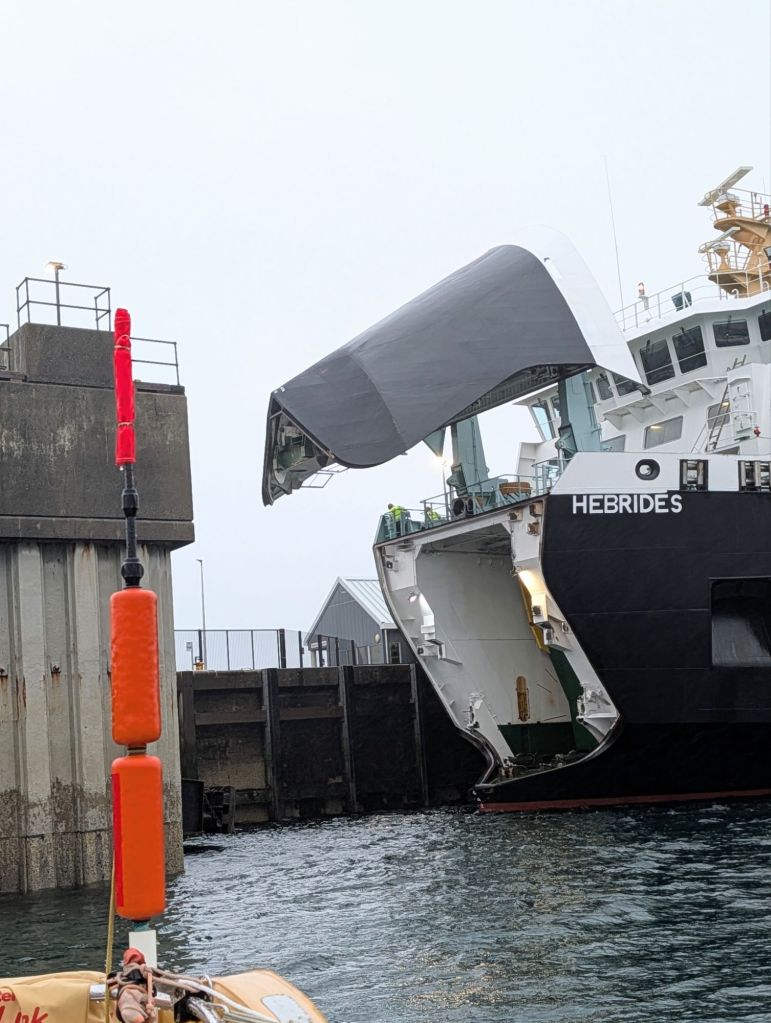
The ferry from Uig on Skye arriving behind us.

Lochmaddy in the wind and rain is a touch bleak, but there is some grand, sweeping scenery when you can see it. The village has a marina with shower, lavatory and washing machines, a shop which also has a diesel pump where cans may be filled for boats, and a big, friendly hotel where we had dinner in the bar.

There we studied the updated forecast: that nice weather window was shrinking again. It now lasted from Tuesday morning to the middle of Thursday, when it began to break down into a rainy south-westerly 5 to 7 which would blow all Friday.

St Kilda’s harbour is a half circle bay, fully exposed from east through south to southwest to wind, waves and long distance Atlantic swells. If swells are too big, landing a dinghy could be difficult, even if the local wind-driven waves are modest. The forecast westerly swell would refract round into the bay, with 2.4 metres predicted for Tuesday, dropping only slowly the next day. The wind forecast also turned easterly after a while, far from ideal for getting back again. With the swell forecast and the continual shortening of the weather window we decided not to try, and instead to use the next couple of days of better weather to visit Barra, the southernmost of the Outer Hebrides.
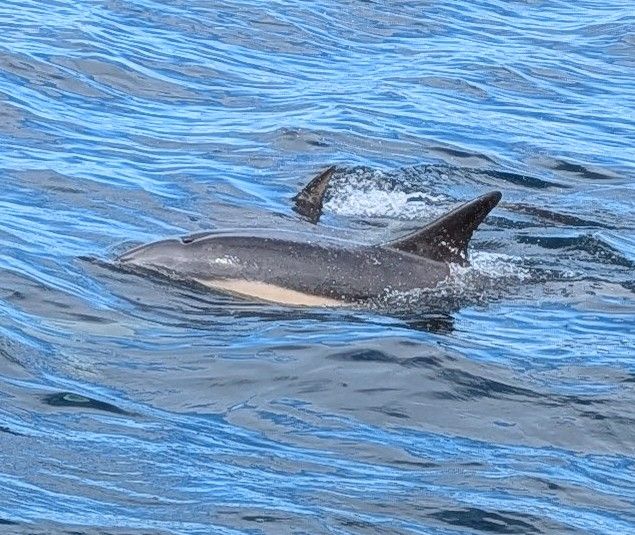
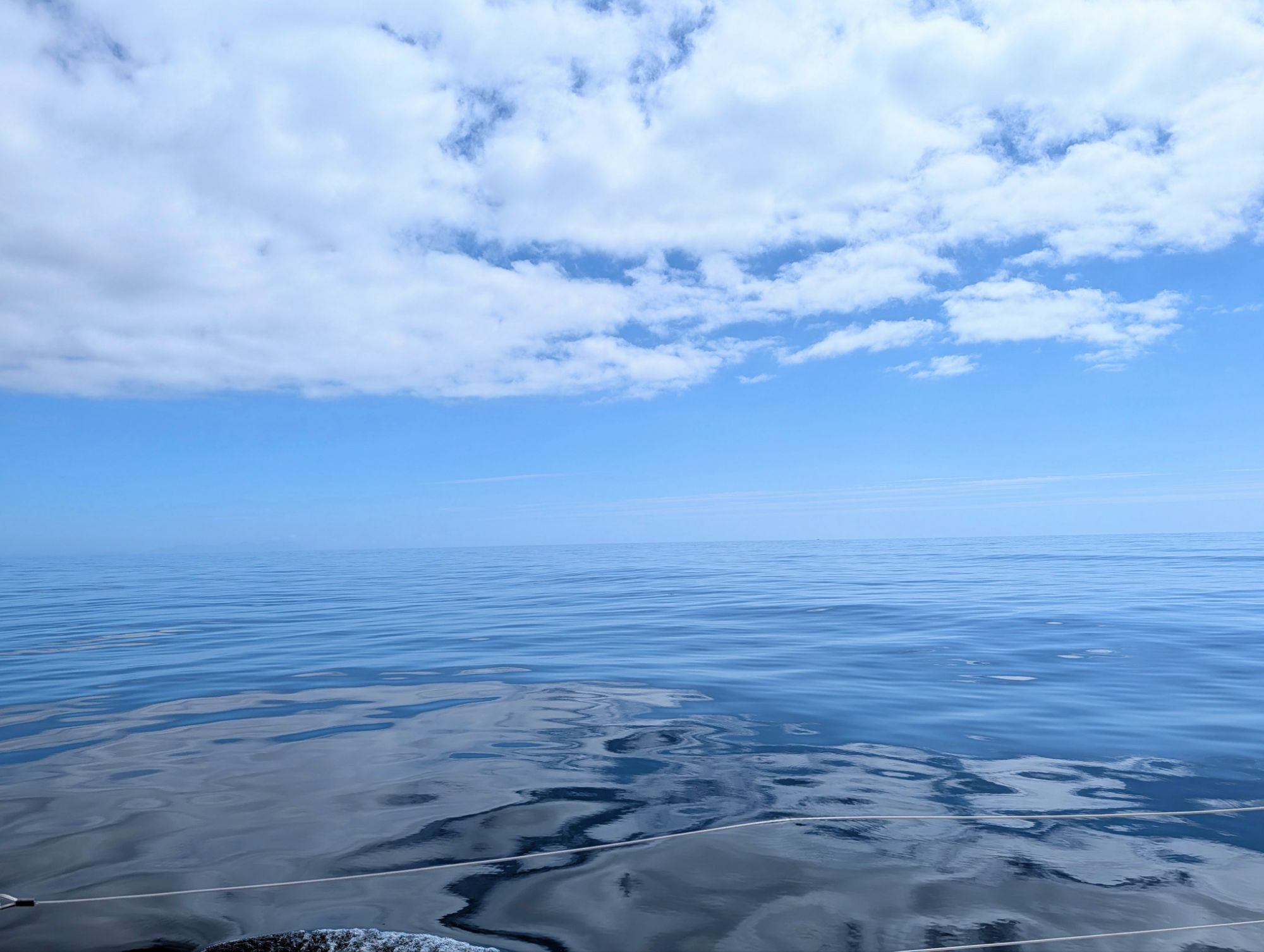
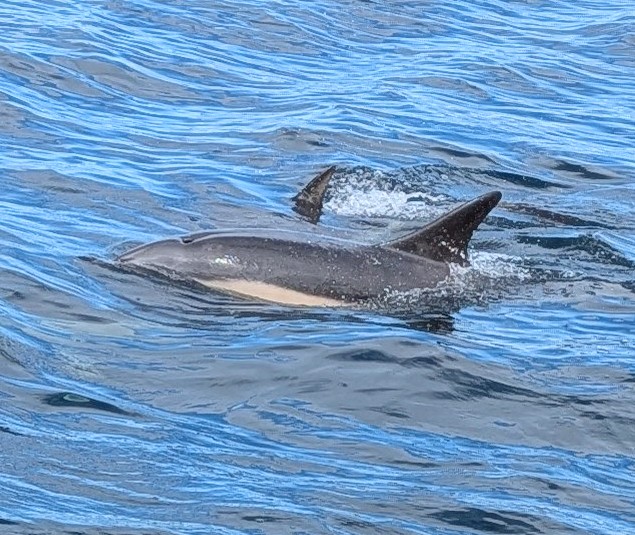
There were many dolphins in pods of up to half a dozen on the way down to Barra
Blue, but cold

On a sunny morning with cold but light winds – the first good weather we had had – we motor-sailed 45 miles down the coast and moored on a pontoon in the marina at Castle Bay, the main settlement on the island. (Pontoons, not anchoring, were out preference this time, since Tony had a new knee and I had a new hip, both installed over the winter).
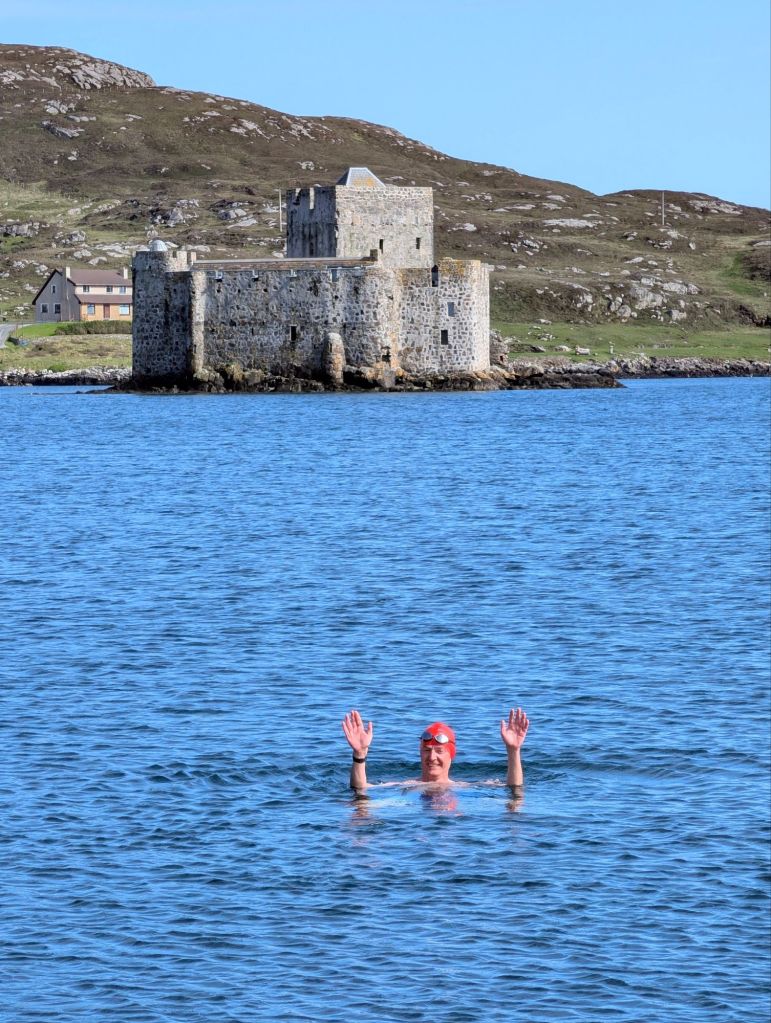
Michael goes for a swim in front of the castle after which the bay is named

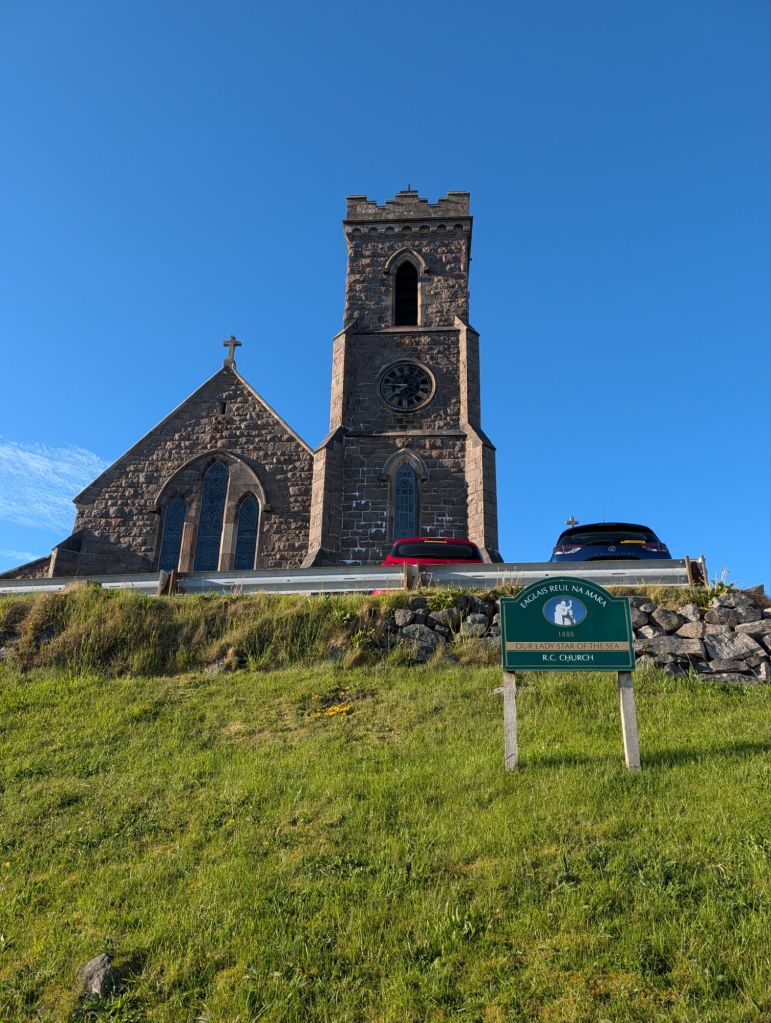
The Reformation did not reach Barra, which is still a Roman Catholic stronghold with a large Victorian church, built to replace the old one at a time when Castle Bay was one of the richest and most important herring fishing ports in Britain; the bay is still lined with the foundations of gutting and salting factories.
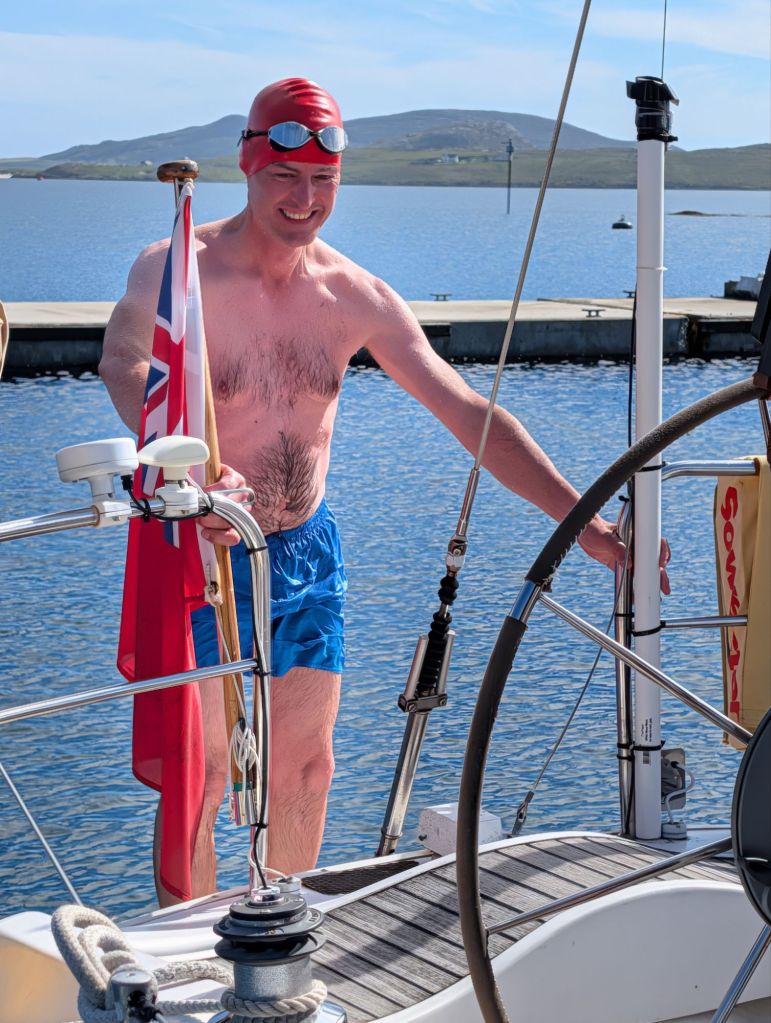
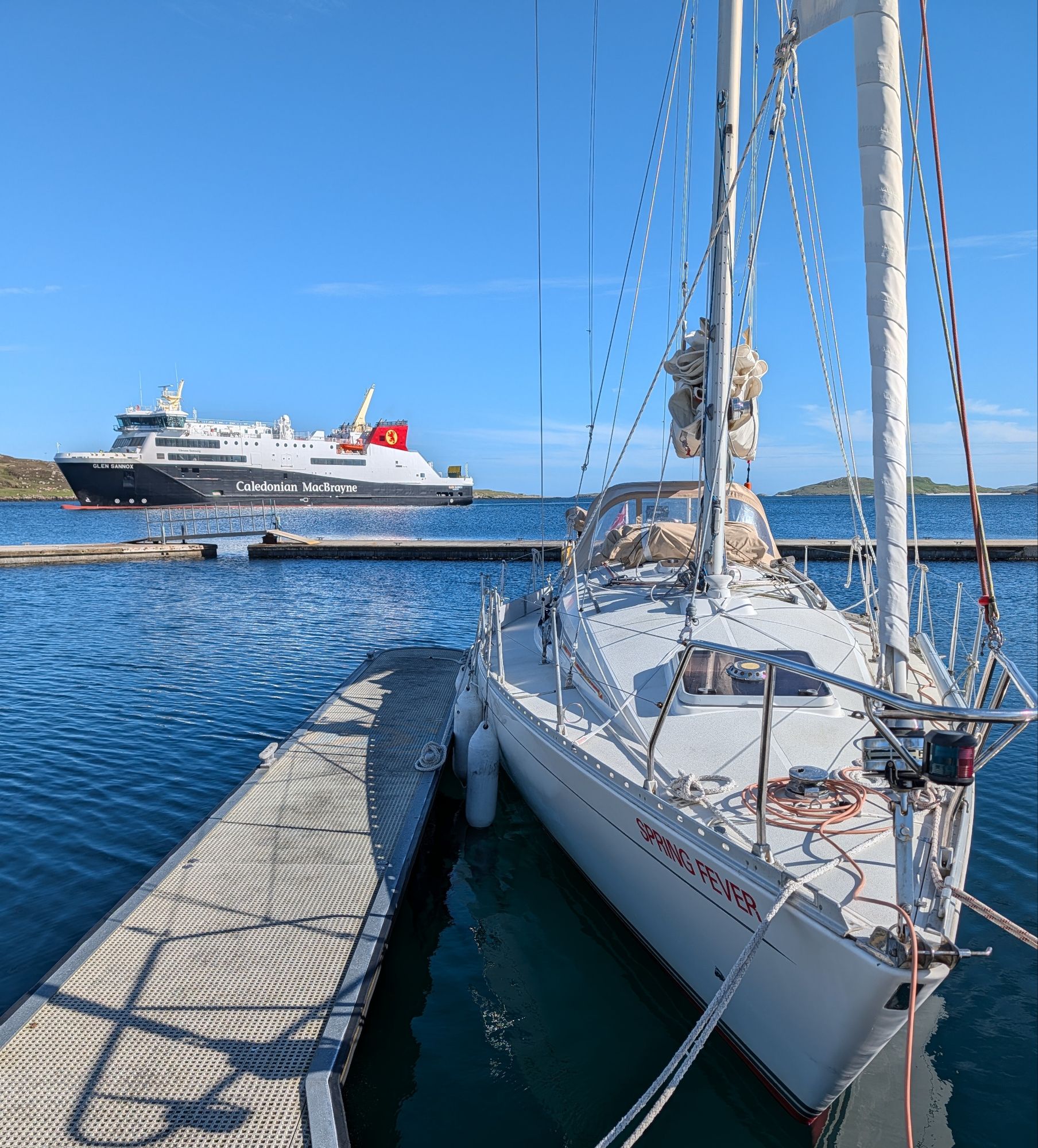
Water 11.6 degrees, according to the boat’s instruments
A recent addition to the Caledonian MacBrayne fleet, the Glen Sannox, arrives from Oban. It was seven years late in construction and the total cost with its sister ship Glen Rosa was around £460 million, compared with a £100 million initial budget. Glen Sannox broke down several times in its first year and needed £3 million of repairs. Islanders are angry with CalMac and its unreliable ferries.
Our Lady of the Sea

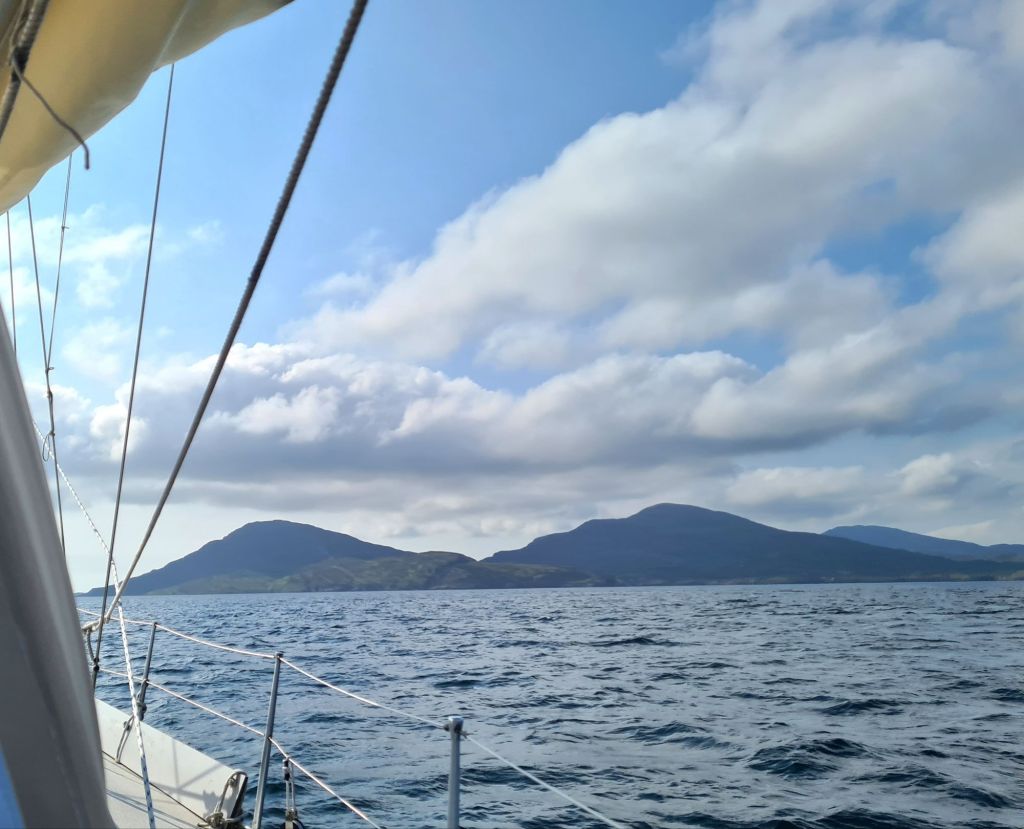
 We left Barra on another bright but cold morning, with light winds, so we motor-sailed much of the way across the Sea of the Hebrides back to Tobermory.  As we entered the sheltered bay in front of the village, the temperature shot up to the low twenties, the sun came out and we were briefly down to shirtsleeves for the first time since we arrived.
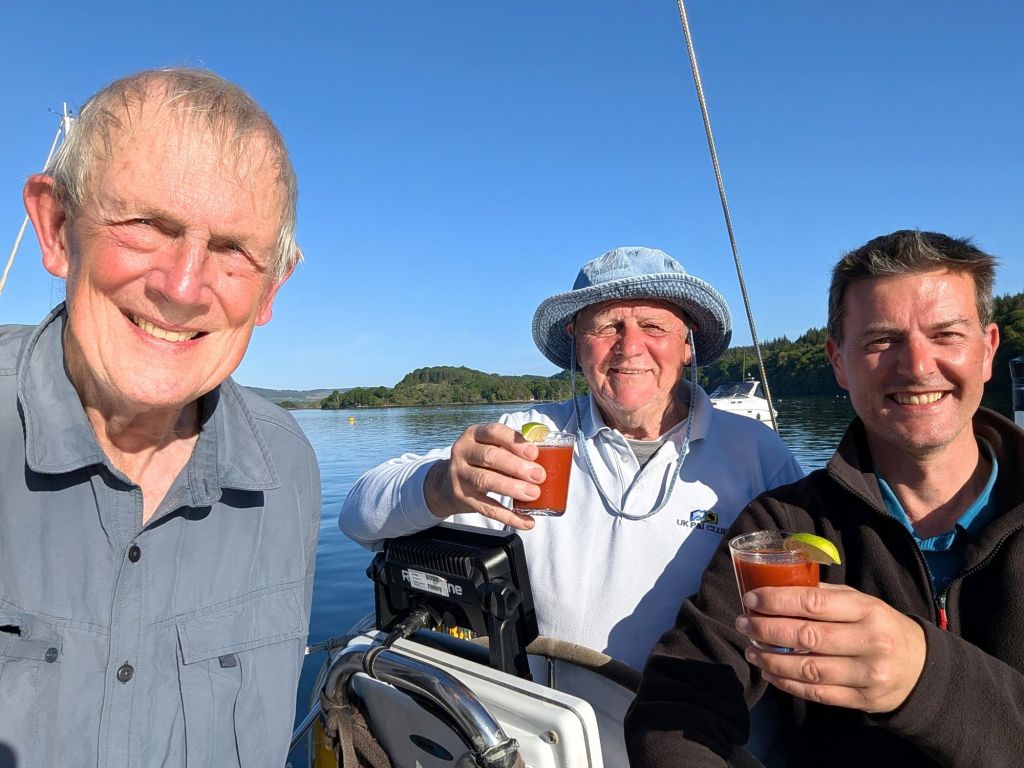
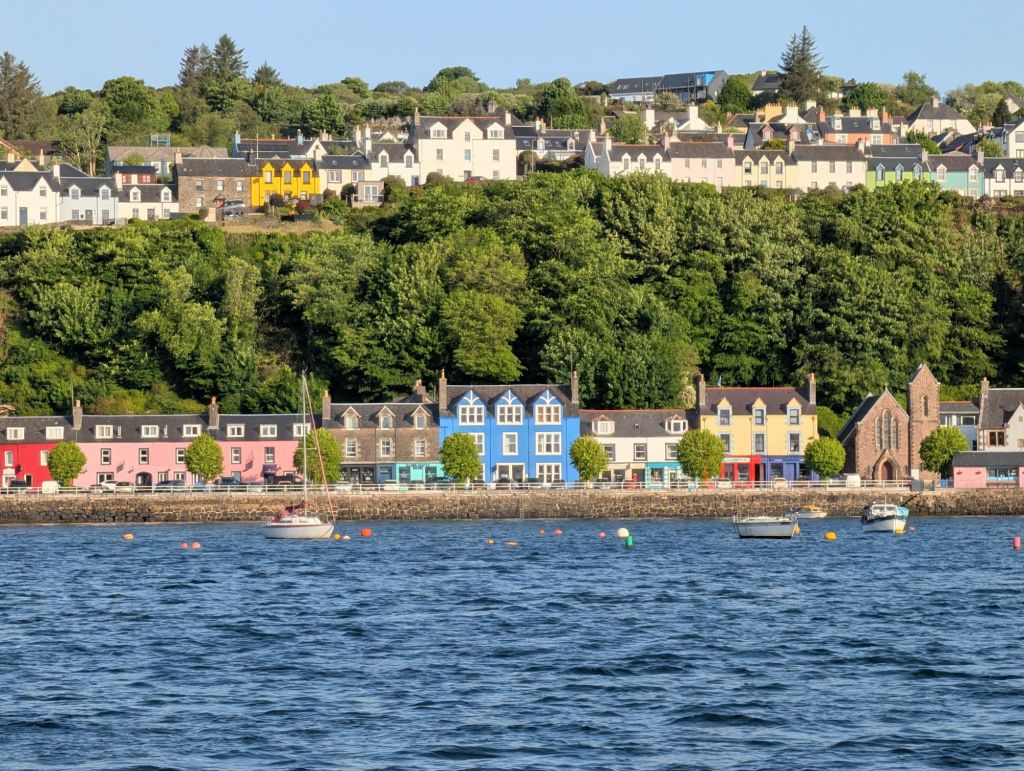
Suddenly it’s summer, for a few all too brief hours
Tobermory next morning in the sun

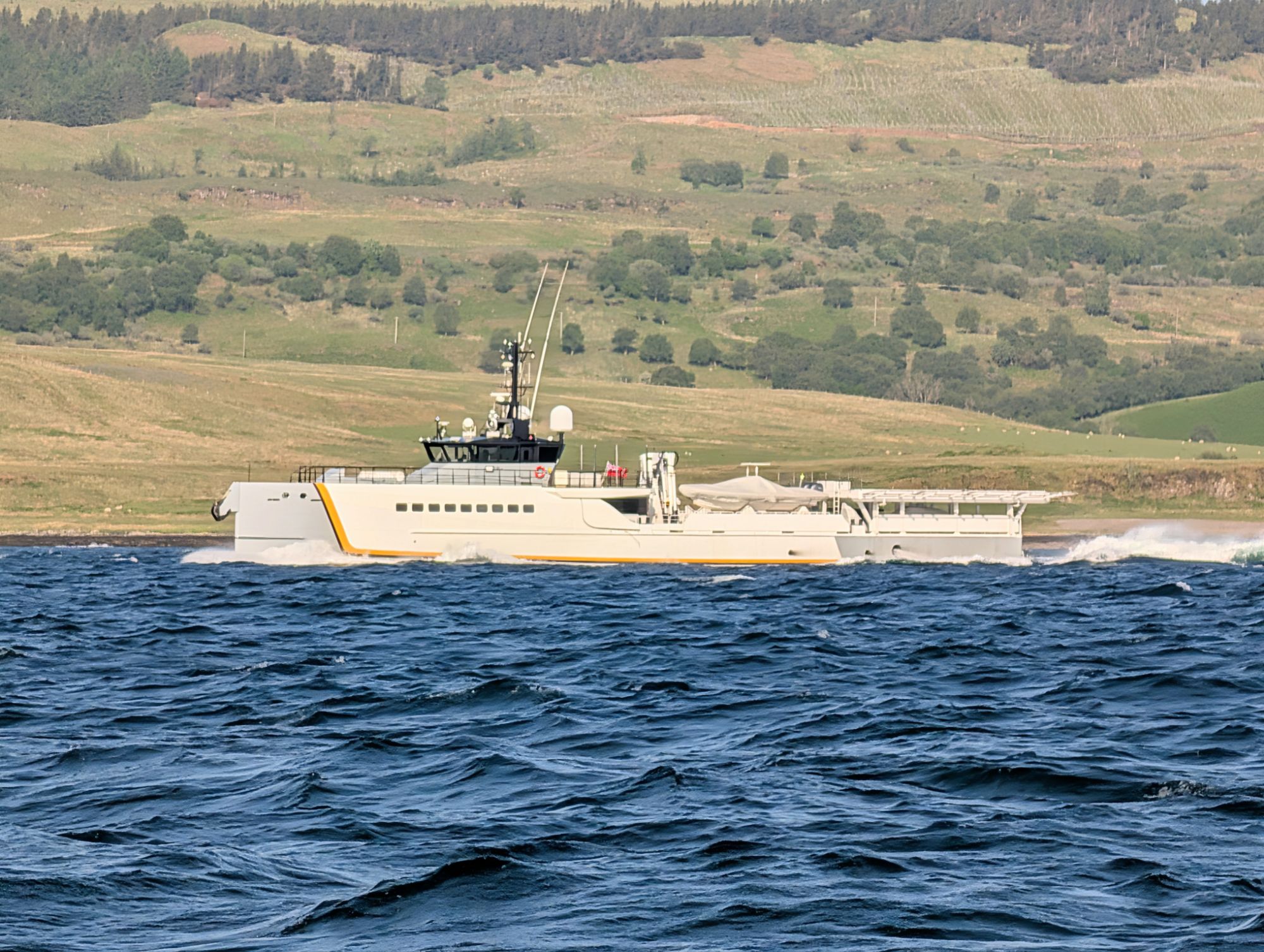
Next day, we headed back down the Sound to Kerrera and Oban. On the way we were passed by two boats which we had seen anchored off Kerrera before we started out the week before: they were Mogambo, a 77 meter super-yacht belonging to Jan Koum, co-founder of WhatsApp, and its 55 meter helicopter tender Power Play. It’s interesting what you can discover through the AIS automatic identification system we have on board.

Koum’s other yacht, Moonrise, is much bigger, at 100 meters, and it has it’s own helicopter tender. The beauty of Scotland is enough to attract the super-rich away from the Med and the Caribbean in spite of the cold, though I guess the air conditioning kept everything at a lovely temperature, so they only had to enjoy the view.
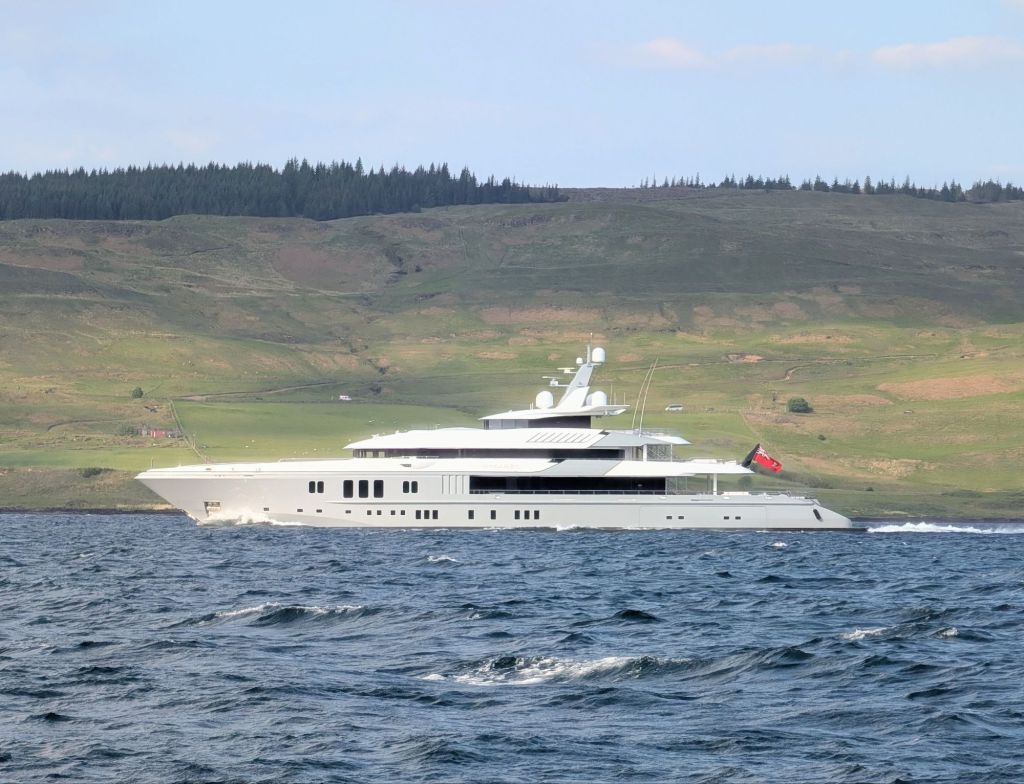
Mogambo
Power Play, the helicopter carrying tender, with its curious paint scheme making it look like two different boats

Back in Kerrera, we found the mainland temperature stilll 8 or 10 degrees higher than in the Outer Hebrides, but with the wind building and heavy rain due soon. Dinner at the Waypoint restaurant was a good way of signing off the fortnight.

LIke most first cruises after layup, a few problems were revealed. The marina will replace the unreliable bow navigation lights with new LEDs, and install a new masthead VHF aerial. The current one is 18 years old and we think it is deteriorating because performance is not as good as it ought to be. When we return in July, Spring Fever should be ready for the 700 miles back to the south coast.
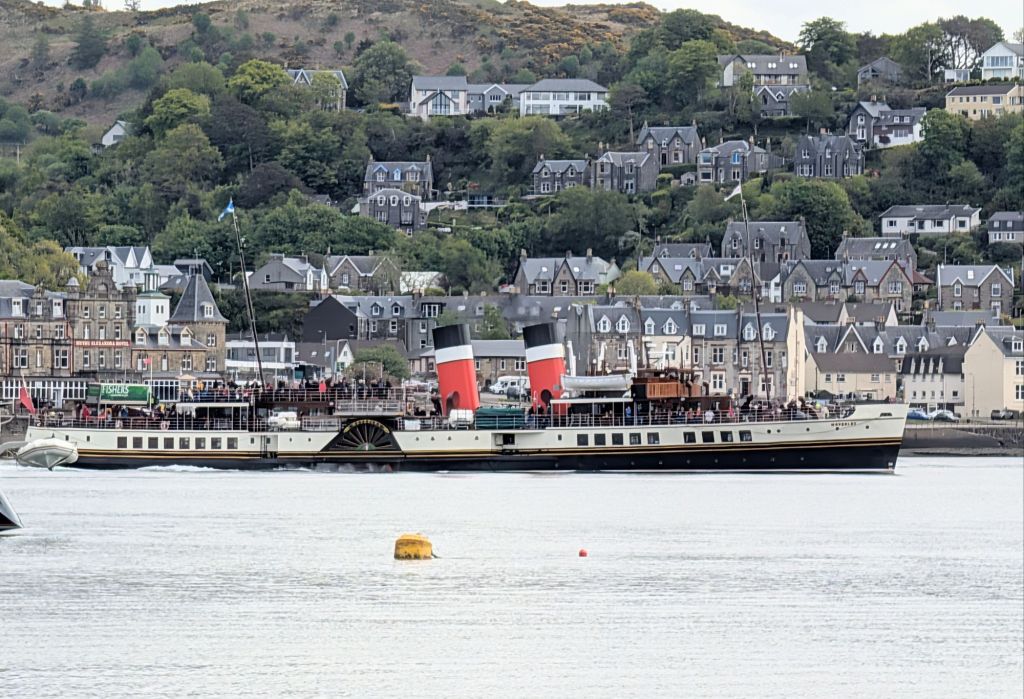
The paddle ship Waverley was visiting Oban on her regular tour of the UK , offering day trips wherever she stops. Waverley will be on the Thames for a few days this summer.

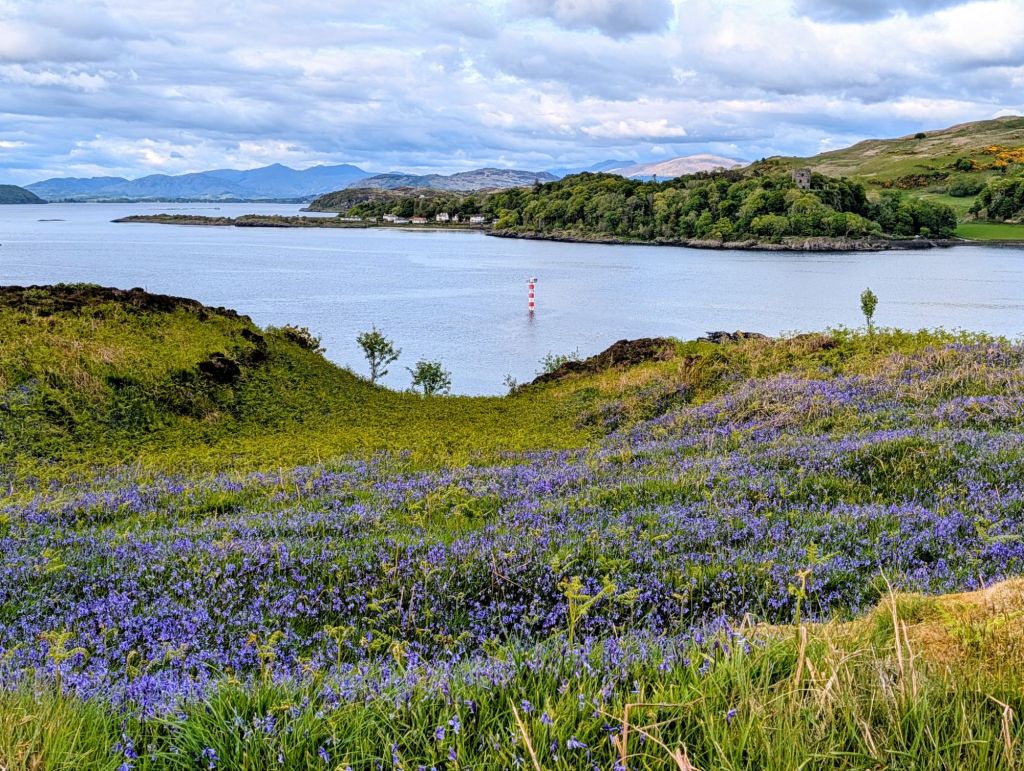
Drifts of bluebells on Kerrera

We were disappointed that we did not get to St Kilda, but the underlying reason is that our recent cruises have been limited by many other commitments to just a couple of weeks, so our chances in any given holiday of catching a long enough weather window to go out in the Atlantic to an exposed anchorage are not that high. A lot of sailors in the Hebrides spend far longer on their cruises.
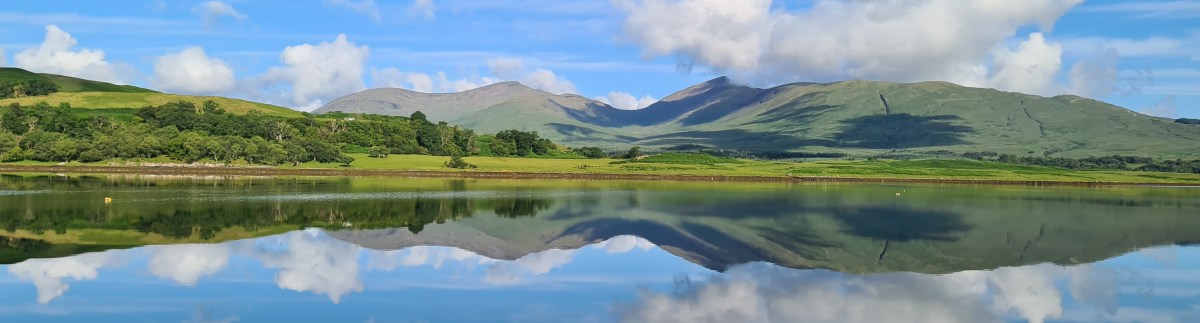
A taste of old Scottish weather in South Uist and Mull

After cruises with perfect weather in  September and May, we were bound to experience the other side of Scotland sooner or later. Rather too much of our 15 days in June was spent hiding from the weather instead of enjoying it.

The first plan was to head for Barra in the Outer Hebrides and work our way up some of the anchorages on the islands as far as Harris and Lewis.

In the Sound of Mull, with the autopilot doing the work

It started well, with two days of fine weather. We went from Kerrera to Tobermory, and left the next day in gentle winds for the 55 miles to Lochboisdale in South Uist, after deciding at the last minute  against Barra. The pilot book says Barra’s Castle Bay is uncomfortable in strong southerlies and south-westerlies, and the (by then) forecast showed that was what we were about to get.

Approaching Lochboisdale

Lochboisdale Harbour is protected. The village has a bakery (fresh bread and cakes) and a hotel with a pleasant, old-fashioned bar and friendly landlord, but that’s about it. The tourist office that used to welcome ferry passengers from Mallaig has closed.

After sitting out a first day of heavy rain and strong winds on the boat and in the pub, the rain eased enough the next day to sightsee using a local bus across South Uist and Benbecula, the neighbouring island joined by a short causeway.

Lochboisdale
…and Lochboisdale harbour

Benbecula has a fascinating landscape: it looks almost as much water as land, with small freshwater lochs dotted all over it, and sea lochs coming right inland.

On the way to the island, you can see the missile launching base and the big military radar and communications sites that are an important part of the South Uist economy.

A wet and windy day on Benbecula

After buying stores in the village of Benbecula we stopped off on the way back at the South Uist Museum, which is well worth a visit: it tells the story of the tough lives of the crofters, including the forced clearances in the 19th century that led many to emigrate. Now much of South Uist is owned communally by the islanders. As in Barra, Roman Catholicism survived the reformation and is still the main tradition on the island.

There’s a museum section about the island’s deep gaelic culture and the rich tradition of story telling and singing that persisted there long enough for it to be studied, collected and preserved.

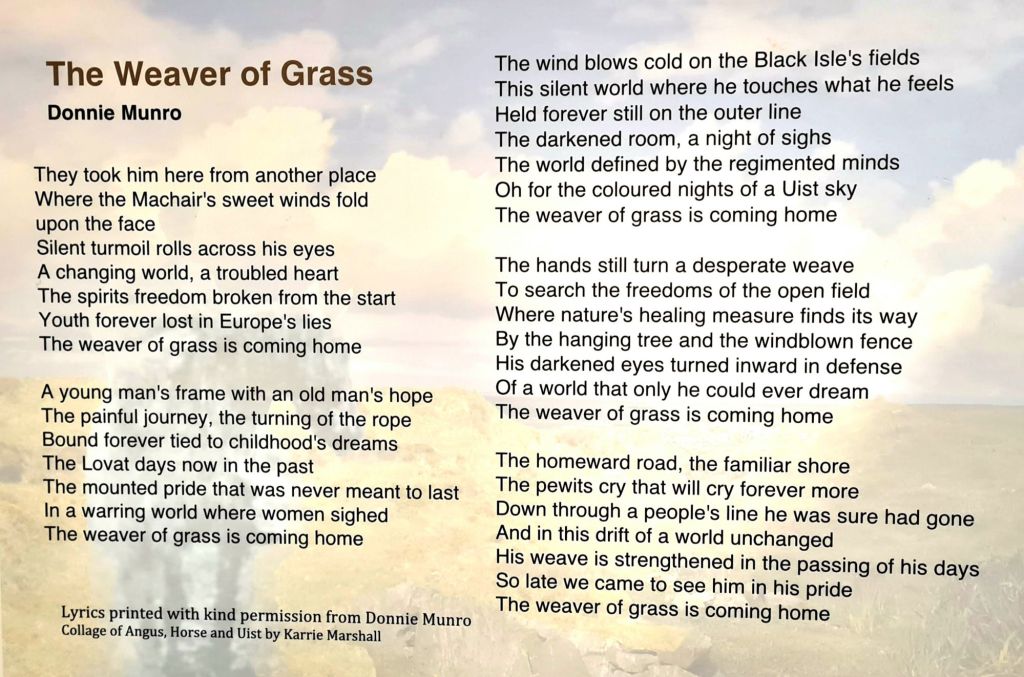
It includes a touching connection with modern Scottish culture in the words of a song by Donnie Munro of the ’90s band Runrig. It’s called The Weaver of Straw, and is about Angus MacPhee, who came back to South Uist so traumatised after serving in the army in WWII  that he never spoke a word for 50 years. His sole pursuit was weaving straw into familiar and fantastic shapes.

Donnie Munro’s song – see next page

After three nights sheltering in the very well protected Lochboisdale marina, we decided to go back to the mainland. It was clear that in two days time another series of depressions was going to pass close to the outer Hebrides so we’d just find ourselves stuck in the next anchorage north.

So we sailed back the 60 miles to Loch Droma na Buidhe (a.k.a. Drumbuie) on the mainland in 9 hours, averaging nearly 7 knots, with the wind on the beam, the fastest point of sailing, with intense small showers scurrying across our course and occasionally catching us. It was much the best sail we’d had all year.

After anchoring for the night in peace and quiet we sailed 5 miles to Tobermory for a pontoon berth. There were strong winds forecast right through till Saturday night, so there we stayed, taking the opportunity to see some of the island and do outstanding repairs and maintenance on the boat.

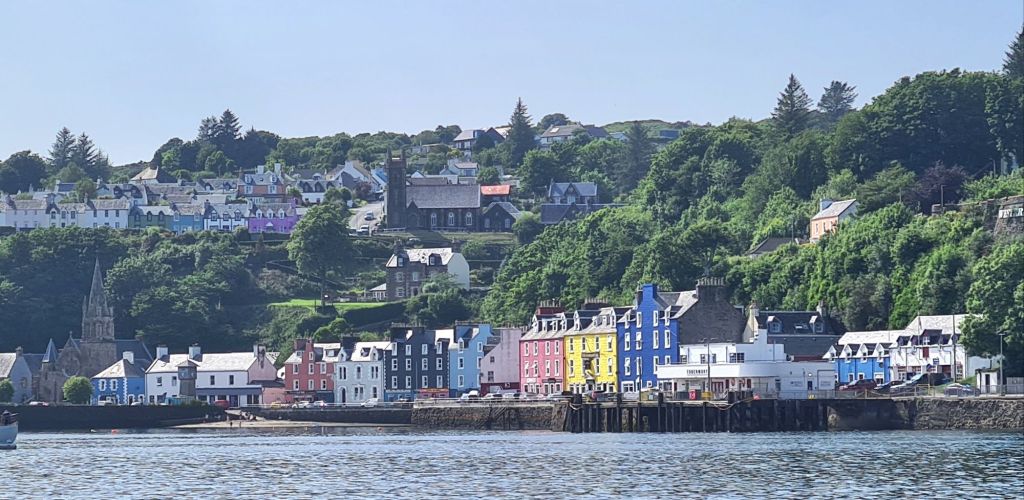
Tobermory
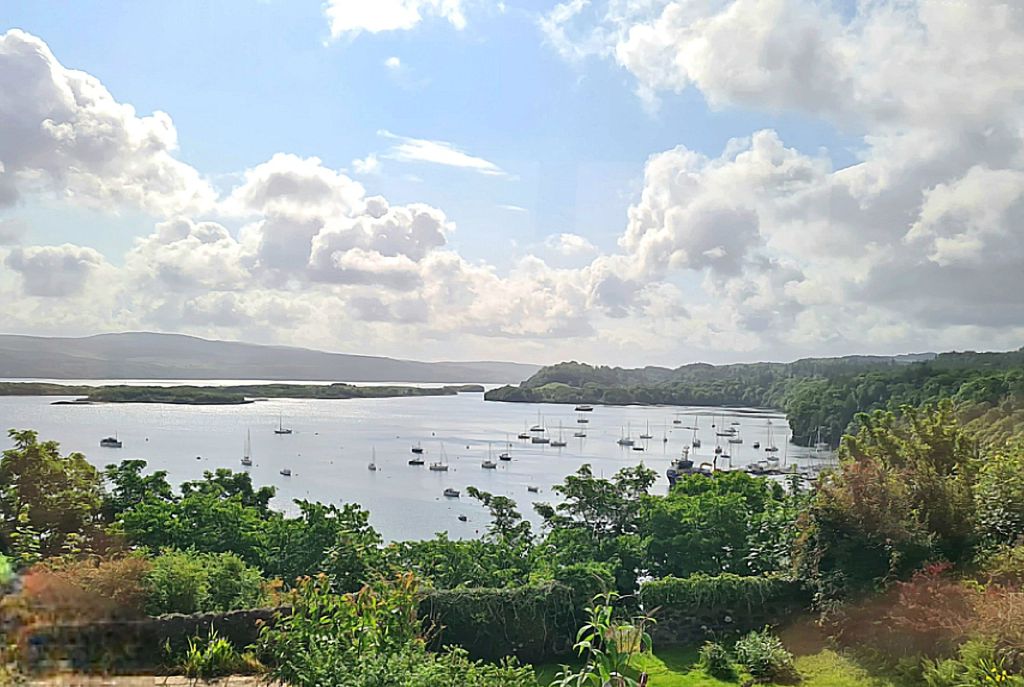
Tobermory Bay from the bus across the island
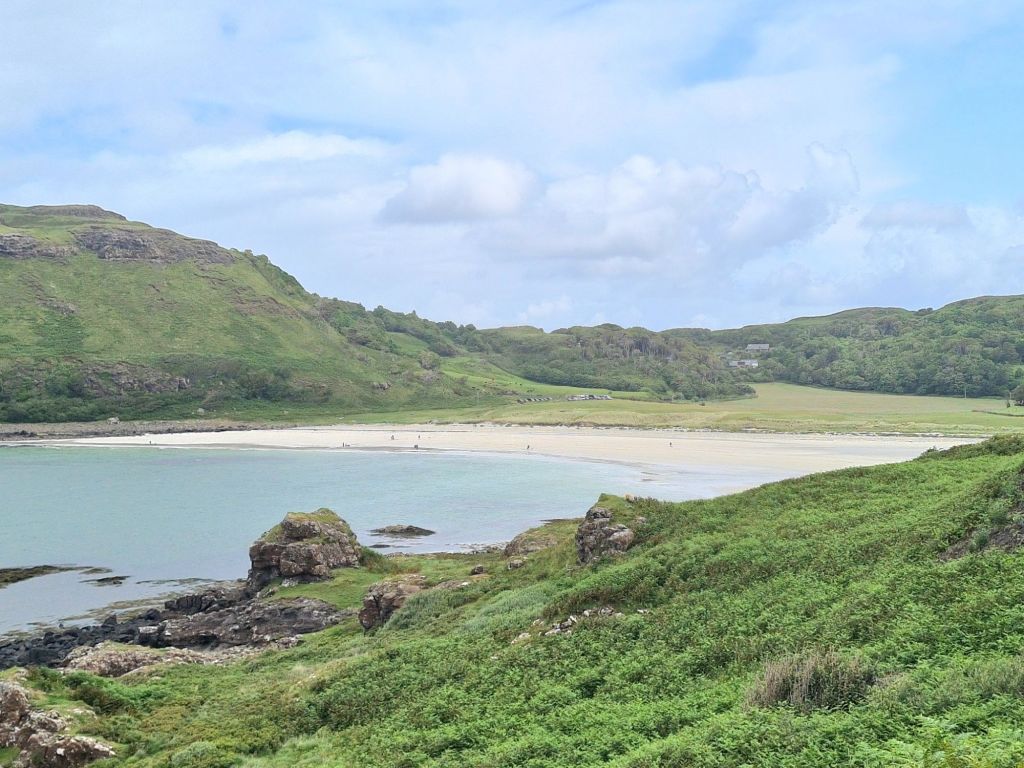
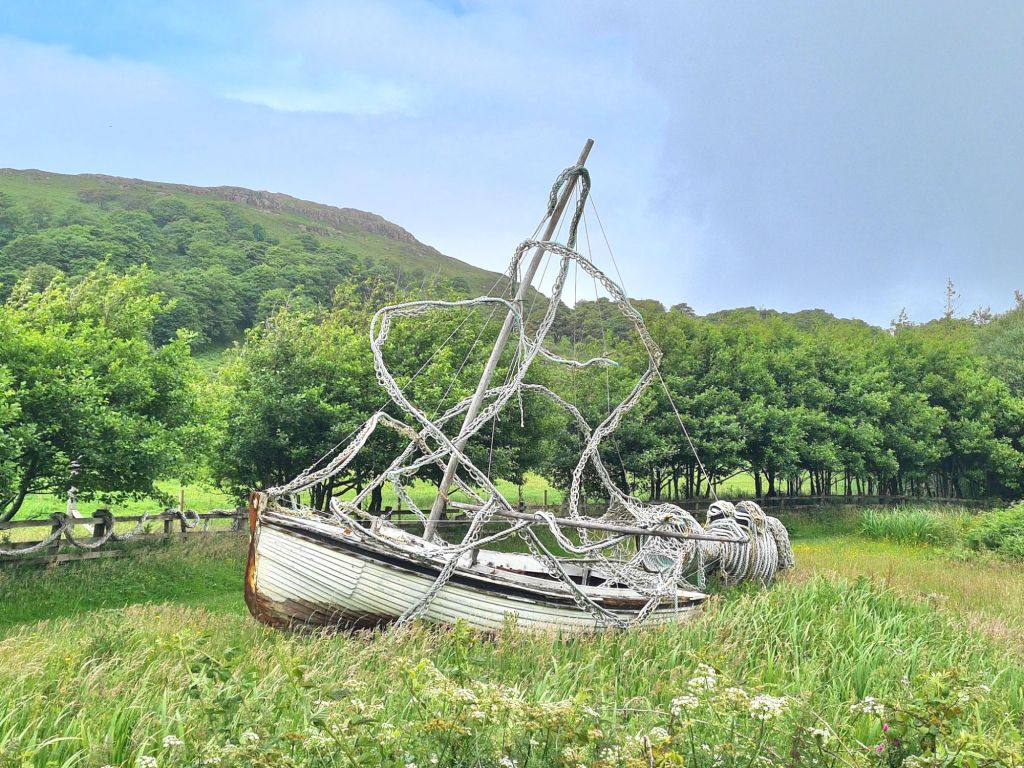
We went by bus to Calgary Bay for a walk. There is an excellent cafe tucked away, and an interesting arts centre with a sculpture trail
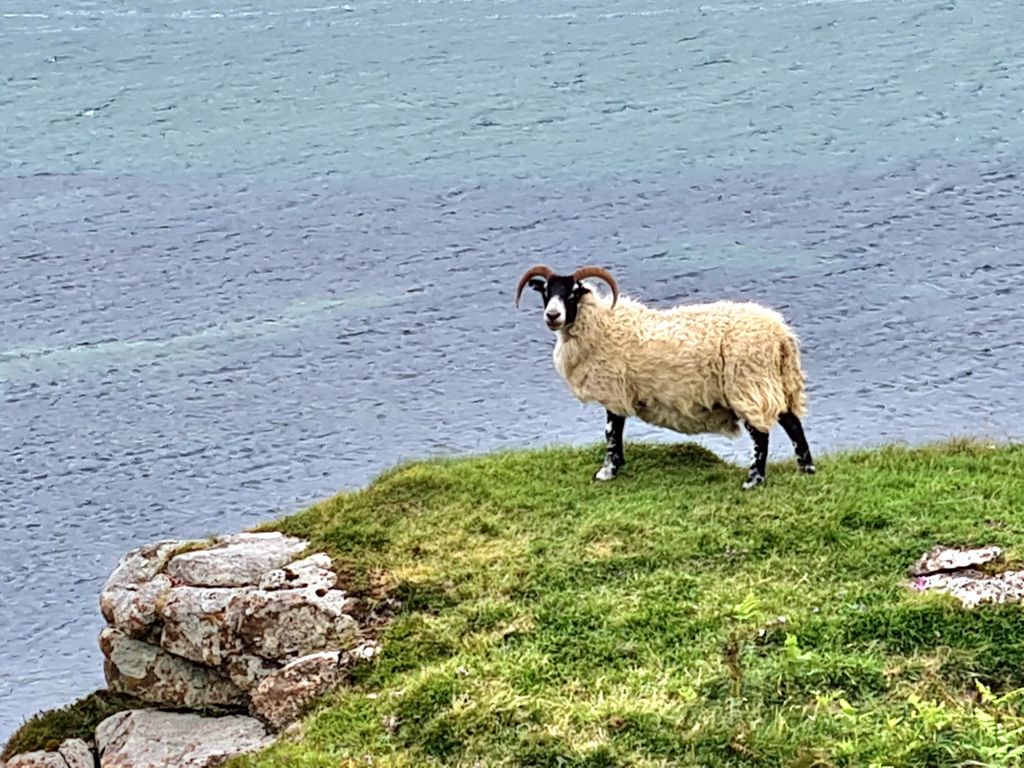
Sheep roamed round Calgary bay
On the sculpture trail
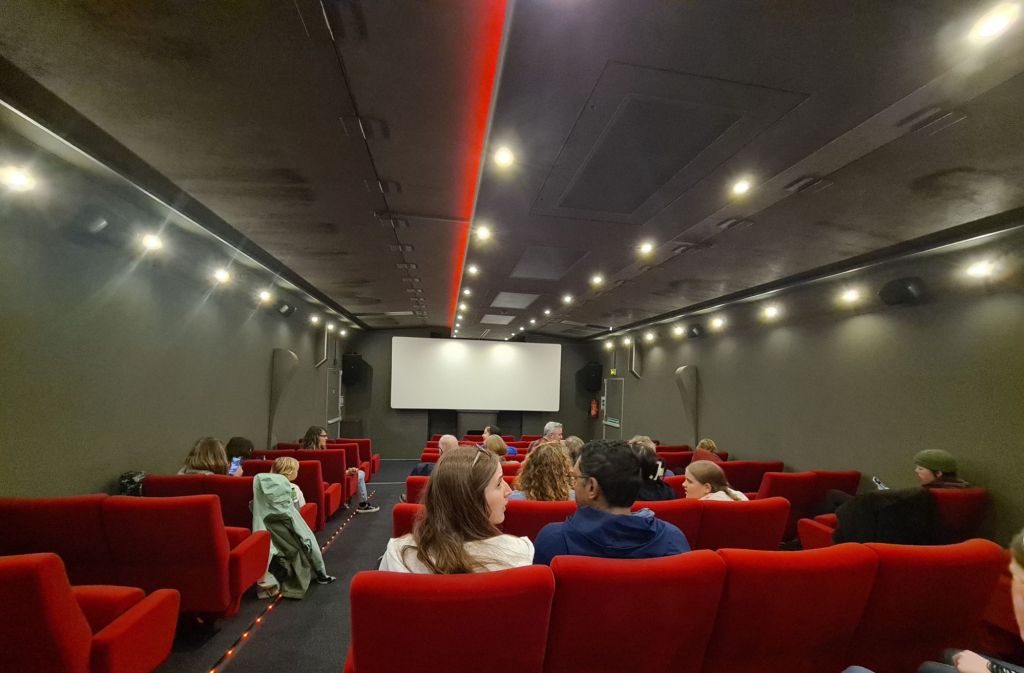
We twice went in the rain to an 80 seat mobile cinema which was in Tobermory for a week. It is in a truck that expands sideways like an accordion.

When the rain cleared and the wind eased for a few hours on Sunday we had a sunny morning sail 15 miles down the Sound of Mull to Loch Aline, which is pretty and sheltered.

The head of Loch Aline before the rain and wind

Plans to go for a walk ashore were abandoned next day in heavy rain, because we’d be soaked in the dinghy. So we stayed at anchor a second day and night, read, played backgammon and watched old iPlayer and Netflix downloads.

Rainy Monday in Loch Aline.
Sunny Tuesday, Loch Aline

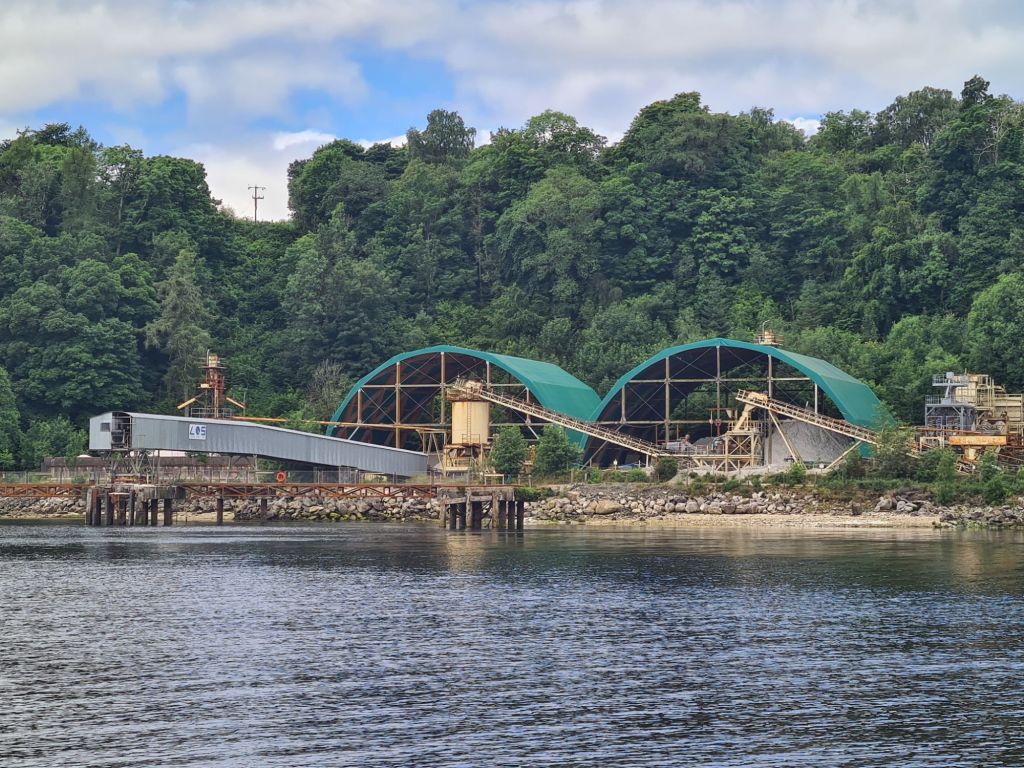
Loch Aline is pretty, sheltered and has a thriving village near a quartz sand mine, which is used for making high quality glass. It’s said to be the only sand from an underground mine in Europe. Quartz is a valuable material and the tonnages aren’t large, so the facilities aren’t intrusive.

Sand is loaded onto ships here in Loch Aline
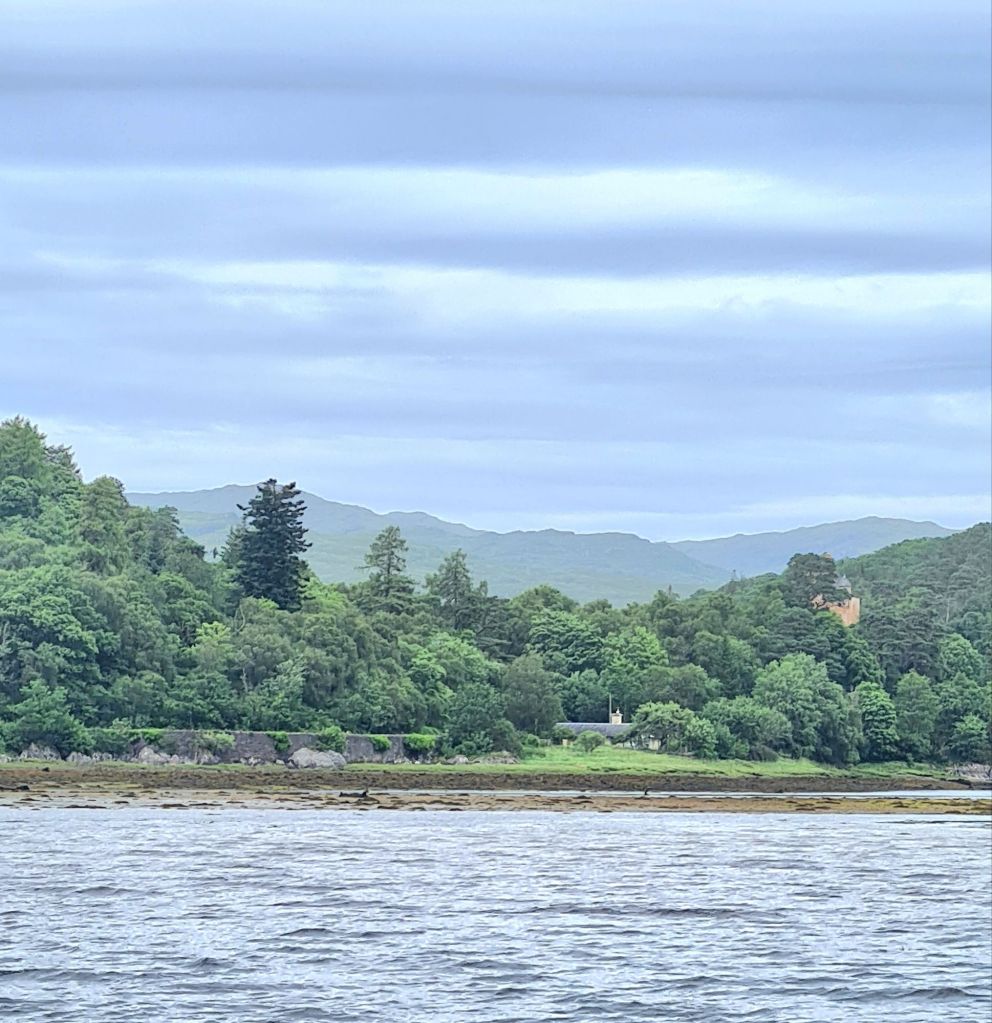
The waterfall to the left of the ruined castle in the Sound of Mull is one of the ‘Widows Tresses,’ which fly back up the cliff into the sky like fountains, in strong west winds – I’ve seen them do it.
Nearing Loch Don: Duart Castle at the south end of the Sound of Mull

From Loch Aline, we sailed a gentle 12 miles to Loch Don on Mull, a good place for watching wildlife. The channel into the loch is narrow, muddy and winding, almost like a Suffolk river. Once in, it is well sheltered. We anchored overnight in the deepest pool in the loch, all of 6 metres, which makes it unusually shallow for Scotland.

Catching the last of the sun in Loch Don
Early morning neighbour, Loch Don

The hills of Ross of Mull from Loch Don

Our last anchorage of the cruise was Puilladobhrain (Pool of the Otter), a delightful, small stretch of shallow water sheltered by reefs and islets.

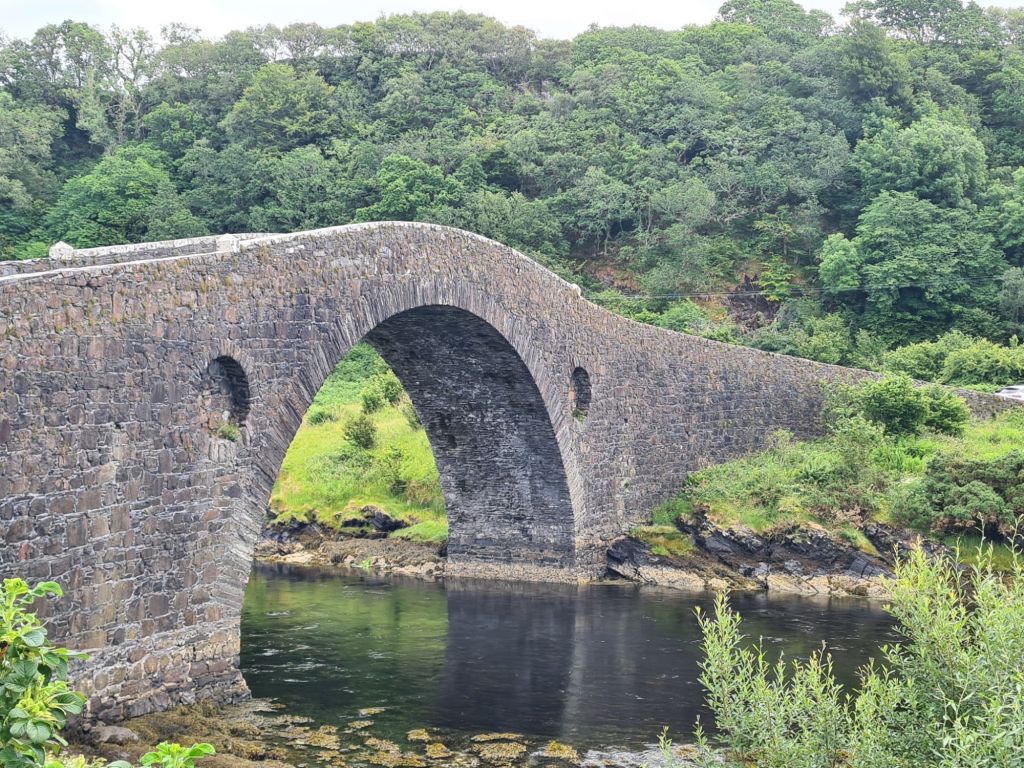
It is also one of the most popular anchorages, not least because of the lovely half mile walk over a low hill to Tigh an Truish, a pub and restaurant next to the Bridge Over the Atlantic, the old stone bridge connecting the island of Seil with the mainland. We found what we thought was the last space to anchor, until 4 more boats brought the total to a dozen.

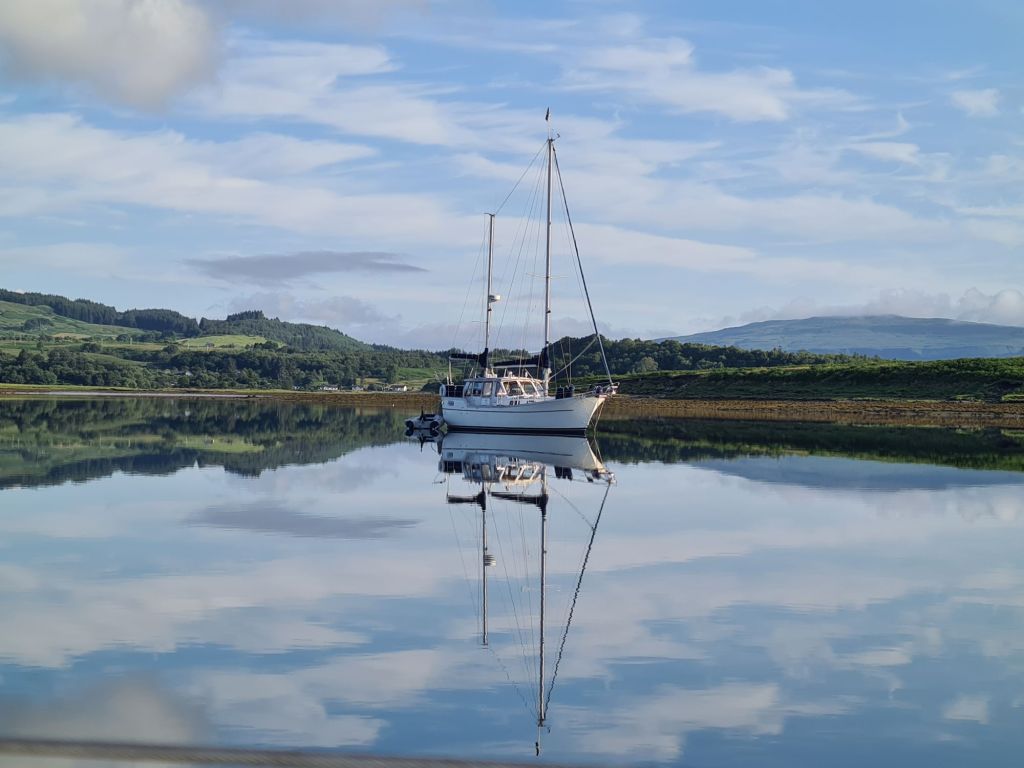
Spring Fever anchored in Puilladobhrain
The Bridge over the Atlantic, whose slim arch can take the weight of heavy trucks.
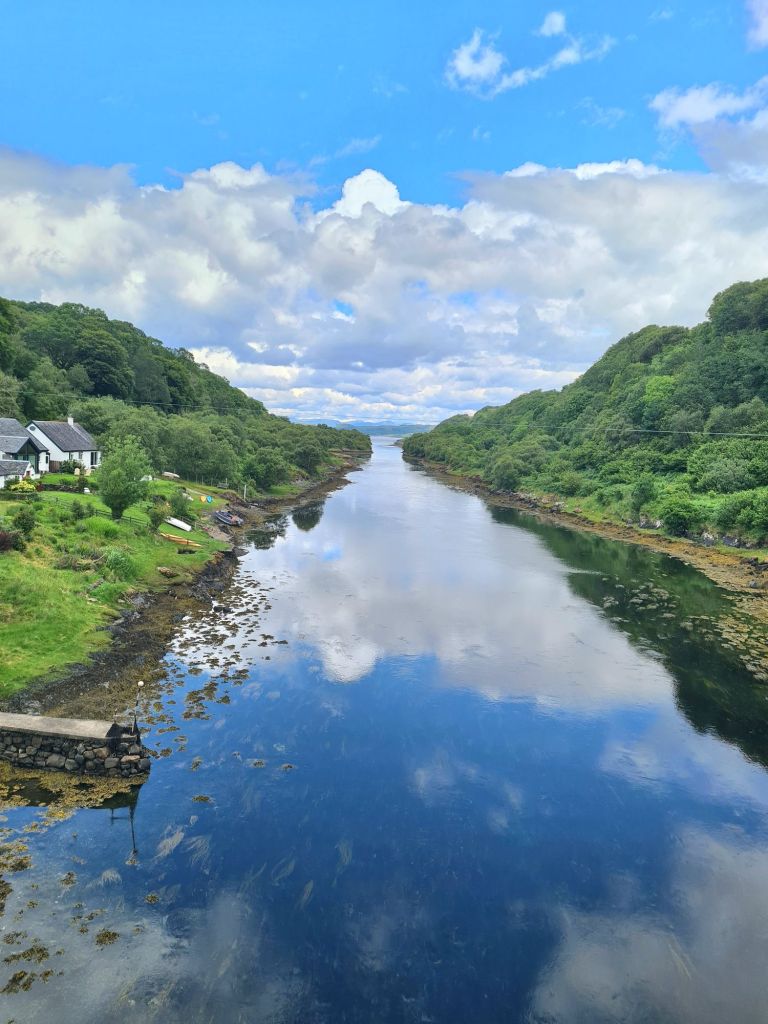
Looking north from the bridge
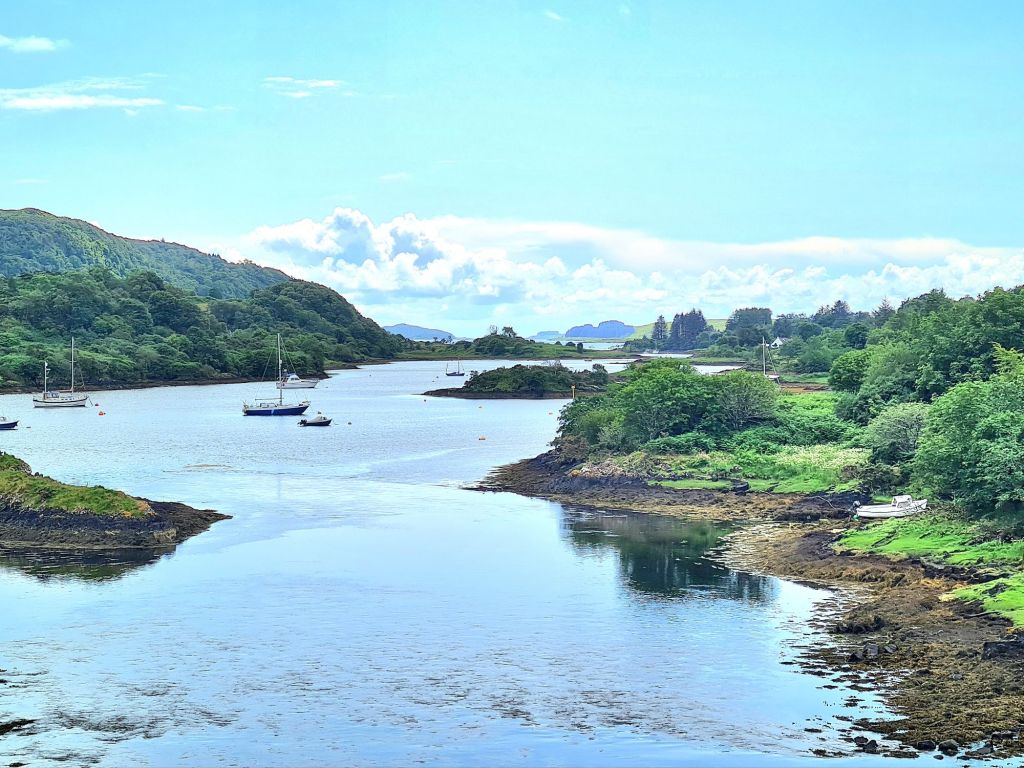
and looking south.
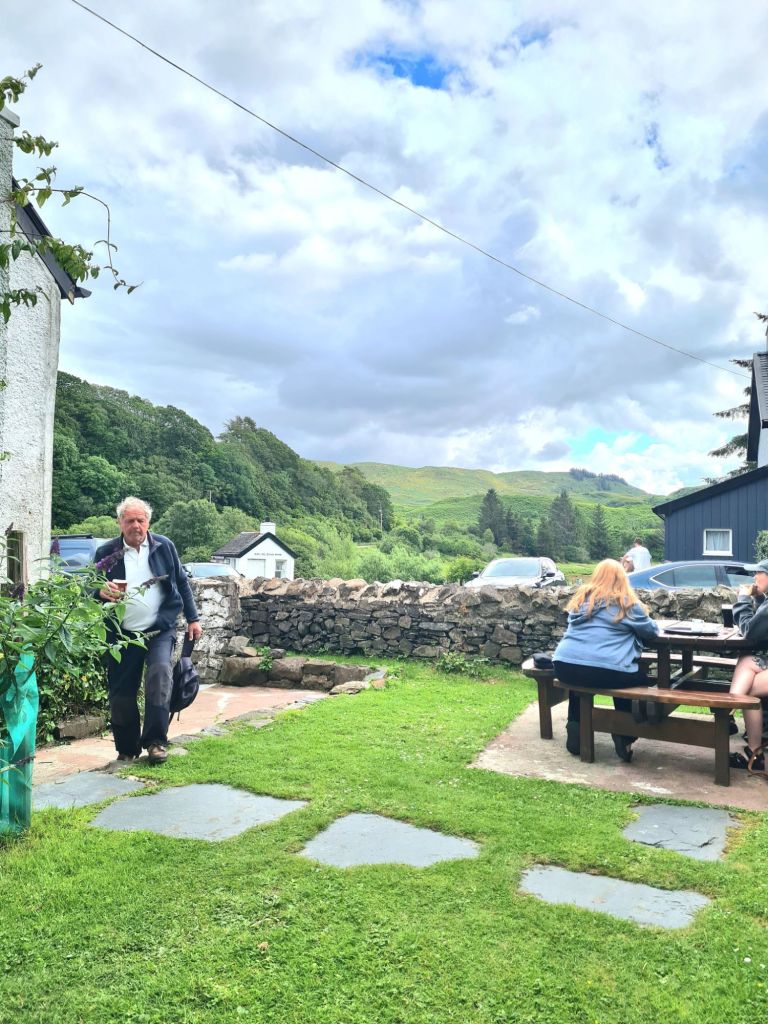
Lunch was in the pub garden

The forecast for the following day and the rest of the week was bad, with Force 6 and 7 mentioned, and gale Force 8 expected for a while. It was also forecast to be very wet.

So after lunch in the pub, we sailed back to our base in Kerrera to pack up ready to go home a couple of days later.

Actually, we haven’t done badly at all in our time here if we look at the bigger picture. Since September, we’ve been on board nearly 40 days, and there have only been about 8 or 9 with bad weather. They have all been in the last fortnight, but that still makes a pretty good overall score for holidaying in Scotland.

Lochalsh, Canna, Tobermory

After watching the European Cup final we stayed, in a not particularly cheerful mood, on the harbourmaster’s pontoon at Kyle of Lochalsh, just across from Skye. Next morning there was some cleaning to do, because Loch Ewe mud from the chain and anchor had left sticky traces on the deck.

Continue reading “Lochalsh, Canna, Tobermory”

Round Britain 2012-13: Cowes, Whitby, Inverness, Oban

This is the story of the first year of our two-year round Britain cruise in Spring Fever, a retired racing boat on a mission to go slowly (like us). A previous round Britain in 2007-8 in an earlier boat, Pepper of Brixham, had left us hungry to see more of the beautiful West of Scotland, where we had time to spend only a month sailing.We decided to go anti-clockwise, up the East Coast and down the West, rather than the clockwise route we used last time, and to use the Caledonian Canal rather than Cape Wrath and the Orkneys, which we visited in 2008. The account of our passage back from Scotland down the West Coast of Ireland in 2013  was written as a daily blog (follow this link to see all the posts) but this first part of the cruise is a single account, a photo album with words.

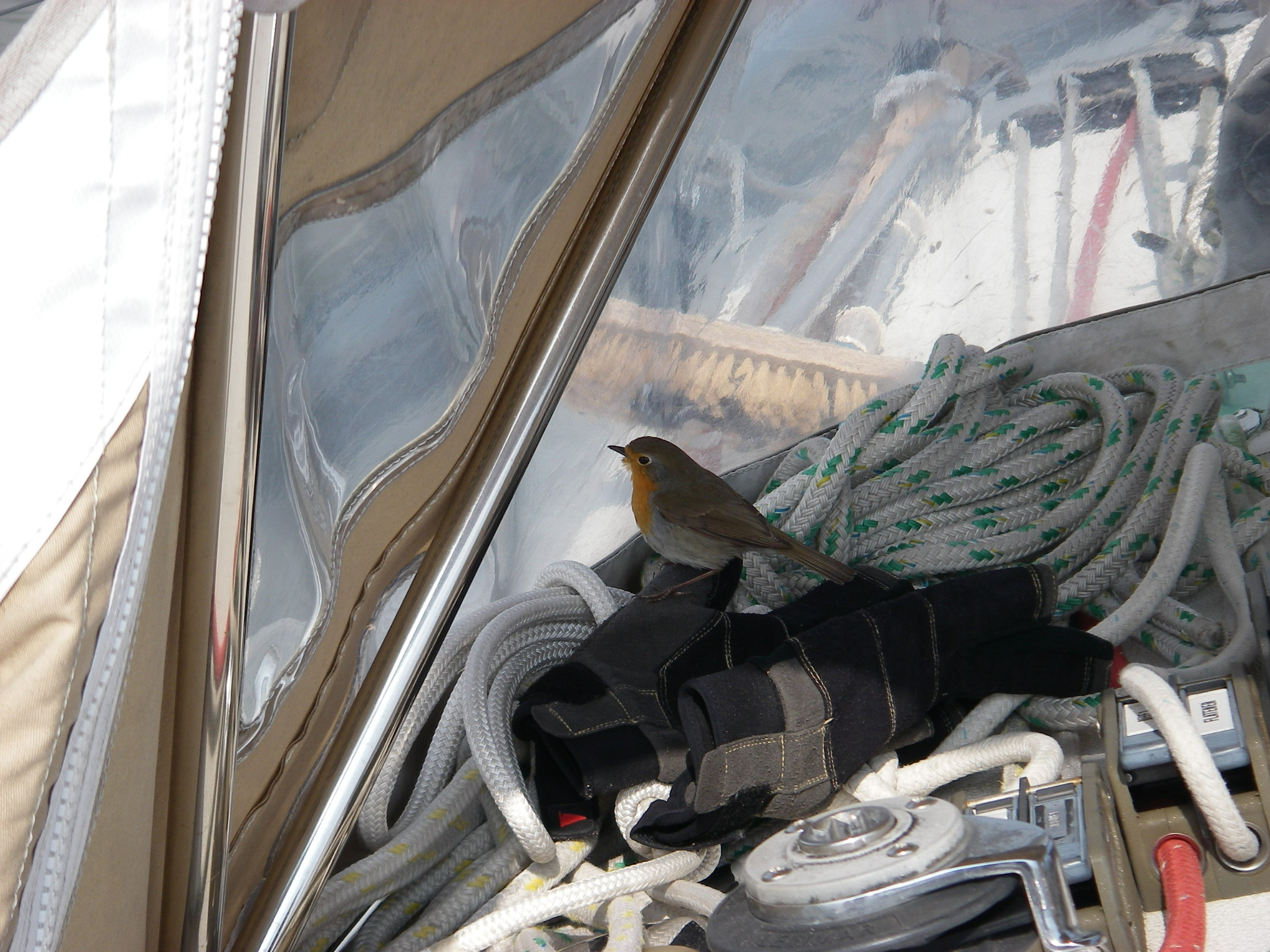
A cheerful start - a Robin spends time with us off Beachy Head
A cheerful start – Robin off Beachy Head

We left Cowes on 11 April 2012 for what always seems a bit of a trudge to the Thames Estuary, though with the right timing there are about 11 hours of favourable tide on the way from Beachy Head to Ramsgate, which cheers things up. After leaving Brighton, for an hour or two we were much entertained by a stray Robin’s search for a safe haven on the boat. He eventually found such a good hiding place – it was a mystery where – that we didn’t see him again until he flew off while we were entering the Deben in Suffolk more than a day later. He had hitched a 130 mile ride.

Follow this link to read the the rest of the story of our cruise up the East Coast and through the Caledonian Canal.