On an Ionian holiday a few years ago, I walked straight off a modern cruising yacht into an argument about an ancient voyage that has been unresolved for well over 2,000 years. We had moored at Vathi, the main town on Ithaca, where in a first floor room down a side street I came across an exhibition of photographs of Homeric sites on the island. There I fell into conversation with a white-haired, distinguished looking man who described himself as director of the archaeological excavations on Ithaca.
Looking down to the sea from the site of excavations on Ithaca.
Naturally, we got onto the Odysseus connection, for the exhibition was designed to connect present day sites on the island with the wanderings of Homer’s hero. I had just read in Rod Heikell’s Ionian pilot book that the island of Levkas, a few miles to the north, had been put forward by some as the true Ithaca. What did the director think of that?
It was as if I had insulted his family, his religion and his country all at once. He exploded.
For the full article – a long read– follow this link. Or look under ‘old stories’ above.
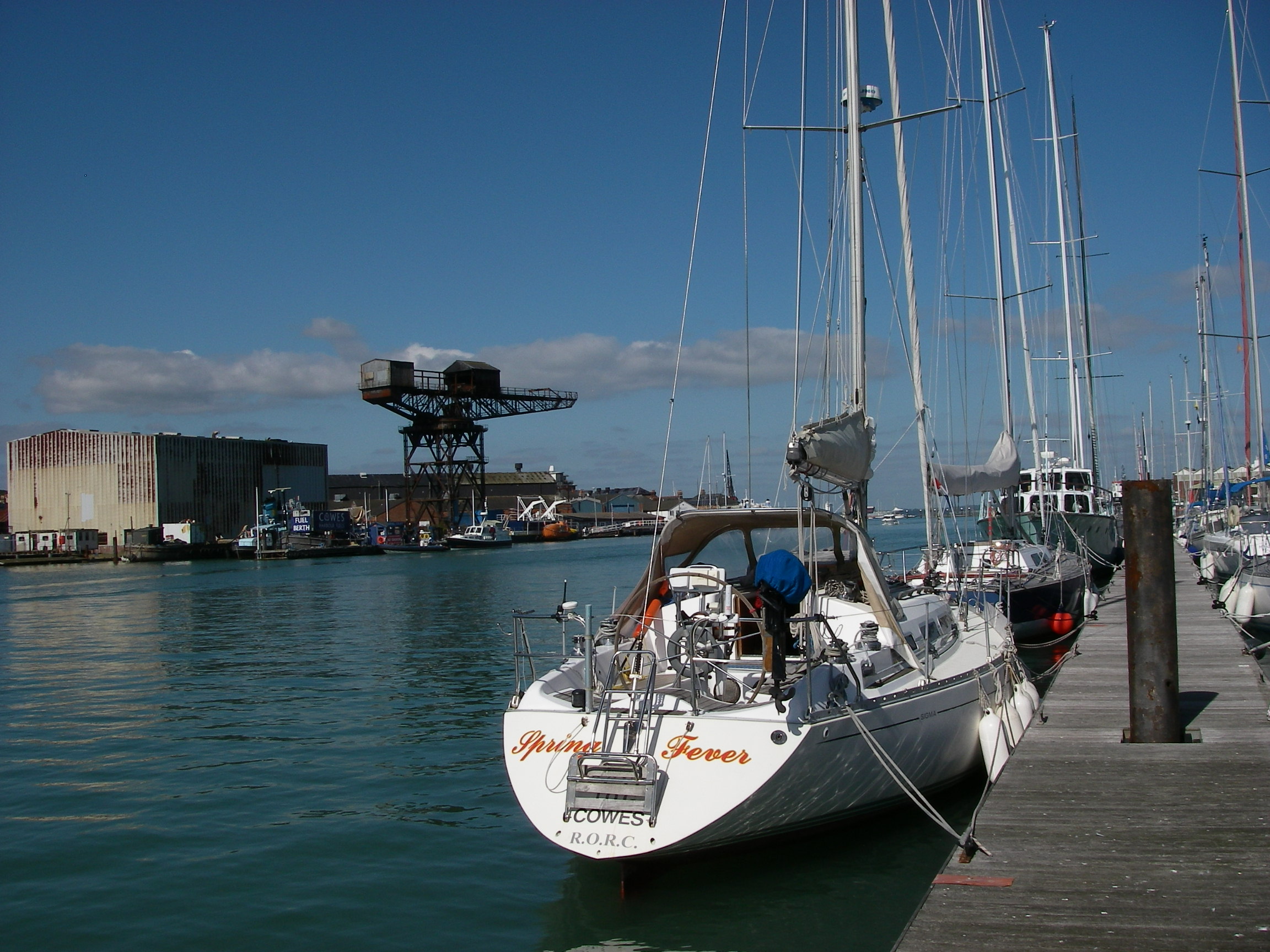
The man manoeuvring in the queue for the fuel pontoon at Falmouth took one look at our port of registration on the transom, and let loose a flood of abuse about people like us from Cowes. He was accusing us of queue jumping – we weren’t. Elsewhere, another sailor looked at the town name and added “arrogant bastards” to his complaint about where we were parked on a pontoon.
I may well be getting paranoid, but since moving our sailing base to Cowes 5 years ago I’ve been wondering whether the mere name sometimes prompts the sailing equivalent of the “posh boy” jibe at David Cameron’s cabinet. Continue reading “Cowes – love it or loathe it?”
This year we’ve been converting and extending an old farm building to make a house, which has been a full time job, so with the work running late I didn’t get away for a cruise until the beginning of September, a jaunt across channel for oysters at St Vaast-la-Hougue and back for a south coast potter.
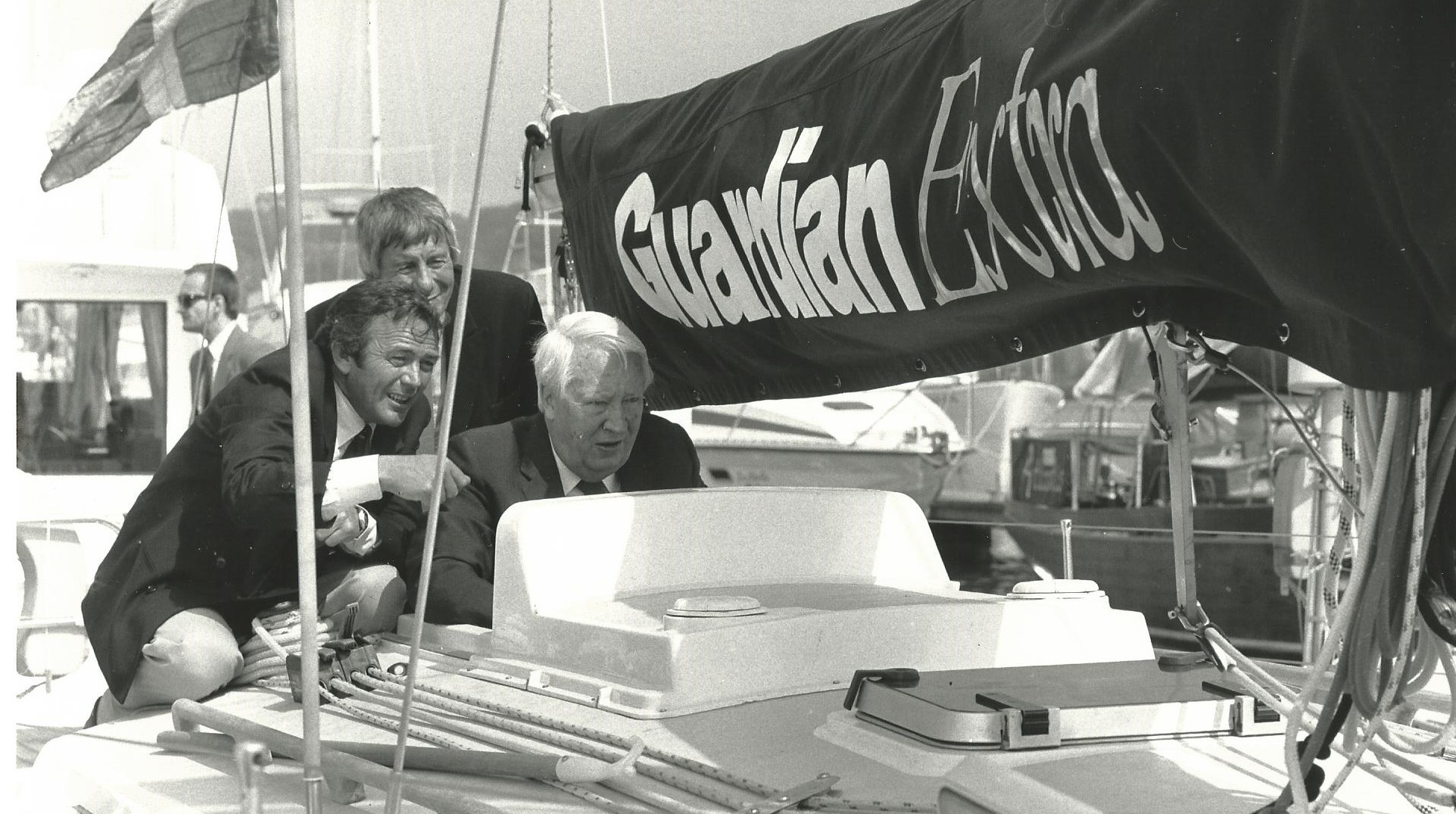
 Roger Justice, David Fairhall and Ted Heath at the launch party – the photo that never appeared.
The Guardian newspaper has a long tradition of involvement with sailing, but many of its staff had forgotten all that when David Fairhall and I came up with an idea for a season of ocean racing. The paper was split down the middle by the plan.
It all came to a head in a spectacular fashion one day in early 1989 when every department head refused point blank to run a story and photographs of the launch of our Guardian-sponsored racing yacht. The former Prime Minister, the late Ted Heath, a well known sailor, had agreed to our invitation to launch the boat at a reception in Southampton. Heath was baffled when none of the photographs and copy about the event appeared in the paper. For some of my then colleagues, the combination of a top Tory and yacht racing was too much to swallow. Mutiny was in the air. For the 25th anniversary of the Guardian’s unusual ocean racing challenge, here is the full story – find itusing this link.
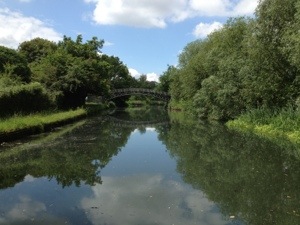
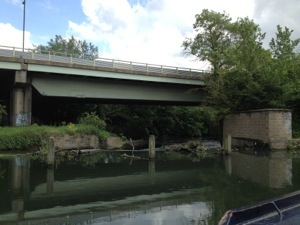
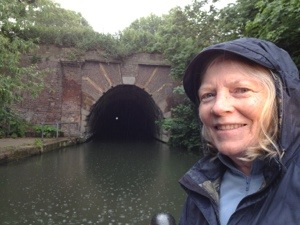
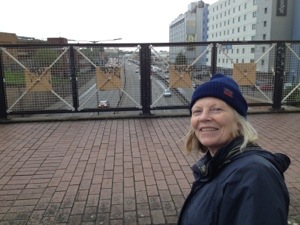
This is the day we complete the circumnavigation of London by returning to base (though south Londoners might take exception to putting it that way). We cruised slowly up the canalised River Brent, which was green and leafy, the birdsong interrupted only by the roar of traffic as we approached the bridge carrying the M4 over the canal.
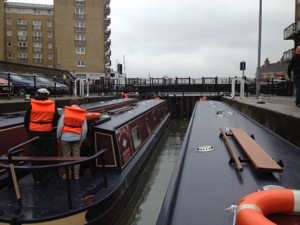
We’ve booked the lock into the Thames for 1130, to catch the last couple of hours of the tide, which will sweep us up the river. (The boat goes so slowly that it would hardly move if it tried to fight the tide). Three other Black Prince boats head for the lock, with a shared professional pilot, but one turns back because of engine trouble. We head out into the Thames, giving our plan to Thames VTS (traffic control) on VHF channel 14, and head for Tower Bridge.
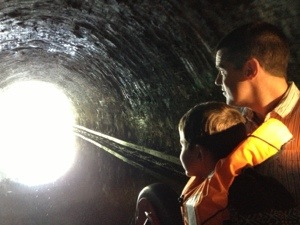
Three ex-Guardian journalists on board, so where else can we head for than Kings Place, the new offices overlooking Kings Cross marina and the Canal Museum. Skipper’s son and grandson joined the crew for a while. Here they are going through the Maida Hill tunnel.
Rain forecast all morning, so wet weather gear and a stoical attitude called for, with half hour watches steering. It was therefore a pleasant surprise to find that there are no locks until Camden, which we won’t reach until tomorrow. Camden is the end of a 27 mile lock-free stretch before a gradual descent to the Thames at Limehouse.
The best surprise was that far from cruising an industrial wasteland we were actually spending much of the time in a green corridor through London, sheltered by trees, with a profusion of wild flowers, certainly as far as Wembley and Alperton. Even in the industrial and retail parks of the North Circular and further in, there’s a May-time profusion of greenery and flowers along the canal itself.
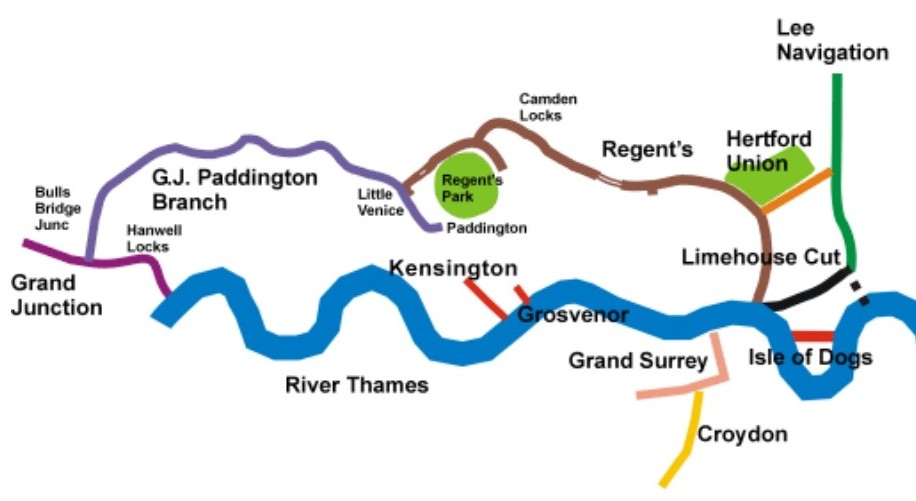
This is a map of our next cruise: a circumnavigation of London using the Paddington Branch and Regents canals, with a detour to see the Olympic Park via the Hertford Union, the Lee Navigation and Limehouse cut, then the River Thames from Limehouse to Brentford and back to our starting point via the Grand Junction Canal.
We have just had the cheapest ever holiday fares – zero – as we got the tube to Greenford and a bus to Tesco’s car park using our Freedom Passes, before a short walk to Willowtree Marina. We were expecting an industrial backwater, but nothing of the sort: a neat marina with a bar and restaurant, surrounded by trees. Evie is the barge’s name, 70 feet long but still a squeeze at 7ft 6 in wide.
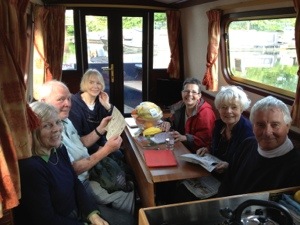
Here’s the captain (David, right) and crew, waiting for what turned out to be a splendid takeaway from an Indian restaurant in nearby Southall.
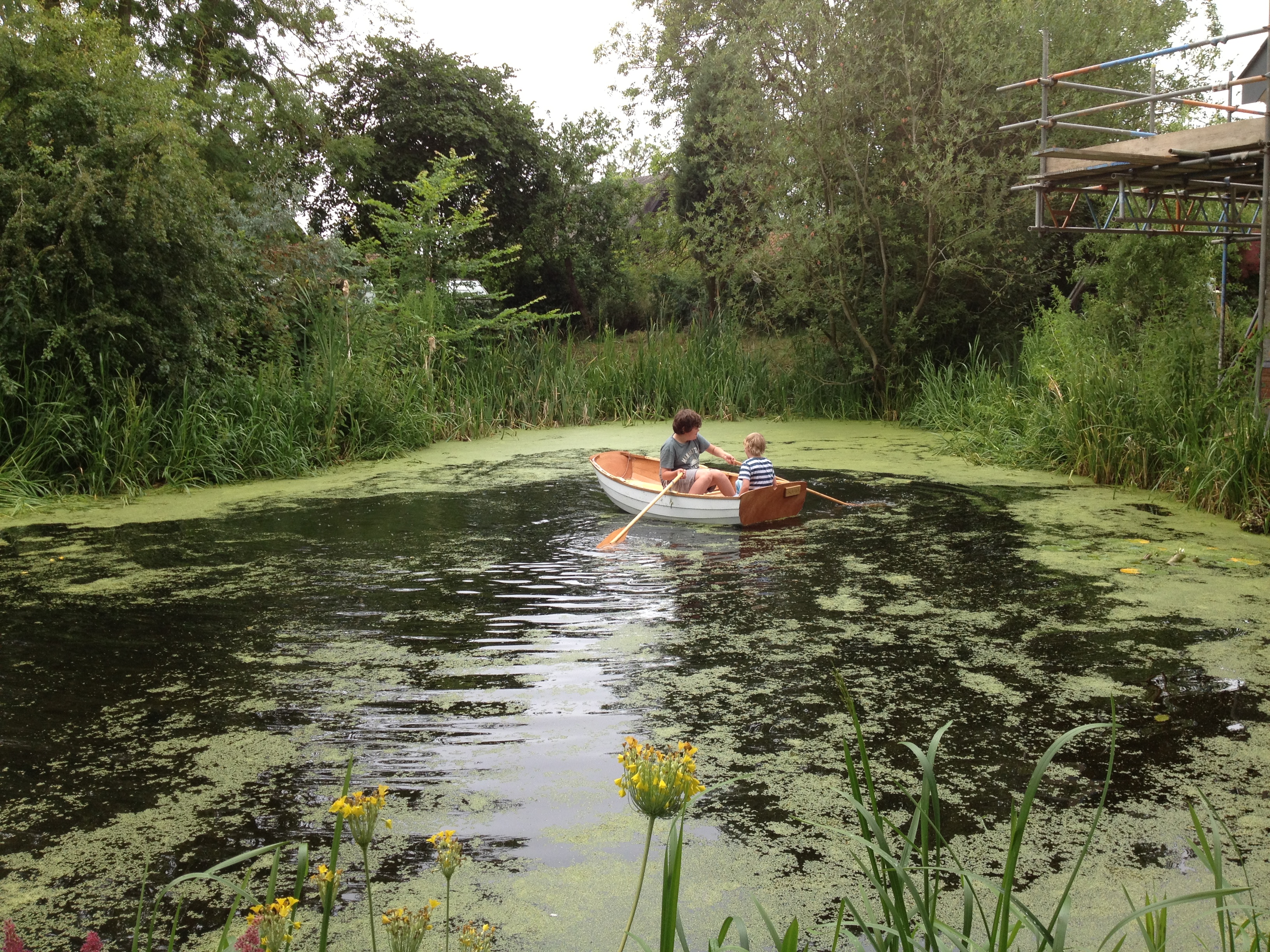
My birthday present was a kit to build a little wooden tender by the celebrated Scottish designer Iain Oughtred (celebrated, that is, by afficionados of wooden boats). However, this tender is not for Spring Fever, because there is nowhere on the deck it would fit, but for the grandchildren to row on the old farm pond in our garden, and perhaps on quiet stretches of a nearby river.
The boat is 6 feet 10 inches and called the ‘Feather’ pram, because it is Oughtred’s smallest and lightest design. Construction is lapstrake, which is like old fashioned clinker (overlapping plank), but glued instead of clenched with nails. Nearly everything is made from plywood. It’s a very pretty little boat.
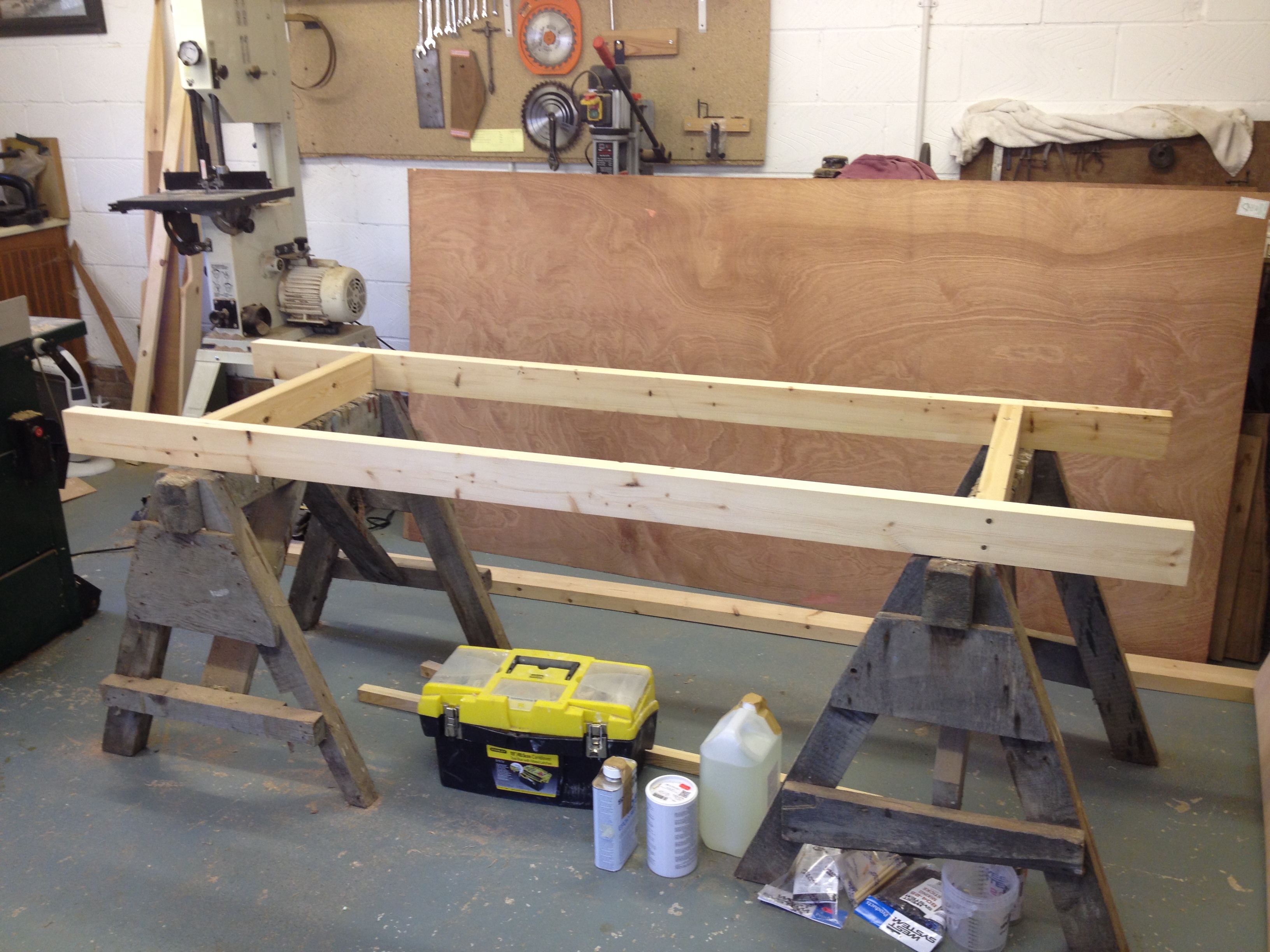
The building frame on trestles.
The first stage was to buy some timber from a builders’ merchant and make a strong frame on which to build the boat, resting on a pair of trestles in our next door neighbour, Paul Broomhead’s, workshop, which he has kindly lent for the project.
The Bank of England once owned a succession of yachts, which each went by the name of Ingotism, an insider’s reference to its old telex address and to the bullion stored deep in the sub-basements of the Threadneedle Street offices. This is the story of how Ingotism was sunk – in a manner of speaking – and of how I got a good share of the blame from the Bank’s sailing club.
Unless there are two Iroquois catamarans called Vouvray, this seems to be the yacht we chartered, pictured more than 40 years later. It is now based in Norway, and its owner put this photo on the Iroquois class website
“Better drowned than duffers if not duffers won’t drown” was the telegram from their naval officer father that gave the children permission to go off sailing in Arthur Ransome’s Swallows and Amazons. We were a good ten years older than the children, and didn’t have to ask our parents when we set off across the English Channel in 1971. I still wonder how we twenty somethings got to France and back, after almost hitting a rocky beach at full speed and near misses with a freighter and an aircraft carrier, all at night.
Offshore sail training was rudimentary, and none of us would have known where to find an instructor even if it had occurred to us to ask. Most of the six crew’s experience was in dinghies, and not everyone had done even that much. Maybe we exaggerated our skills a little. The charter boat owner was taken in. Read the rest by clicking this link
Boats, birds and the Spirit of ’45
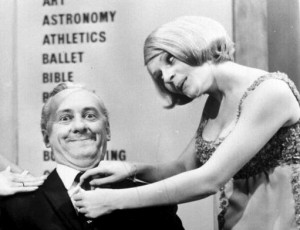
It was Hughie Green, the comedian and game show host, who financed my first boat, during the penny pinching 1950s. I was helped on my way by a passion for birdwatching, a campaign to promote sailing run, perhaps surprisingly, by left wing newspapers, and a working men’s institute in Kentish Town, North London, which offered boatbuilding classes. Read the rest by clicking this link
Brandy to the rescue
… at Brandy Hole
Brandy Hole sounds like a made-up name for a pirate story, but it isn’t: Deep in the saltings and mud flats of the upper reaches of an Essex river, it was always said to be a good place for landing contraband; it still could be, for a modern drug, cigarette or illegal immigrant smuggler sneaking in from the Thames Estuary on a dark night. It was also a place for old boats to come to die, sagging their broken bellies into the mud of the creeklets that wander through the saltings. Some were used as weekend houseboats, until the rot and the constant rise and fall did for their ribs and planks, and they began to fill and empty with each flood and ebb tide. They would have made good hiding places.
Sailing a small dinghy from Brandy Hole was a challenge, because the river almost empties at low tide; in between it rushes in one direction or the other as the tide rises and falls, which provides a great lesson in how to manoeuvre with, against and across the currents. Read the rest by clicking this link
Boating revolution
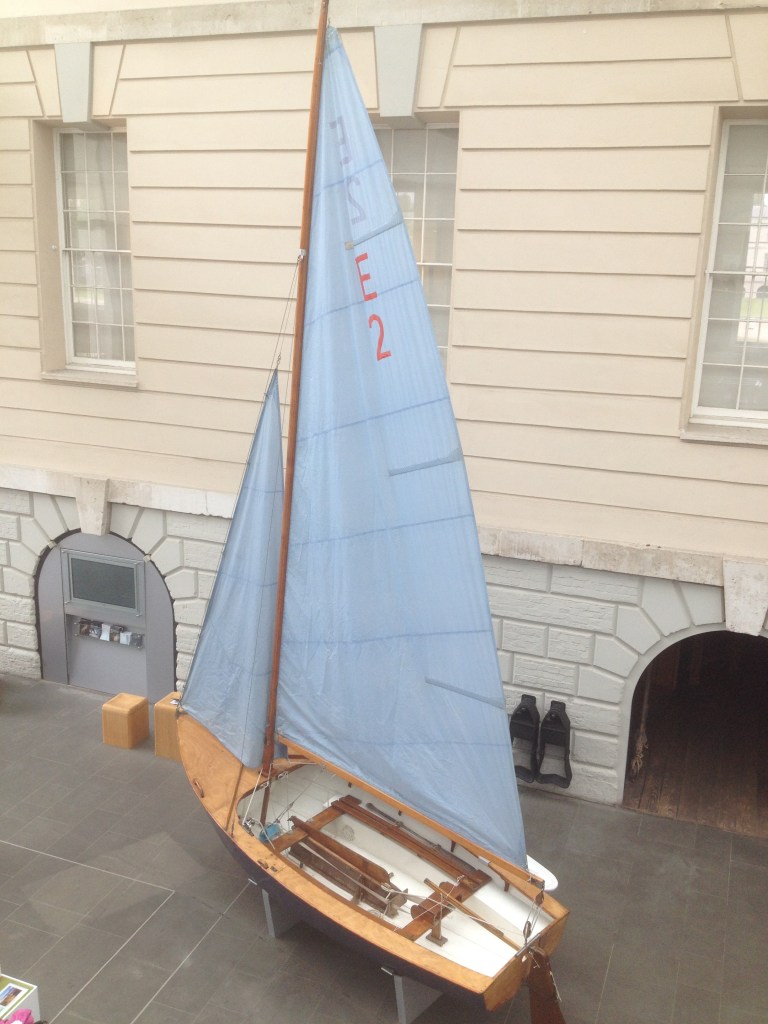
The left-leaning New Chronicle, controlled by the Cadbury family, launched Jack Holt’s plywood Enterprise in 1956. But the paper was failing, even with a circulation of over a million, and was absorbed four years later into Lord Rothermere’s right-wing Daily Mail.
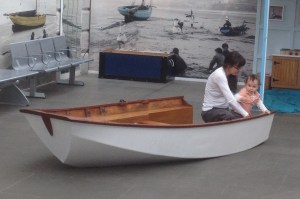
A child plays on part of a Mirror hull displayed at the National Maritime Museum, Greenwich
It was not the end of newspaper sailing promotions, because two years later the Daily Mirror, with a largely working class readership, took up the theme with the Mirror Dinghy; it was also designed by Jack Holt, with the help of a then famous television DIY expert called Barry Bucknell, who devised a new and even cheaper method of boat construction in which the plywood hull shell was stitched together as if it was made of stiff fabric, with copper wire as the thread, and then glued along the joints with resin and glass fibre tape. Read the rest by clicking this link.
Smart and not-so-smart clubs
In dinghy racing in the ’50s and 60s, there were smart sailing clubs and there were the new clubs emerging on gravel pits, canals and reservoirs to sail Jack Holt’s budget boats. It was a very stratified world, which can still be seen on the shore at Cowes, where the clubs are in marshalled in order of rank, starting at the seaward end: the exclusive Royal Yacht Squadron, the Royal Corinthian and the Royal Thames, the Island Sailing Club and – originally for the local working boatmen of the town – the Cowes Corinthians.
News Chronicle Enterprise number 2 in the National Maritime Museum, Greenwich.
My first boat and club were at the other end of the sailing spectrum from the smart clubs. Our neighbour, the former naval officer who helped me build my first boat, ran a boys’ sailing club based on the grimy Lee Navigation in North London, and he encouraged me to join. Read the rest by clicking this link
Figures of eight in Suffolk
Southwold
Richard Jefferey’s Bevis learnt to sail a raft on a mysterious lake in Wiltshire; the Swallows and Amazons were taught to sail dinghies on glorious Lake Coniston, adventures which were the envy of a post-war generation of children; the real Eric Tabarley went to sea in his father’s yacht along the wild Breton coast. I boast of a reedy fen in Suffolk, across the road from Southwold pier .
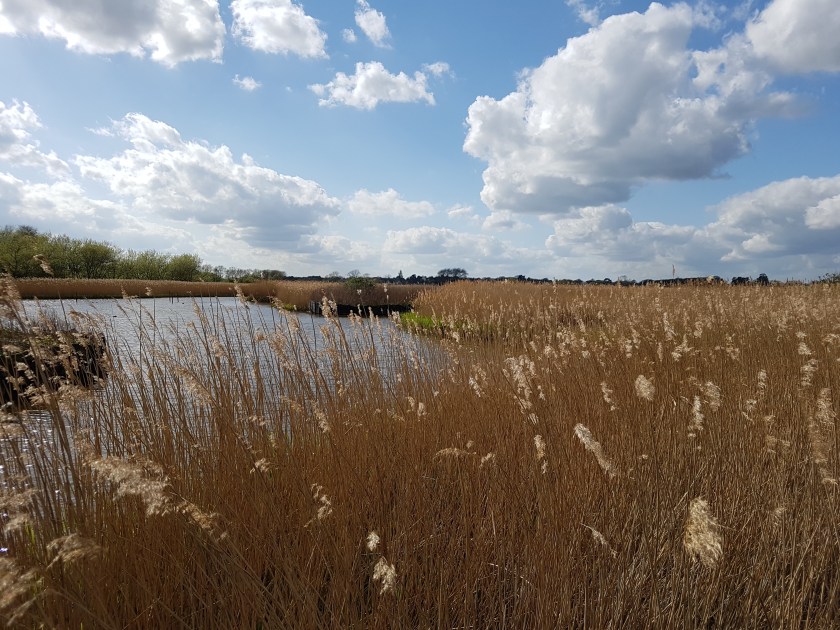
Water glimpsed through reeds
In 1953, it was no more than an expanse of brown water, a mere wandering off into a reedy marsh, much of it drained since then, that spread inland at sea level along the north edge of Southwold town. The great East Coast floods, whose 60th anniversary was commemorated in 2013, had been six months earlier; the lake and the marsh had been inundated and were still draining. The water was brackish and the banks were of mud held together by seagrass and great fields of reeds. In the lake were several small islands, and on the lake, at a hire rate (I think it was) of 6 old pence (2.5p) an hour, were a dozen tiny flat-bottomed dinghies, 7 feet long. Read the rest by clicking this link

 tide by tide