
From Helford we sailed straight to Plymouth, to see Tony F, who crewed for us from Ipswich to the Hebrides via Orkney two years ago, and his wife Potter.
The wind was a gentle south-westerly, and we motored and then sailed the 45 miles from Helford. Tony and Potter invited us for an evening barbecue in the garden as well as a comfortable night’s stay in their lovely home, a great treat after so long in a cramped boat.
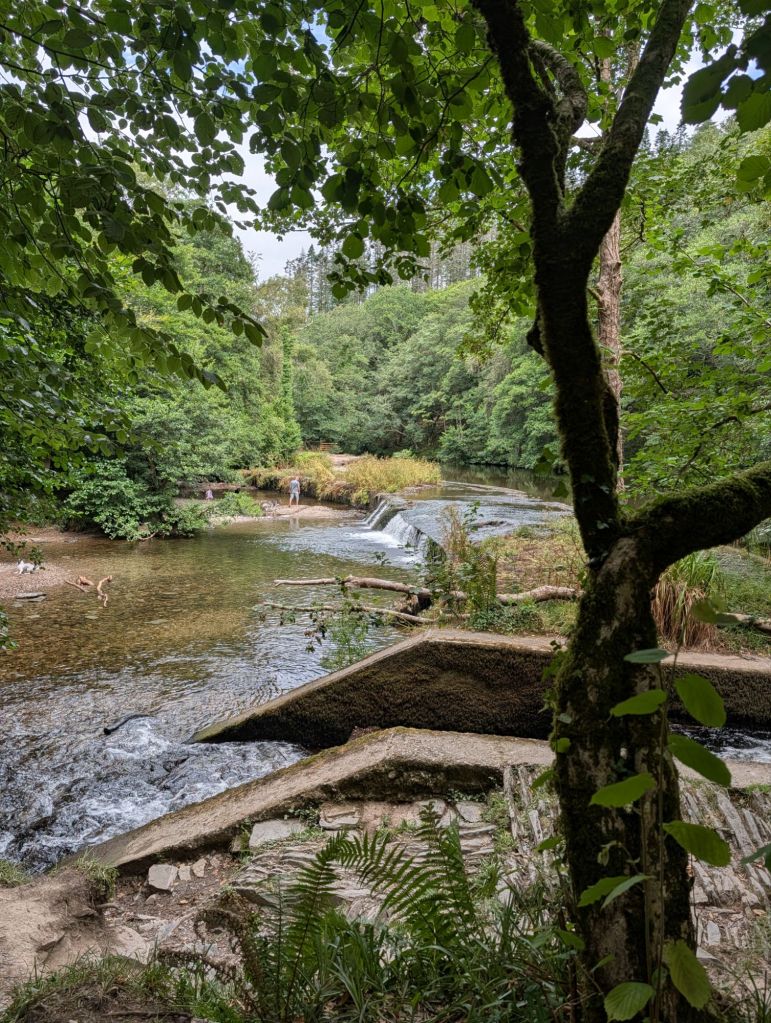
The next day we walked the dogs in Plymbridge Woods along the River Plym, before going back to the boat to refuel and restock ready for the last part of our cruise round Britain.

From Cornwall, we were already on a home run, which we’ve done many times before from the West Country. In this part of the English Channel I measure the distance in headlands rather than sea miles.
The big headlands behave like tidal gates, magnifying the speed of the tide as the water pushes past. The gates almost shut when there’s a strong tide flowing against the boat’s direction, cutting most sailing boats’ speed over the ground to two or three knots, whatever they are making through the moving water.
That means spending a good part of a 6 hour tide watching the headland creep past excruciatingly slowly. Catch the tide going the other way and it rushes by. Much of a passage is about getting the timing of the headland right, but that often means missing the tide at the next one.


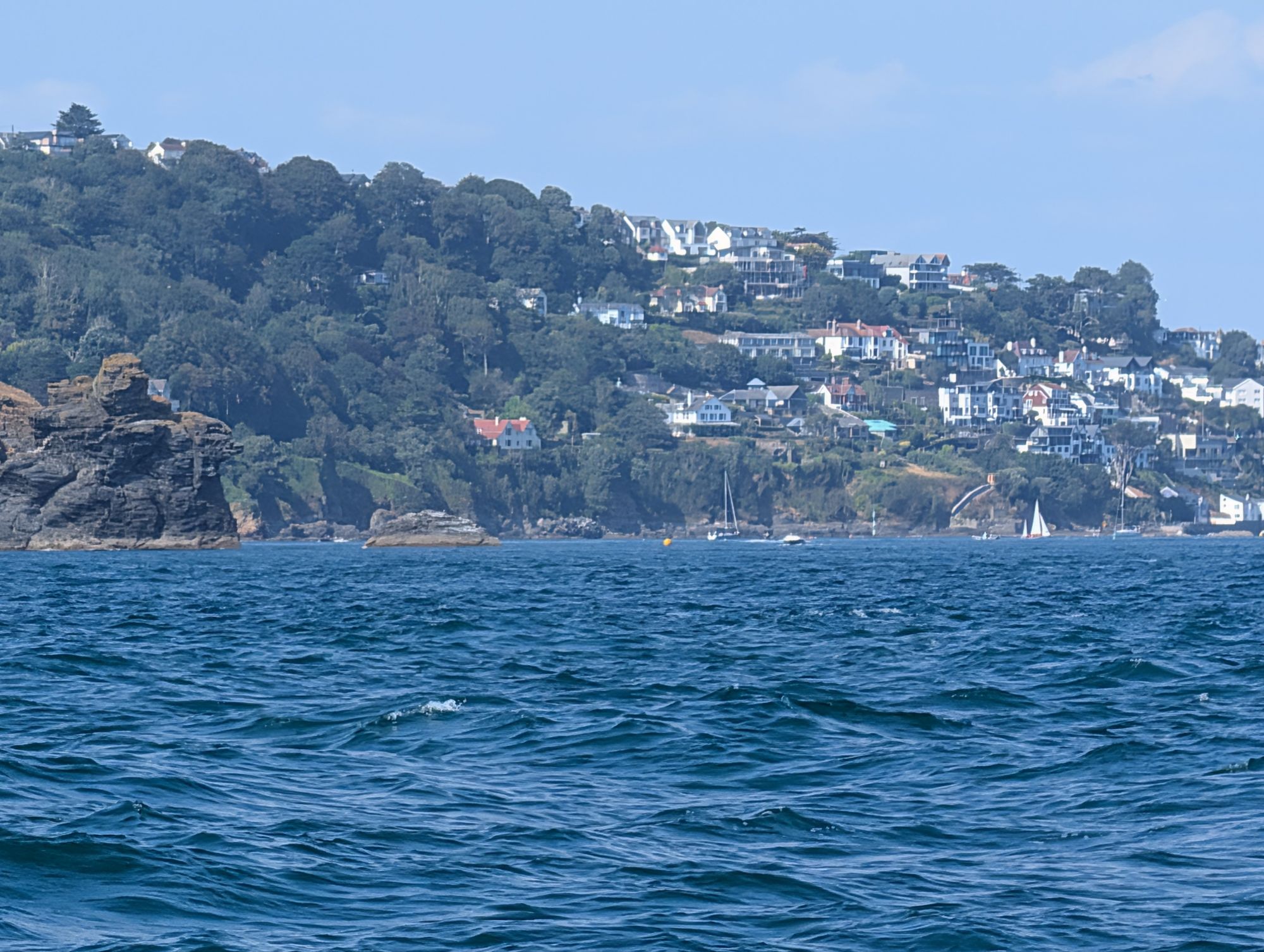
In pleasant light winds we sailed east past Salcombe, which we try to avoid on passage because the harbour charges boats a handsome amount for using their own anchor in the estuary.
There’s a free anchorage in settled westerly winds in Starehole Bay, just outside the harbour entrance. The wreck of the German four-masted barque Herzogin Cecilie, which went aground in 1936, is still just visible underwater, though not nearly as prominent as it once was. Best not to anchor too near it. However, we were heading for Brixham, so had no need of a rest stop this time.
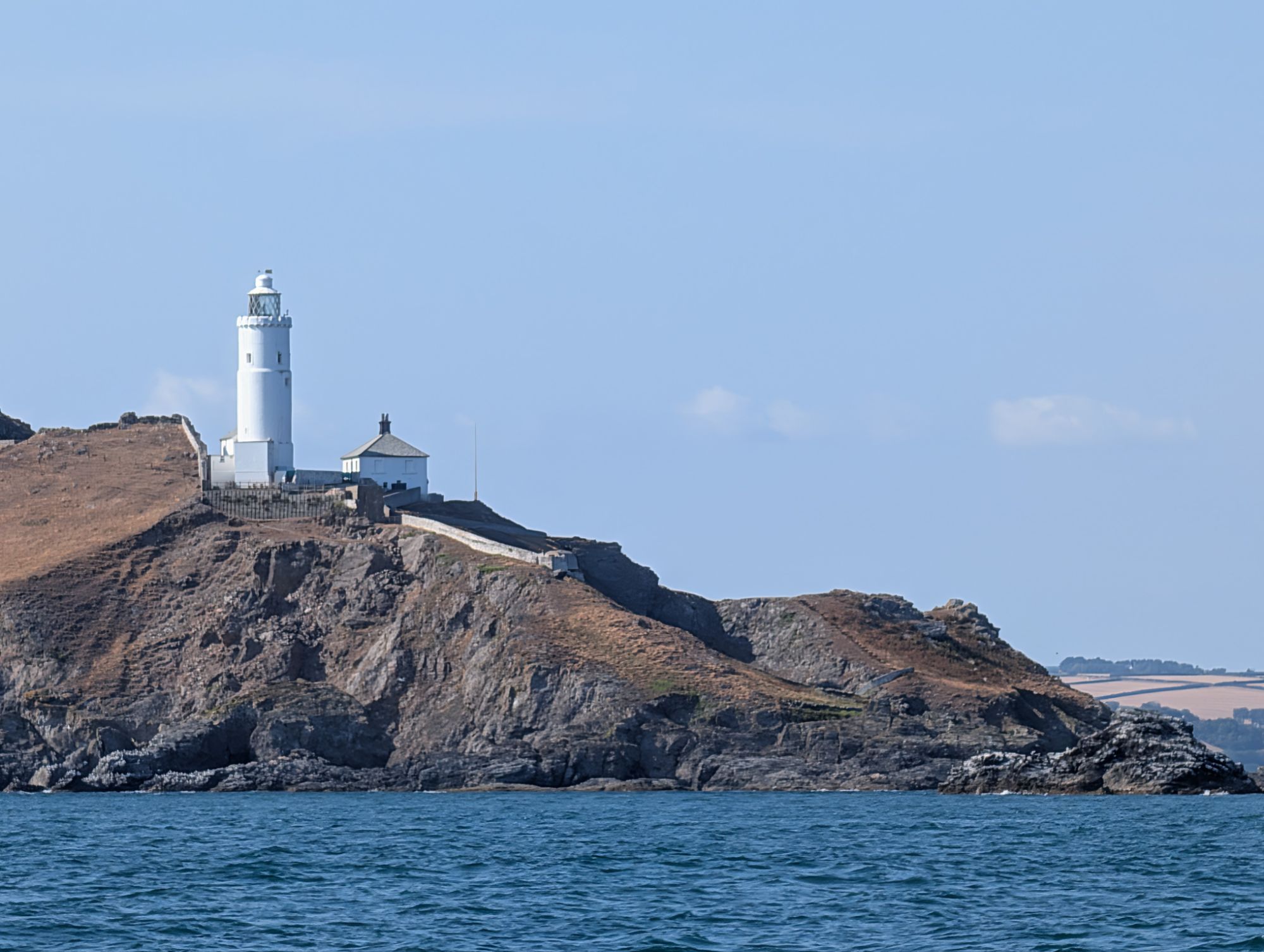
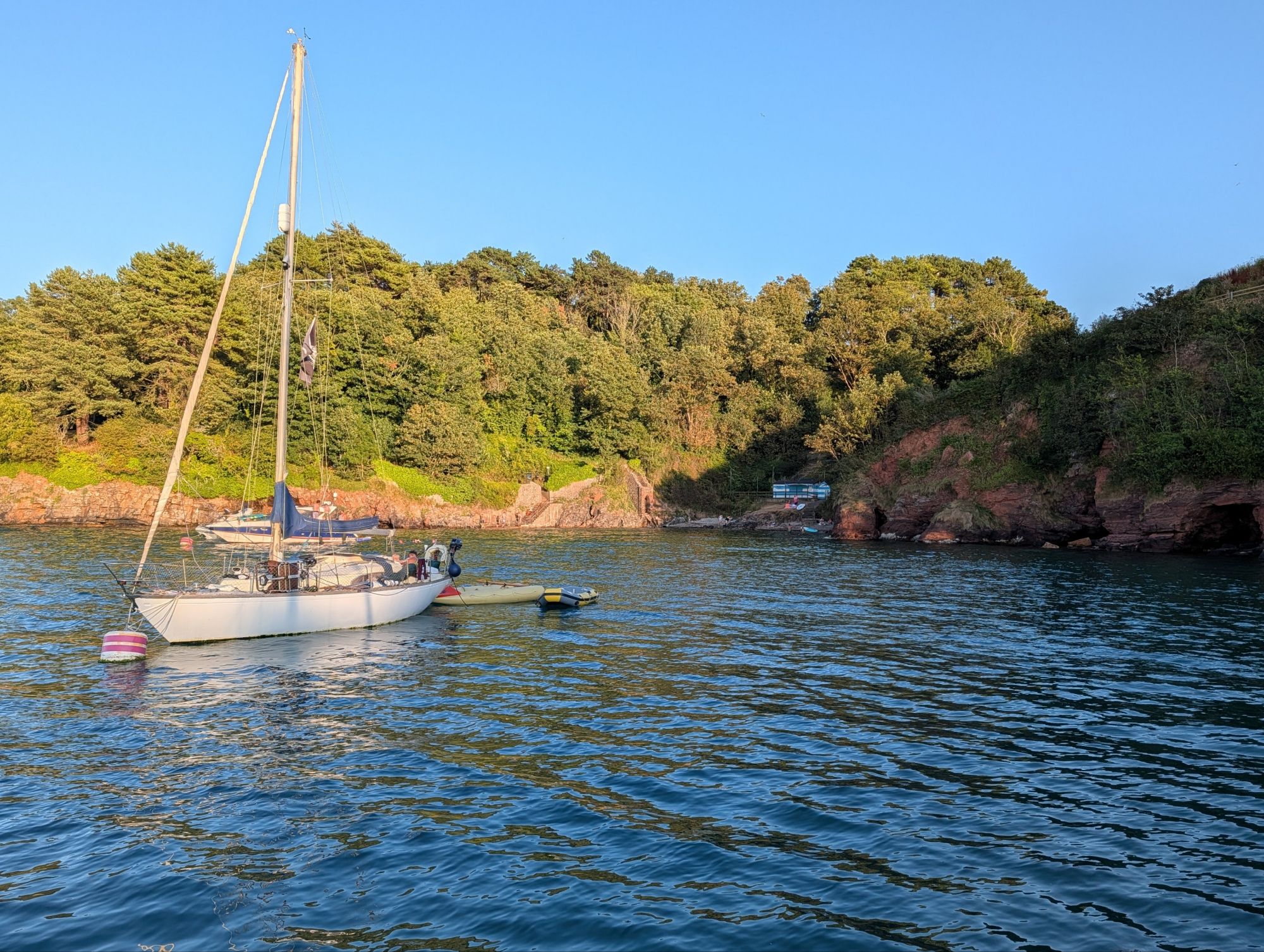
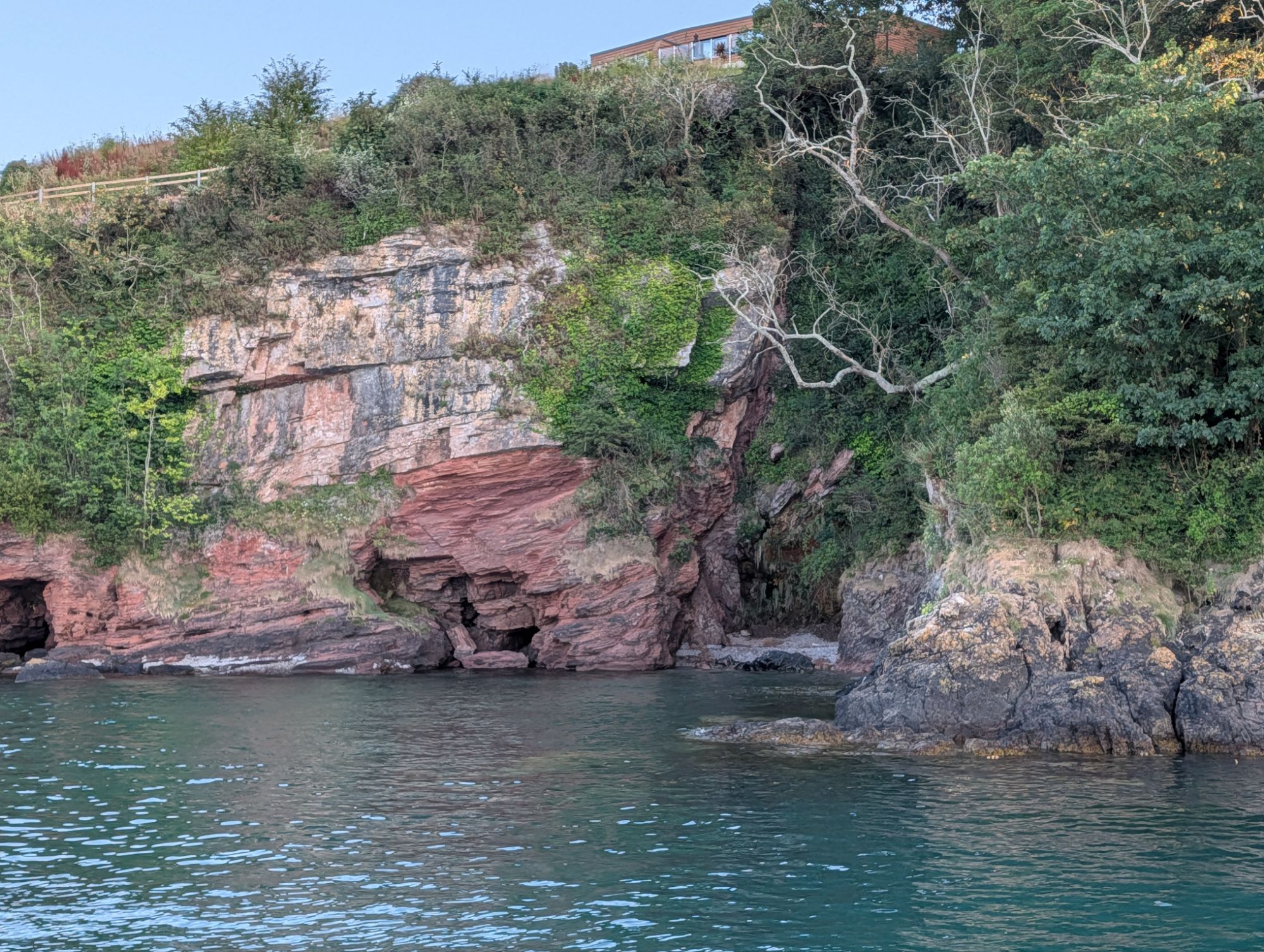
At Start Point we timed our arrival for the east-going tide, sailed fast on a broad reach past Dartmouth, and rounded Berry Head at the entrance to Tor Bay, heading for Fishcombe Cove. This is tucked away immediately next to Brixham Harbour and its expensive marina.
The cove is small and has three eco-moorings designed to protect the seagrass bed. By day they seemed to be occupied by family boats, there for the swimming and paddle boarding (plus some noisy jet skis). We waited an hour for the parents on a big motorboat to haul their smaller children back on board and head home escorted by their teenagers on jet skis, then picked up the mooring for a pleasant night, with two other sailing boats, close to the tree-covered cliffs.
Next day we set out early on the 80 mile passage to Yarmouth, with timing dominated by the need to catch the tide up past the Needles into the Solent, which is much too fast to sail against.
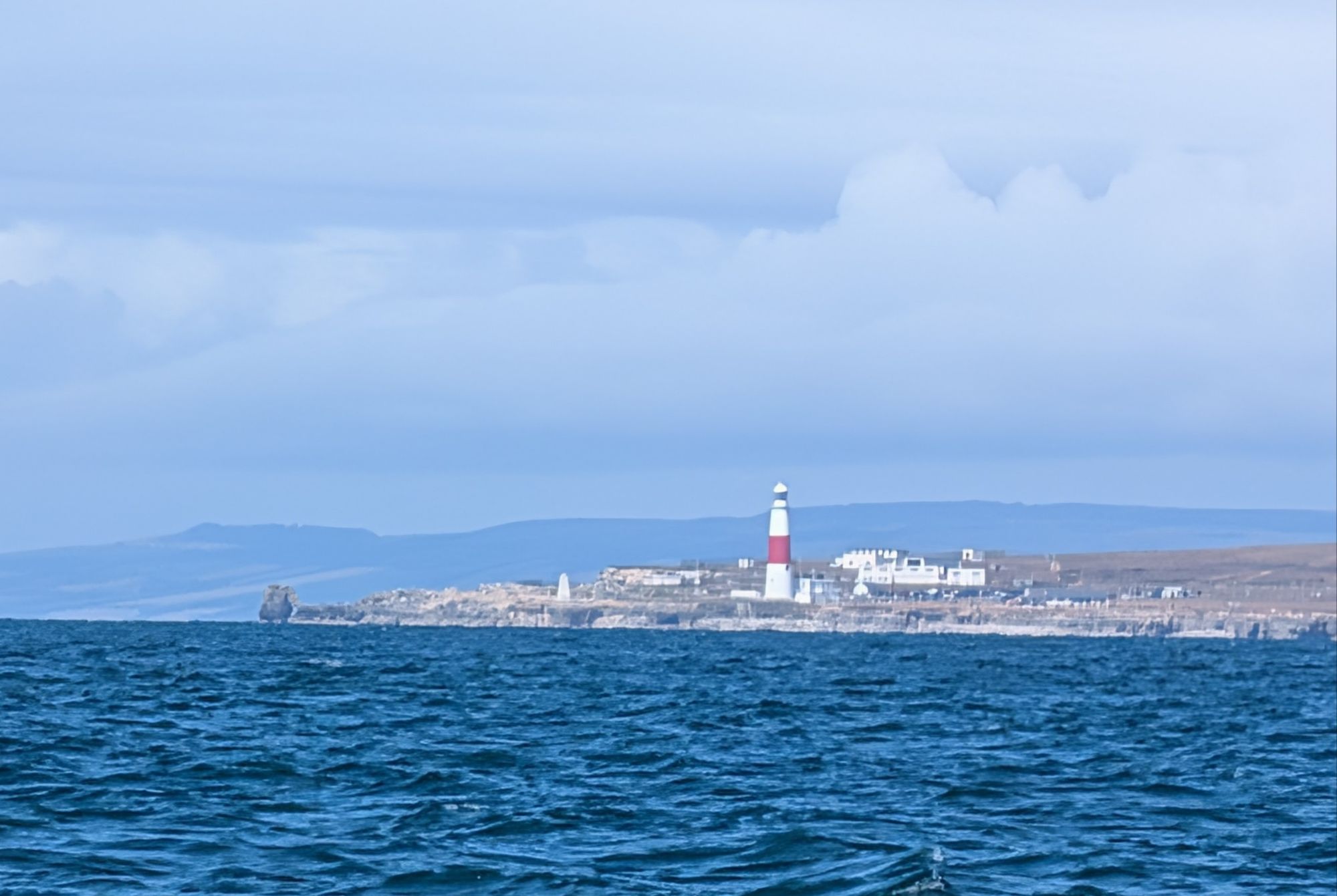
That meant we had to accept a contrary tide as we passed south of Portland Bill and the Portland Race, where we were making 2.5 knots over the ground but 5.5 through the water in a pleasantly refreshing breeze.

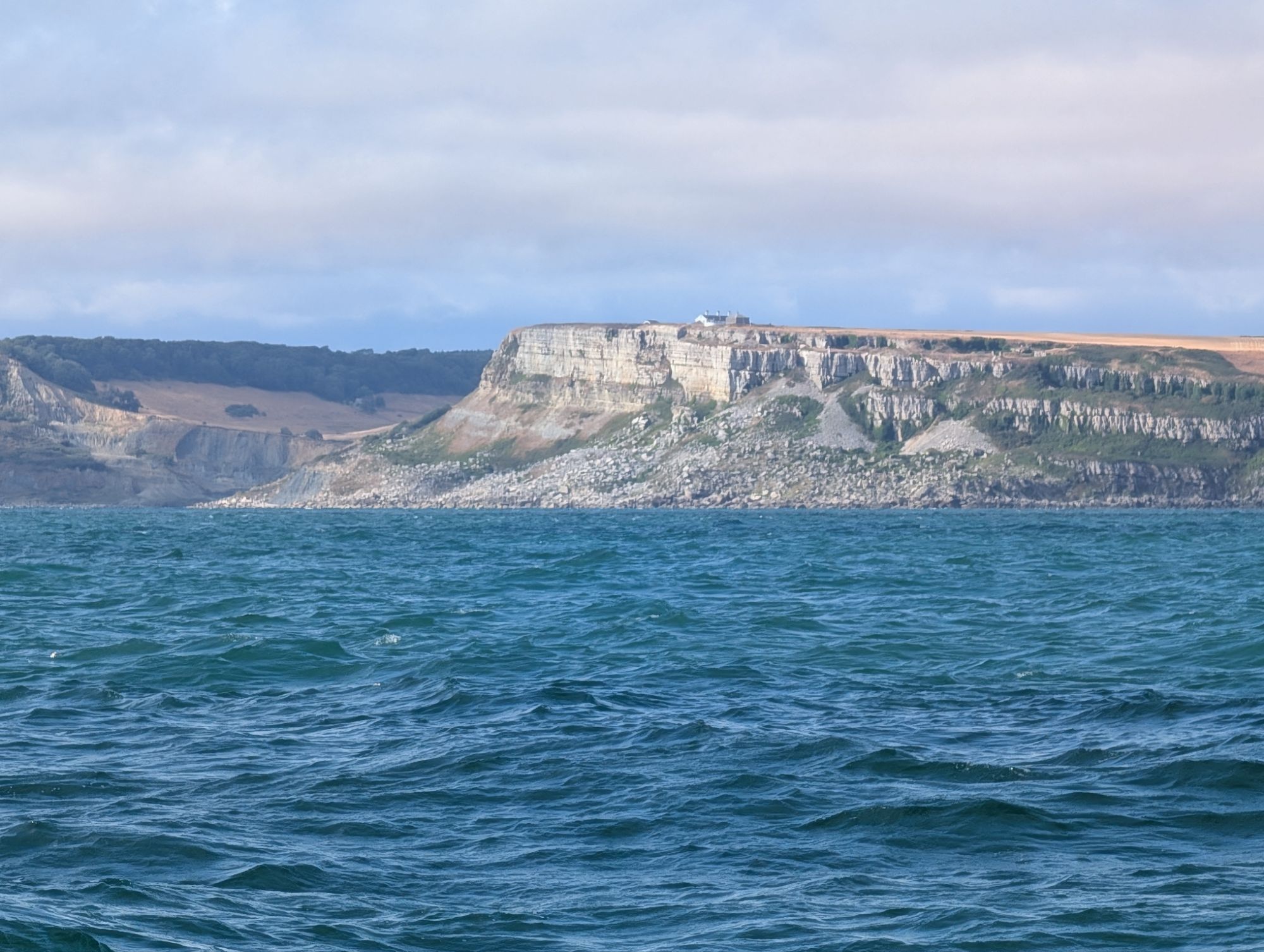
The timings worked in our favour again when the tide turned before we reached the next tide race off St Alban’s Head in Dorset, which runs fast over a rock ledge that goes 3 miles out to sea. Even in calm weather it is worth avoiding the race, by going inside a few hundred meters from the shore, or more than 3 miles out, which was where our direct course took us anyway.
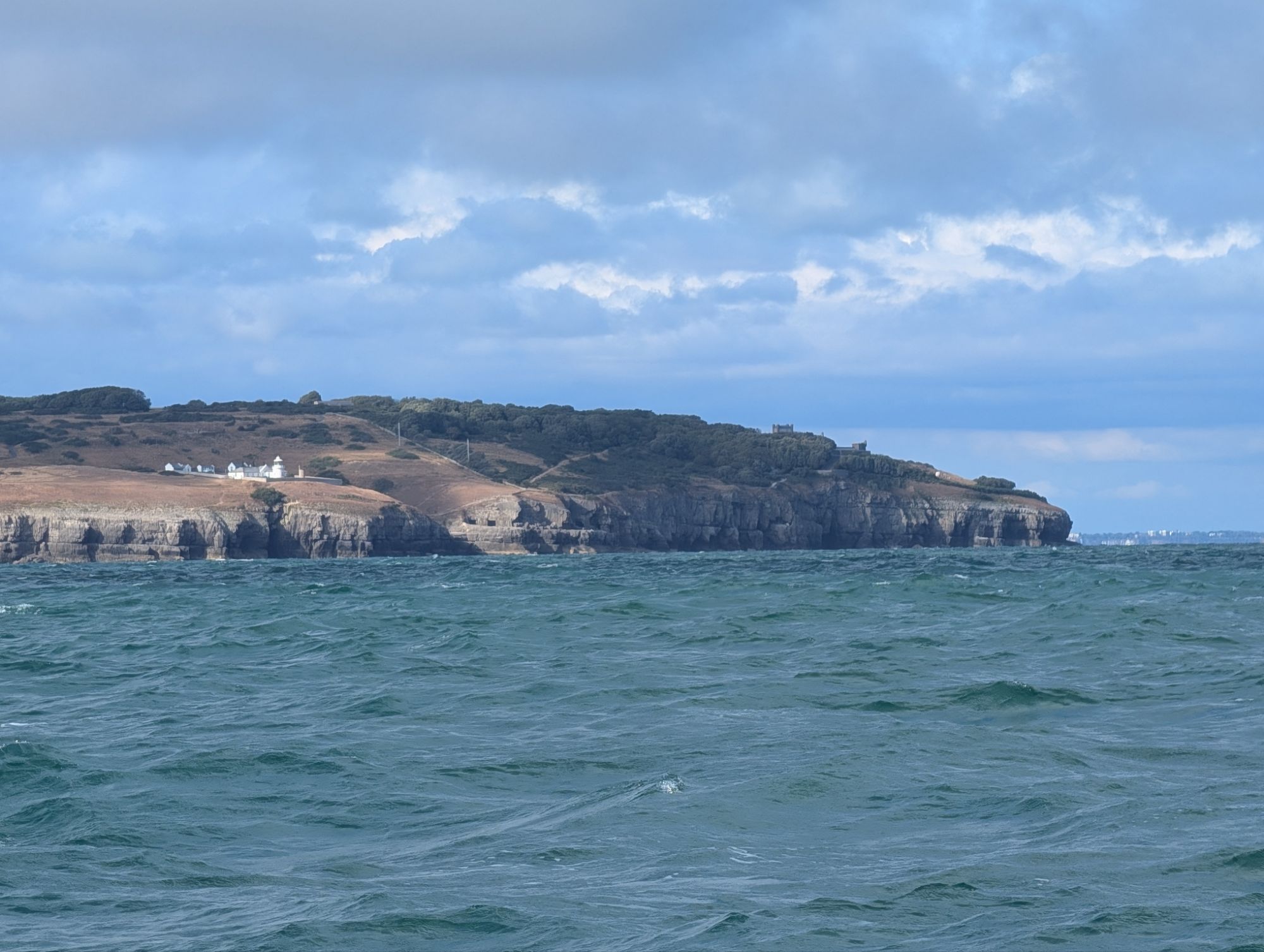
Next we passed Anvil Point, a less significant race a few miles south of Poole and Bournemouth, before crossing Christchurch Bay to the Needles Channel at 6 or 7 knots, sailing in a freshening breeze.
The channel up past the Needles was rough, even though the wind was going with the ferocious spring tide. But we were finally back on home ground and about to enter the Solent.
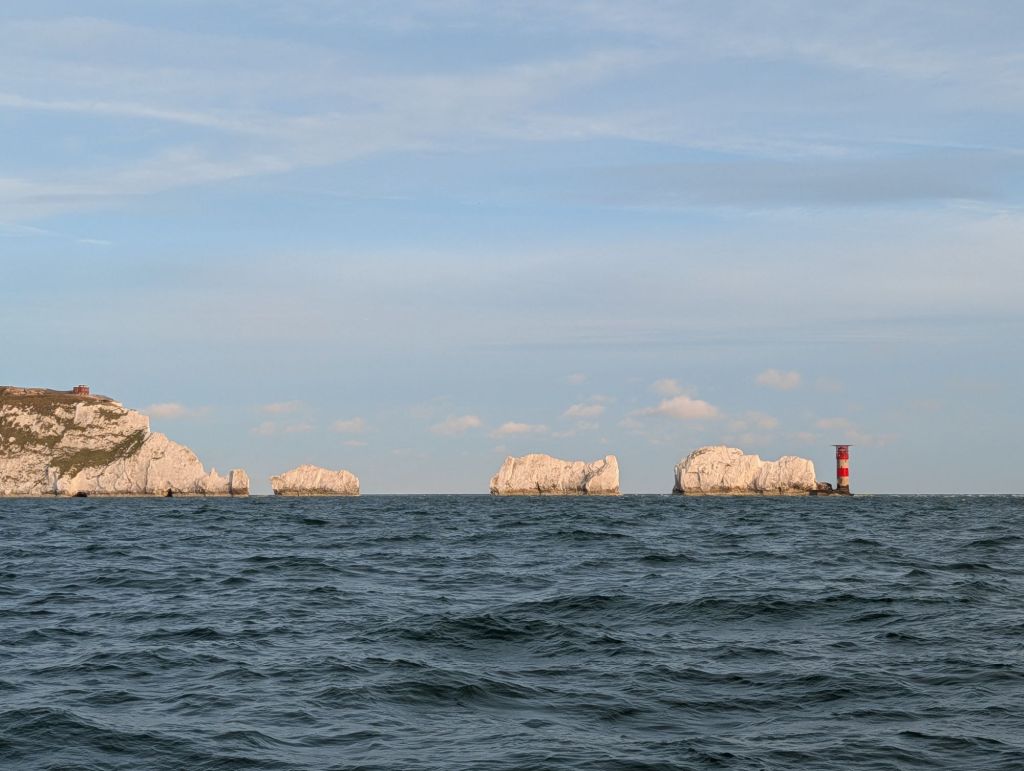


We stopped for the night on a buoy outside Yarmouth Harbour, because we were planning next day to visit Jenny, an old friend who is a retired designer of theatre and opera sets, gardens and most recently houses.
Next day, we headed into the crowded (and expensive) Yarmouth marina as soon as the harbour master said a space had been cleared by a departing yacht, and were picked up to drive to Freshwater by Sarah, a friend of Jenny’s.
Jenny lives in a beautiful house and garden at Freshwater, where she supervised the building project as well as designing the building and garden. Over dinner, Jenny brought out a bottle of delicious champagne bought years ago by her late husband, Tim, a rare treat.
Early on the Saturday morning, we caught the fierce spring tide eastwards through the Solent, and finally crossed our own track out from Cowes more than two years ago, when we started our third round Britain cruise up the East Coast to the Orkneys, past Cape Wrath and down to the Hebrides.


This time we were moving our base from Cowes to Chichester – whether temporarily or permanently we are not sure yet – so we carried on down the familiar Solent, between the Forts guarding the entrance and Spithead, and into Chichester Harbour.
It’s 7 miles from the harbour entrance to Chichester Marina, where we left Spring Fever after passages from Kerrera totalling nearly 700 miles over three weeks.
I cannot remember any three week cruise with so little bad weather and with the wind direction so often in our favour. After three seasons sailing in stunningly beautiful Scotland, I also have to admit that I relished the way the temperature of both water and air seemed to climb with every mile we headed south.
All in all, it was a memorable cruise for those and many other reasons, and especially for the friends and family we saw on the way.
In another post later, I will look back on all three round Britain and Ireland cruises, which have taken place over seven sailing seasons since 2007.
 tide by tide