Seen from the sea in a small boat, the British and Irish coastlines and their harbours, towns and villages are more beautiful, interesting and varied than I ever appreciated from the land. As other travellers by sea have written before, it’s like discovering and exploring a new country.

The most elusive coastline is East Anglia, which is flat and dull, but hides treasures in its towns, rivers and estuaries which, with few exceptions, reveal themselves best when you arrive by boat.
I love the magical moments entering the River Ore in Suffolk, when the waves, currents and dangers of the turbulent entrance sandbars suddenly become the deep calm of a flowing marshland river. On the water and along the shore is a parade of wildlife – marsh harriers, curlews and oyster catchers, handsome avocets, terns like black and white swallows, and brown-eyed seals that stare at passing boats, curiously detached spectators.
A thousand sea miles away is another welcome haven, Loch Ardalanish on the island of Mull. As we neared, the wind falling from the hills above rose from gentle to a wildly gusty Force 6, which often happens unexpectedly in Scotland. The next safe anchorage was hours away, so we pressed on.
We were on the point of being forced back when suddenly the narrow entrance we were searching for, 50 or 60 feet wide, magically appeared close to starboard between seaweed-covered rocks. It revealed a miniature loch, safe and calm, sheltered from the mountain squalls by a circle of land around it. An evening sun came out of the clouds and, lying quietly at anchor, we admired the views of the heights of Mull above us, and the life of the rocky shore a stone’s throw away.
Even the exceptions, the places visited as a last resort, can turn out to be interesting: the ugliness of the dilapidated fish dock in Grimsby concealed a fine, friendly sailing club, a long maritime history and a landscape derelict in a striking way, used at the time by film directors looking for Fellini-esque industrial wastelands.
Our pontoon berth was near the ice chute from a giant rusting freezer plant that had supplied the trawlers that in living memory could fill the dock from wall to wall. The most intrusive reminder of the old way of life was a powerful smell of frying fish, drifting over from a fishfinger factory well away from the dock. Supplies were mostly caught by foreign trawlers, filleted and frozen in factory ships at sea and delivered by container.
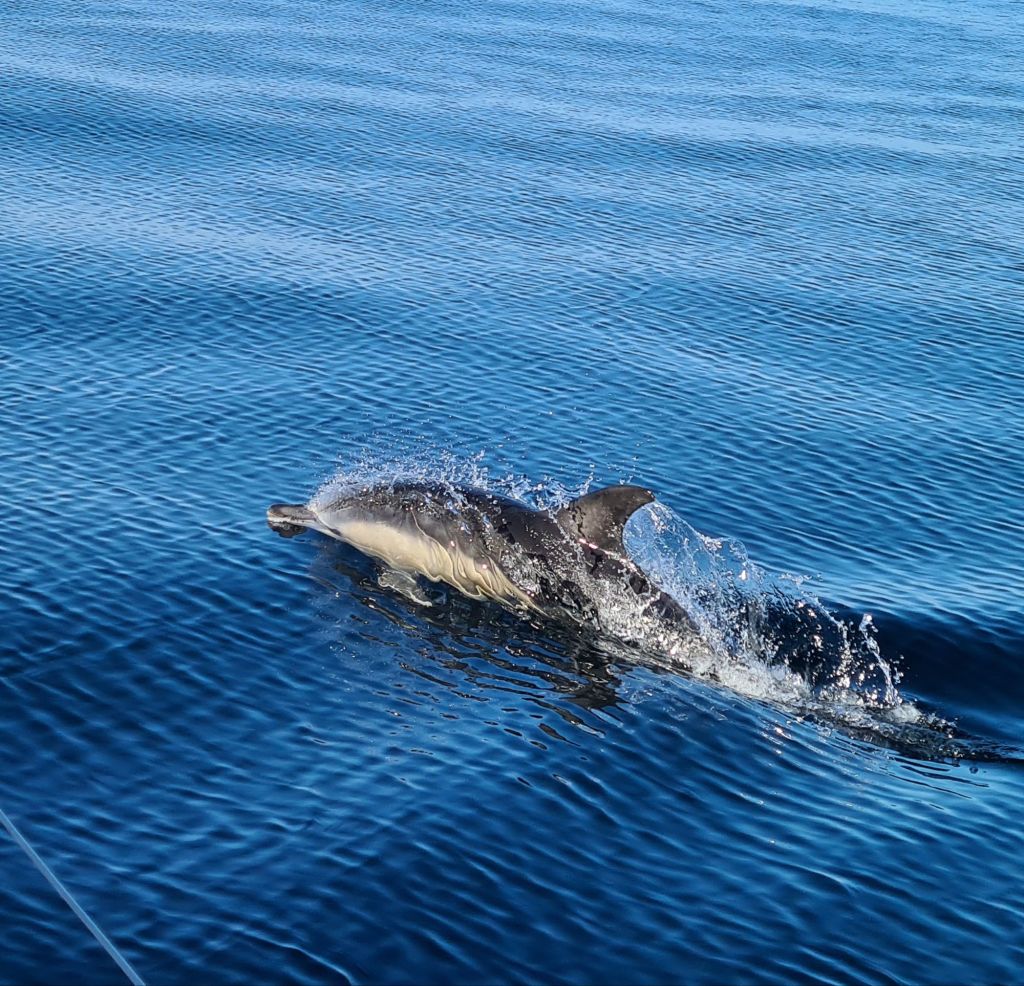
Since 2007, we’ve spent seven seasons sailing three times round Britain and Ireland, and made many landfalls, most described in earlier posts on this blog. We’ve seen a multitude of sea creatures and birds: dolphins, whales, basking sharks, seals, sunfish, gannets, guillemots, puffins, terns – the full list is much longer.
There were the wildlife-rich Farne Islands off the Northumberland coast, where dozens of puffins milled around our boat. A few miles north we twice visited the island monastery of Lindisfarne, linked to the mainland by a causeway. The crowds all leave before the tide rises to cover it. The island at dusk feeds the imagination; its setting and especially the castle attract film directors, the latest being Danny Boyle with his post-apocalyptic horror 28 years later.
There were completely different and very urban breaks, such as when we stopped in muddy Granton Harbour, Edinburgh, in perfect time for a week at the Festival.
On two visits to Orkney, the wait for the weather to improve was put to good use, by visiting archaeological sites such as the almost completely intact 5,000 year old village of Skara Brae, which had been preserved under a sand dune, and the recent excavations of a complex settlement of similar age, including public buildings, at the Ness of Brodgar, now buried again to prevent deterioration of its soft stonework.
We twice rounded Cape Wrath at the north-west tip of Scotland. The Norse name simply means turning point, but the weather can be suddenly angry, as we found the first time we were there, when we sheltered nearby in Loch Eriboll, a remote and beautiful place on the north coast.
On the mainland, Loch Moidart, with its tortuous entrance between large rocks, with wooded islands and a castle inside, was unforgettable, and we stayed for days.
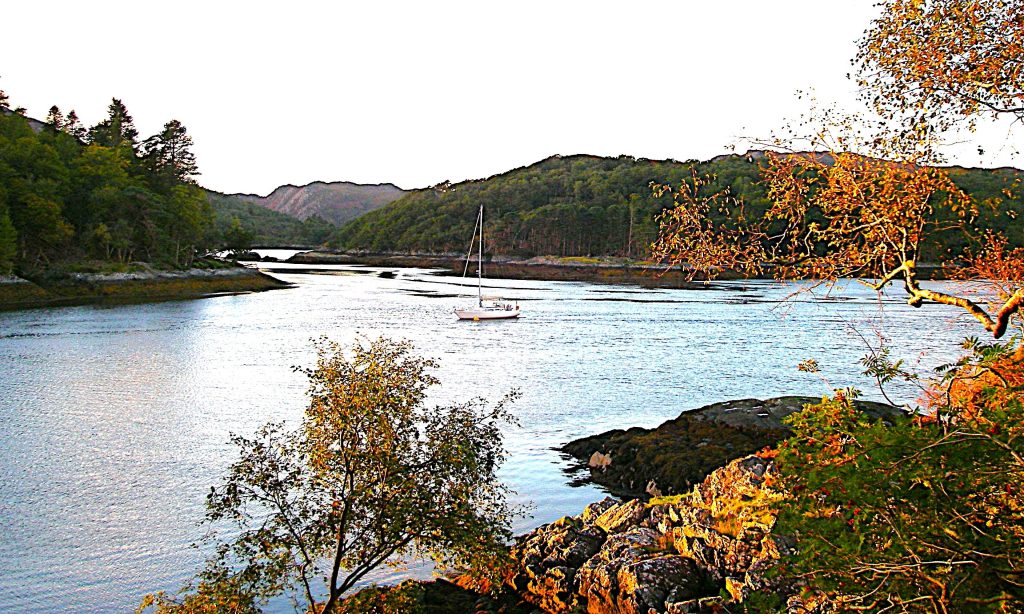
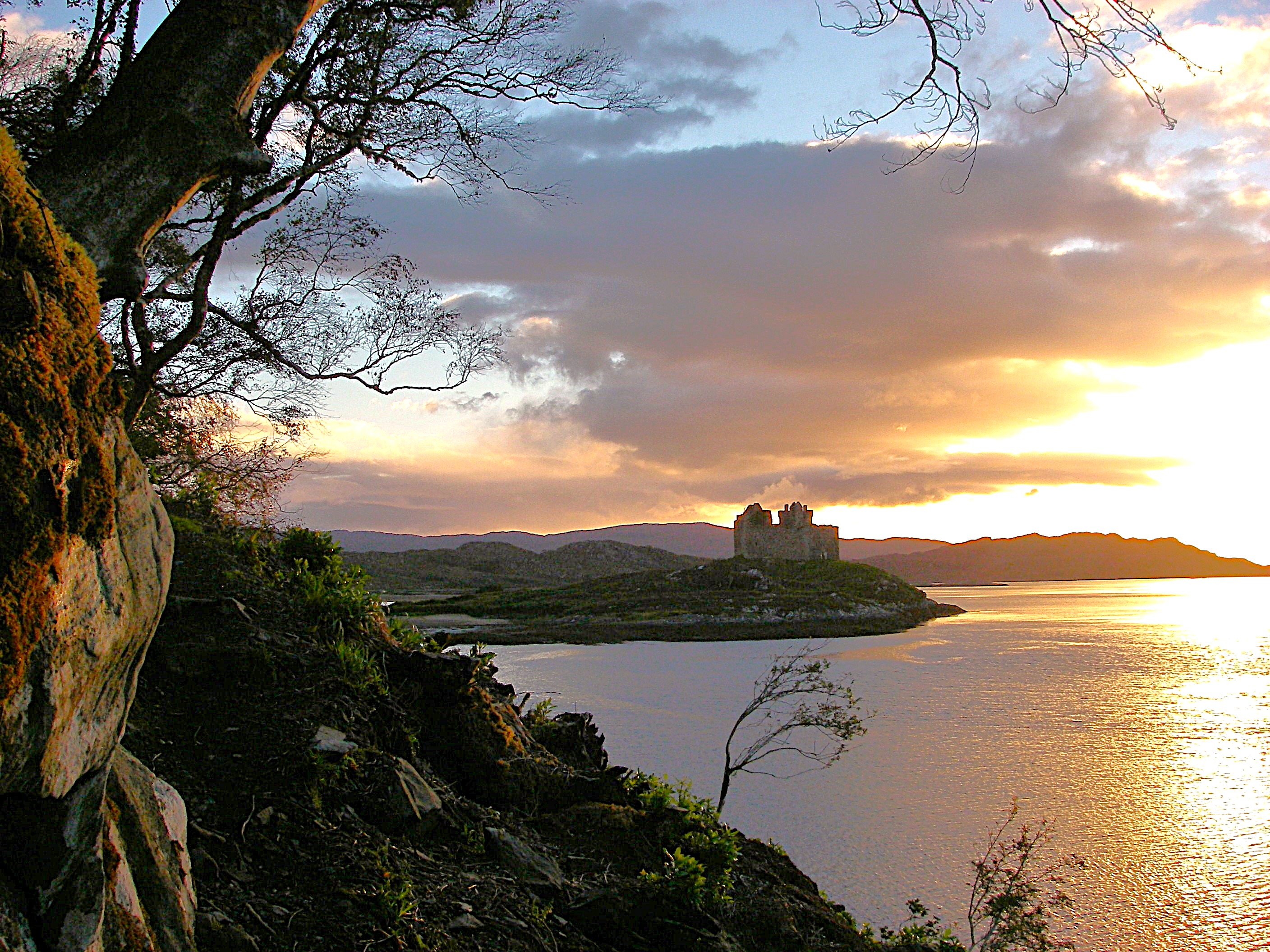
Just about every one of the islands we went to in the inner and outer Hebrides on all three circuits was interesting and lovely, and so were the many places we moored.
On Lewis, we visited the Callanish standing stones, the Stonehenge of the islands, more spectacular because of the loch-side setting by the Atlantic. On Iona, another revered and ancient holy site, we visited the grave of John Smith, the leader of the Labour opposition in the early 1990s, who died too young. A simple engraving, An honest man’s the noblest work of God, says what many believed to be true about him.
We regularly used Loch Drumbuie, protected by another narrow entrance, as a stopping place on passage, when we didn’t feel like visiting the crowded Tobermory nearby, though that’s a lovely place too, and mustn’t be missed.

There was food to remember: at the cafe on the island of Canna, seaweeds of many kinds cooked with fish are their special expertise. We rarely went ashore in Oban without sampling the oysters, mussels, scallops and crabs at the seafood stall on the ferry dock.
On our way south, we stayed in the harbour of Tory Island off Donegal, Ireland’s remotest offshore place, where the majority of residents are called Rodgers, spelled with a ‘d’ like my name.
Further down the west coast, our stops included Inishmore, the biggest of the Aran Islands, which we cycled round, exploring the ancient cliff-top fort of Dun Aengus; we visited Dingle and its beautiful peninsular, and Schull, Baltimore and Kinsale. Ireland’s east coast is less spectacular, but there’s plenty to see, not least Strangford Loch for scenery and Dublin for enjoyable city breaks.
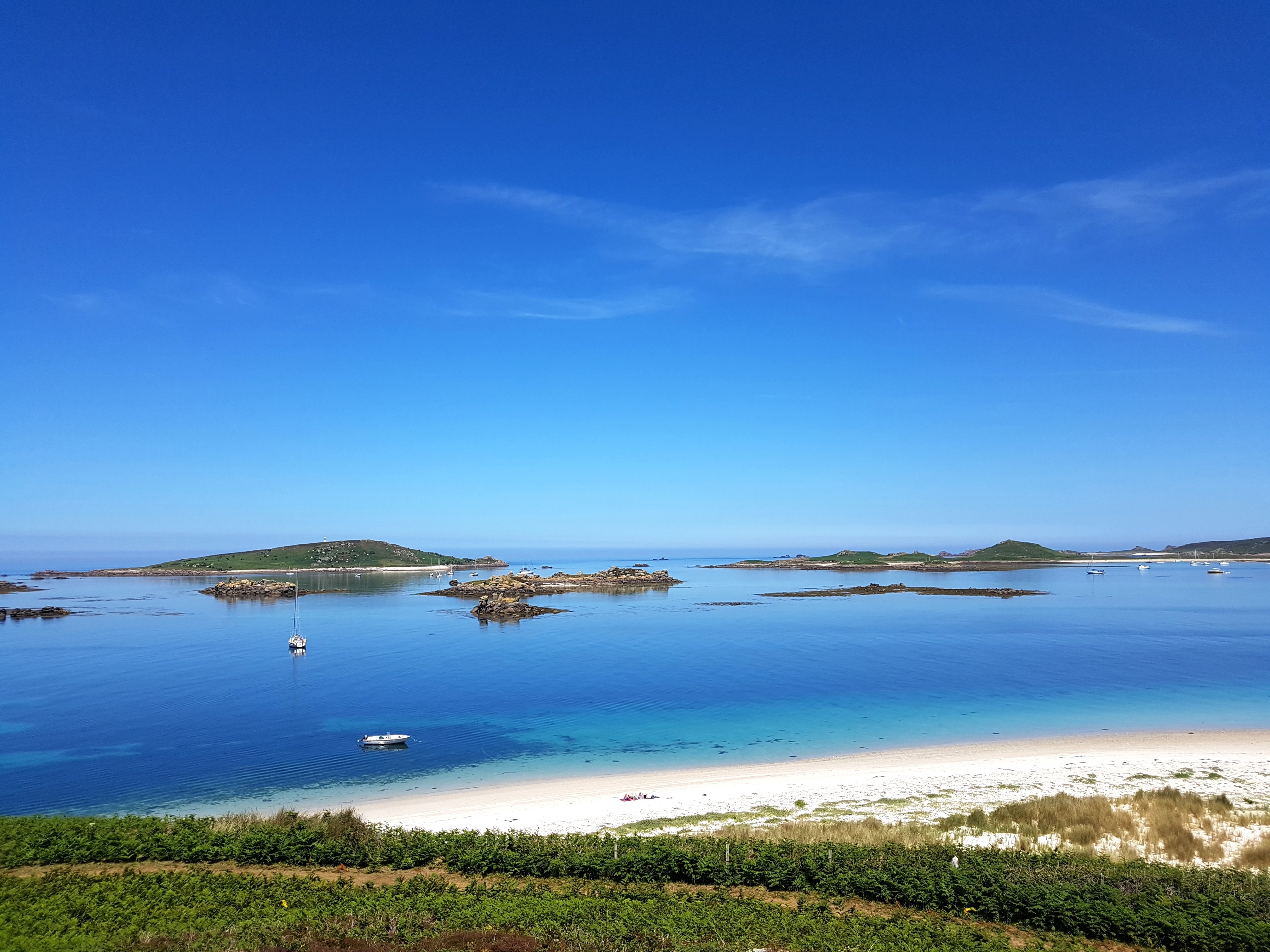
On one round Britain cruise, after a nerve-wracking unforecast Force 8 in the western approaches with terrible visibility, we arrived from Ireland at the islands of Scilly just as the weather cleared and the sun came out. The white-sand anchorages of Tresco, Samson, St Martin’s, St Agnes and St Mary’s are lovely only in good weather.
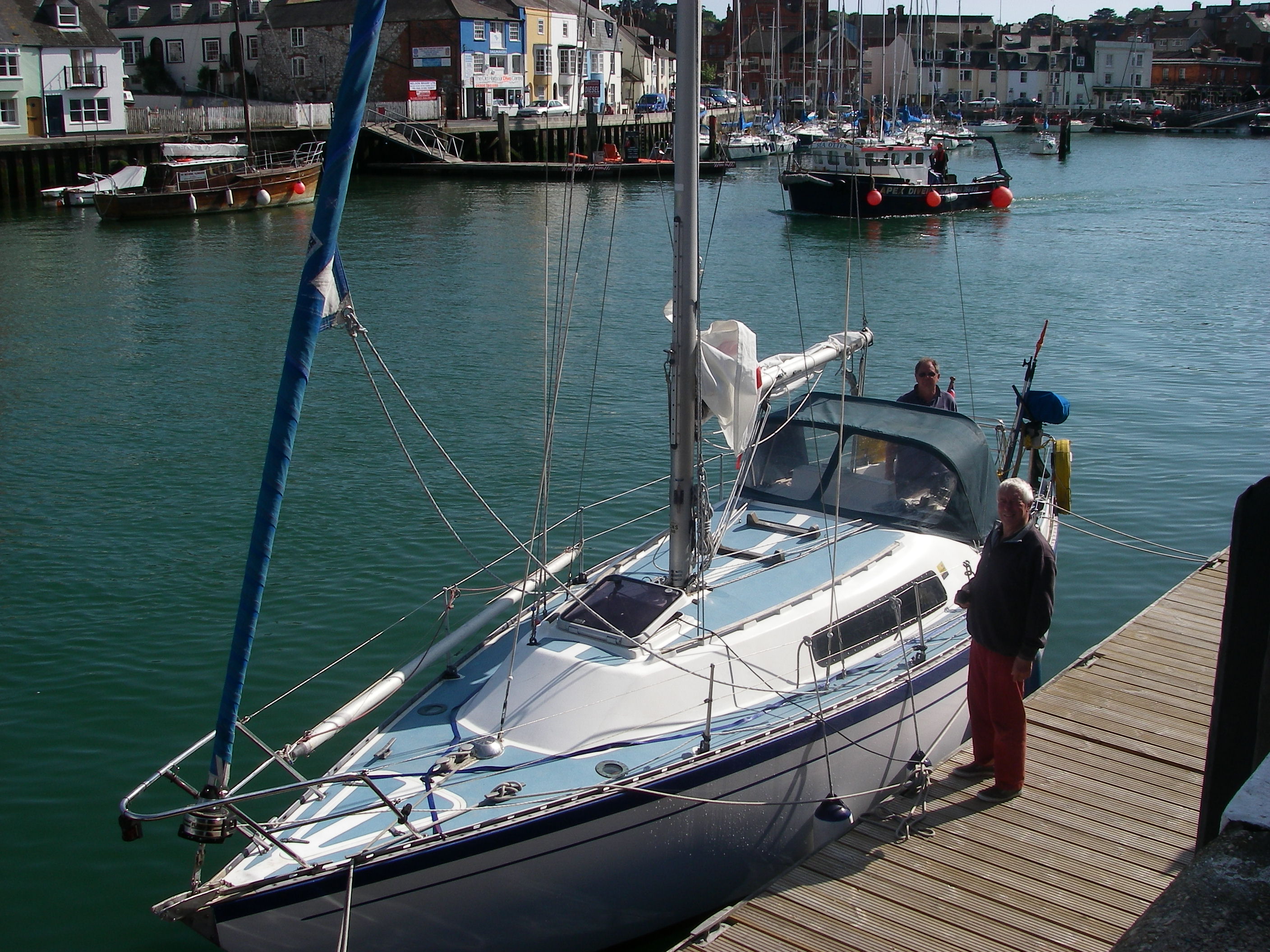
Over the seven seasons, we wintered four times on the west coast of Scotland. The first cruise, in 2007-8 was in Pepper, a 30 foot Verl 900, in which we went clockwise from Shotley, near Harwich, across the Thames Estuary, along the English Channel and up the east of Ireland to Scotland, where we put Pepper ashore for the winter on Kerrera, an island near Oban. We went home the following year via Cape Wrath, Orkney and the east coast.
In 2012-13 in Spring Fever, a 36 foot Sigma 362, we sailed anti-clockwise from Cowes and up the East Coast to the Moray Firth and through the Caledonian Canal, which connects Inverness to Fort William via a string of lochs, of which the most famous is Loch Ness. The boat spent the winter at Ardoran in the lovely Loch Feochan in Argyll. The following summer we sailed back to Cowes by the spectacular West and South coasts of Ireland.
On our third tour, Scotland seemed so enticing in the lovely weather of autumn 2024 that at the last minute we decided to stay a second winter at the marina on Kerrera, so had a full year in Scotland in 2025.
After two anti-clockwise tours and one clockwise, it is hard to say which way is tactically best. There is talk of the advantage going clockwise of prevailing west or south-west winds up the west coast, which can also be a favourable wind on long stretches of the east coast. That would not have been much help this year. We had three weeks of solid northerlies following us as we went anti-clockwise down the west coast.
From the first cruise, we decided always to take it slowly, and to stop and go home for a while whenever we ran out of time. We left the boats for weeks in places as different as Falmouth in Cornwall, Eyemouth on the Scottish border and Grimsby’s fish dock. There were few long passages. Lowestoft to Whitby, Dunmore East in Ireland to the Scillies, and Milford Haven round Lands End to Helford River, were among those over 100 miles.
Some of the people we met were spending several months, maybe the whole of a summer, on their boats, to complete a round Britain cruise in one go. The co-owners of Spring Fever have many other commitments, so our cruises were split into sections of two or three weeks at a time, and only once in the seven years were we away a full month.
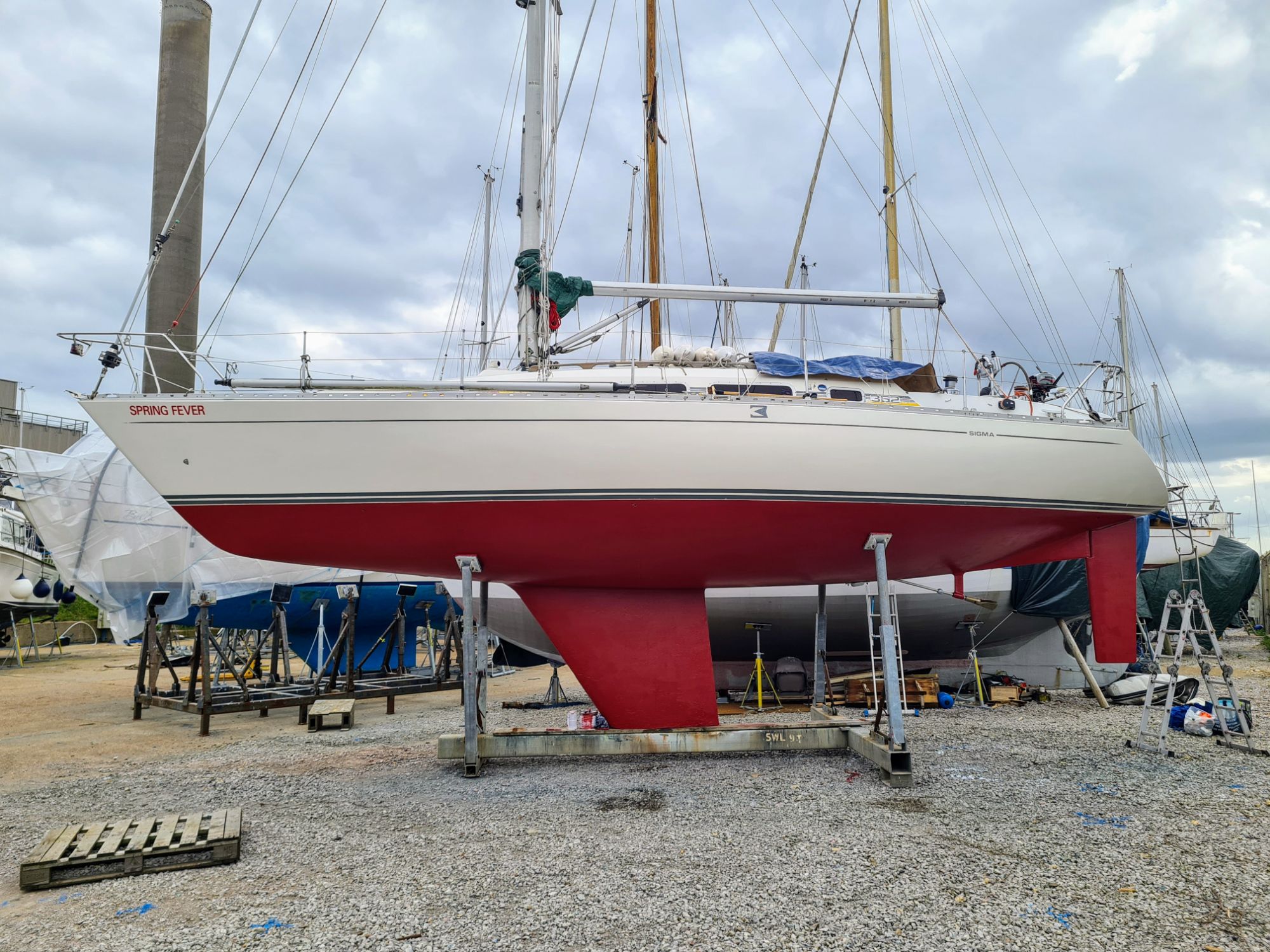
That fitted well with our slowboat approach. (Spring Fever is the more comfortable cruiser racing version of the Sigma 36 racing boat, and though quite old now, is still fast and comfortable). We wanted a leisurely tour of Britain, minimising pressures, and checked in advance for the most economical places to leave a boat for a few weeks when we ran out of time.
I’ve been a fan of Maurice Griffiths’ writings about his home waters of the sandbanks, mud and strong tides of the Thames Estuary, ever since I read his Sailing on a Small Income as a teenager in the 1950s. Griffiths horizons hardly strayed over his lifetime from the rivers and estuaries around the Thames, which were his whole world of sailing and the focus of his best known book, Magic of the Swatchways.
After seven seasons sailing round the British and Irish coasts, it is still possible to be a Griffiths at heart, getting to know a cruising area well and largely staying within it. The difference now is that the horizons are enormously wider, and the reason for that is simple: huge improvements in boats, engines, weather forecasts and navigation equipment have expanded the area we can think of as local or home waters, the familiar places we can reach in the limited time we have available.
I recently picked up a copy of a 1930s Yachting Monthly to read an account of a cruise to Ireland. The magazine writer owned a substantial yacht for the 1930s, with a little petrol engine that was not much use for anything more than getting in and out of harbours – the boat was typical of the times.
When I read to the end I discovered the timescale for his Irish cruise: the author wrote that it had been a most enjoyable three months. In Spring Fever in 2022 an Irish cruise took three weeks from the Solent and back, and it could have been done comfortably in less than a fortnight. With modern boats, the whole of our coastline now feels in reach as home waters, just as the Thames was long ago for Maurice Griffiths.
[Coming later – a gallery of photos of crew who joined us on our three cruises.]
 tide by tide