The days are longer, the pilot books have been taken off the shelf, and it’s time to think of this year’s cruise. As a first step in planning, there is nothing better to browse than Hamish Haswell-Smith’s Scottish Islands*.
Haswell-Smith has visited and written about the geology, people and history of every Scottish island, 169 in total by his definition.
The book includes brief mentions of safe anchorages, though not with the essential details of a pilot book or chart. His mission mirrors and complements that of Bob Bradfield, with his personally surveyed Antares Charts of 755 Scottish anchorages.
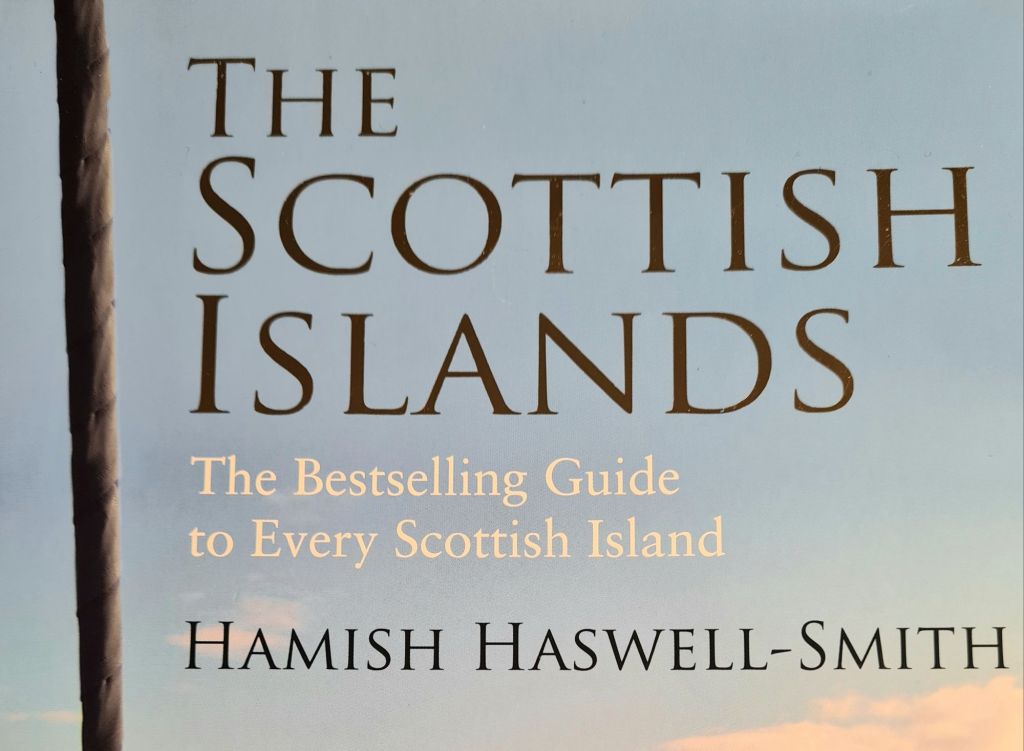
Haswell-Smith is an excellent preparation ahead of reading up the practical details with our copies of the Clyde Cruising Club pilot books.
With five seasons sailing in Scotland so far, we still have many island omissions, of which the most glaring is the long chain of the Outer Hebrides. We’ve called there only once, mooring for several days a few years ago in the marina at Stornoway on Lewis, where bad weather gave us time to explore by bus before we left for Orkney.
The sensible advice given at the Cruising Association’s excellent Celtic Day meeting in January was that firm plans are a bad idea, given the unpredictability of weather. We’ll decide where to go when we are on board, forecast by forecast, and of course tide by tide.
However, in the right weather, the Outer Hebrides from Mingulay and Barra up to North Uist are where we’d most like to cruise, so that’s what we are reading about at the moment. A secondary objective is to visit the west coast of Skye.
A gleam in the eyes if we are fortunate enough to have a good weather window is St Kilda, 40 miles west of the Outer Hebrides.
A much less ambitious subsidiary plan is to visit Canna any day of the week from Wednesday through to Monday: when we arrived last year on a Tuesday we discovered that was the closing day of the much-praised cafe-restaurant.
We have an extra consideration when planning, with neither co-owner in the first flush of youth: creaky joints.
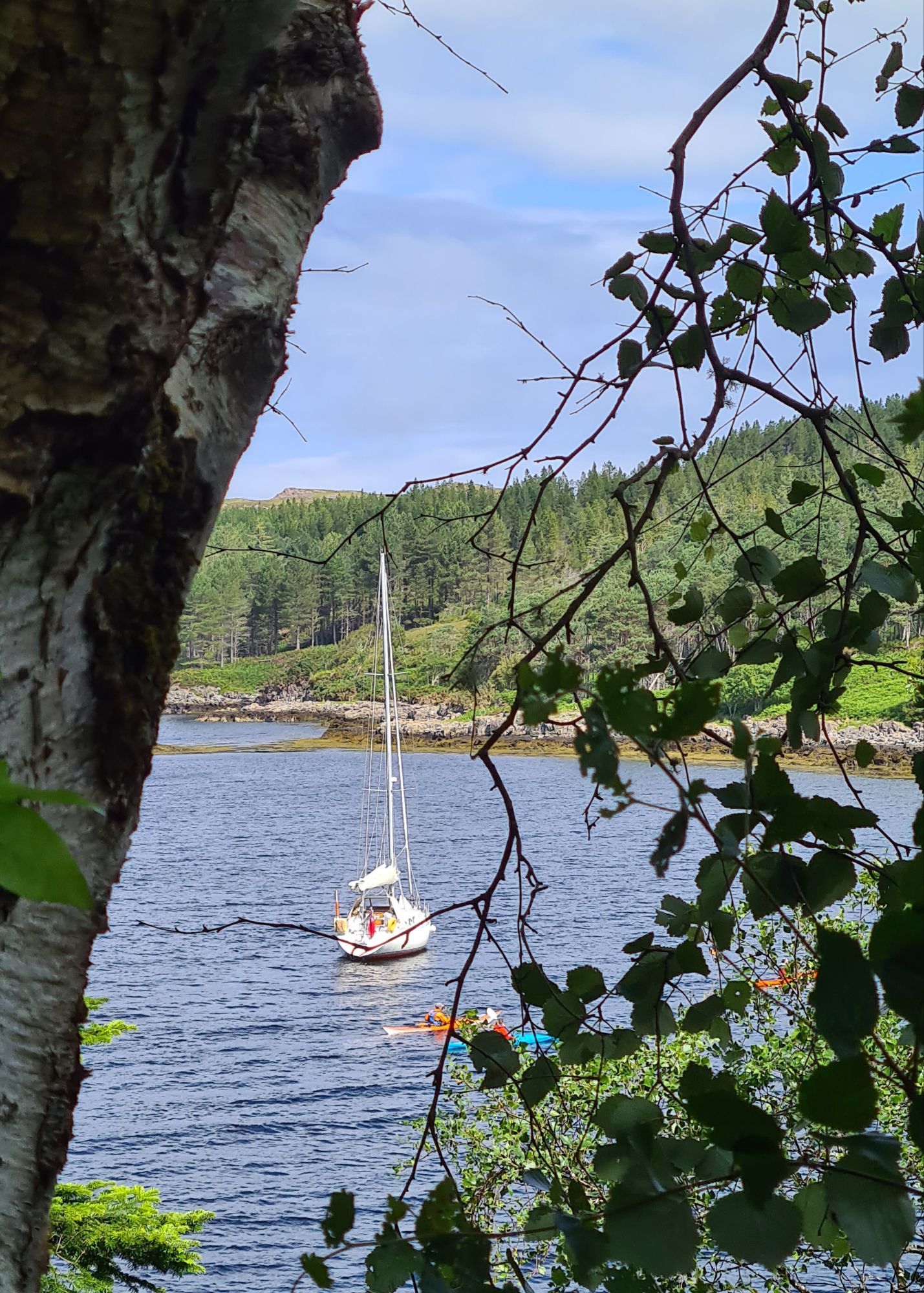
I enjoy the peace of being at anchor. At the seminar I detected a slightly negative view, which I used to share, of those who seek out marinas, pontoons and official moorings.
However, we do not have an electric windlass, which is quite hard and expensive to fit on an old cruiser racer design. The arm-powered anchor winch is the best we can do. It makes sense not to push our luck and our joints too hard. While anchoring is always an option, buoys and pontoons will also be welcome when we find them.
*The Scottish Islands, Hamish Haswell-Smith, Canongate, £40