August – Dun Laoghaire to Cowes

Covid caused a full week’s delay in Ireland, and the weather forecast added another three days. By then we were feeling fit, though perhaps tiring a touch more easily than usual. We grabbed the chance to see more of Dublin, along with Rob, who arrived by ferry late on Sunday night.

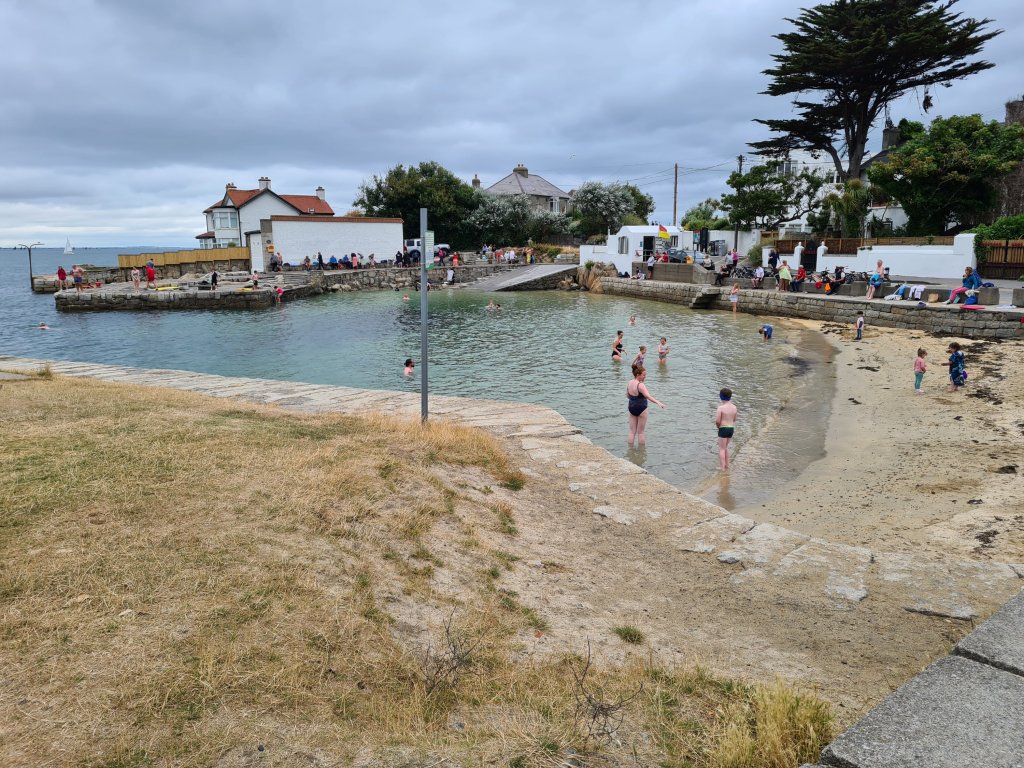
Sandy Cove, Joyce’s Tower almost hidden behind the trees on the right

Near Dun Laoghaire, the James Joyce Tower and Museum at Sandy Cove is fascinating both for its atmosphere and – at weekends – for the fluent storytelling about Joyce and Ulysses by the volunteers who staff it. The tower is the setting of the first page of the book.

Continue reading “August – Dun Laoghaire to Cowes”

July – passage to Ireland

The plan before Covid struck was to allow three weeks for a cruise to the Irish Sea, which is quite difficult to time exactly because of the uncertainties involved in rounding Lands End.

To make the new cruise work on our original pre-Covid timescale, Tony and I had taken advantage of a generous offer from Antony F to arrange a mooring for us at Saltash Sailing Club, an attractive and friendly place near the Tamar bridges (see June post).

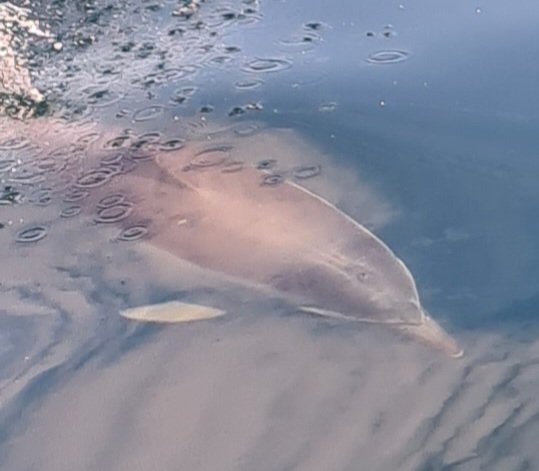
Dolphins all the way from Plymouth to Helford – here’s one about to surface

A good wind to get to Lands End from Plymouth is often a bad wind for carrying on northwards to Ireland. Strong winds can also prevent rounding the headland for days, as we found in 2007 when we were held up for a week in Falmouth.

Continue reading “July – passage to Ireland”

Covid strikes the crew

It was a lovely cruise to Ireland at first, with fine, sunny weather rather than the extraordinarily high temperatures that hit central and southern England. But half way through we had a problem for which there was no easy answer – three of us tested positive for Covid after feeling as if we were getting mild colds, with headache, sinusitis and sore throat.

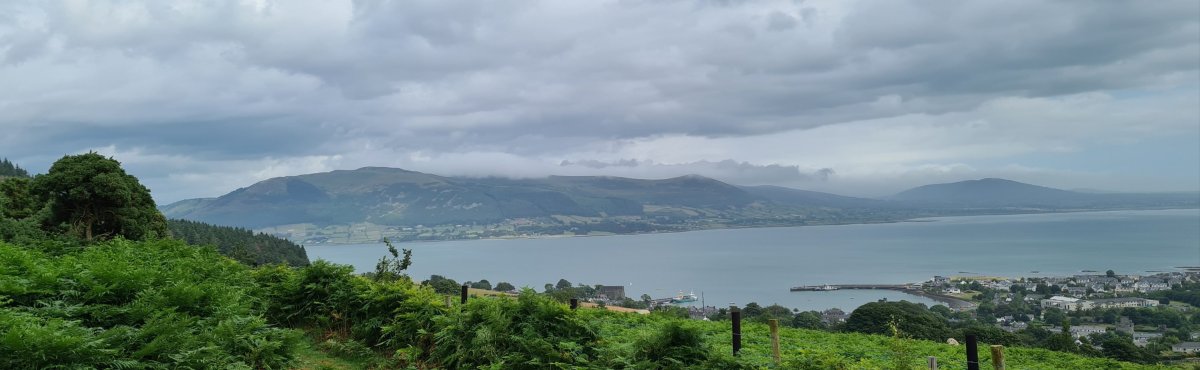
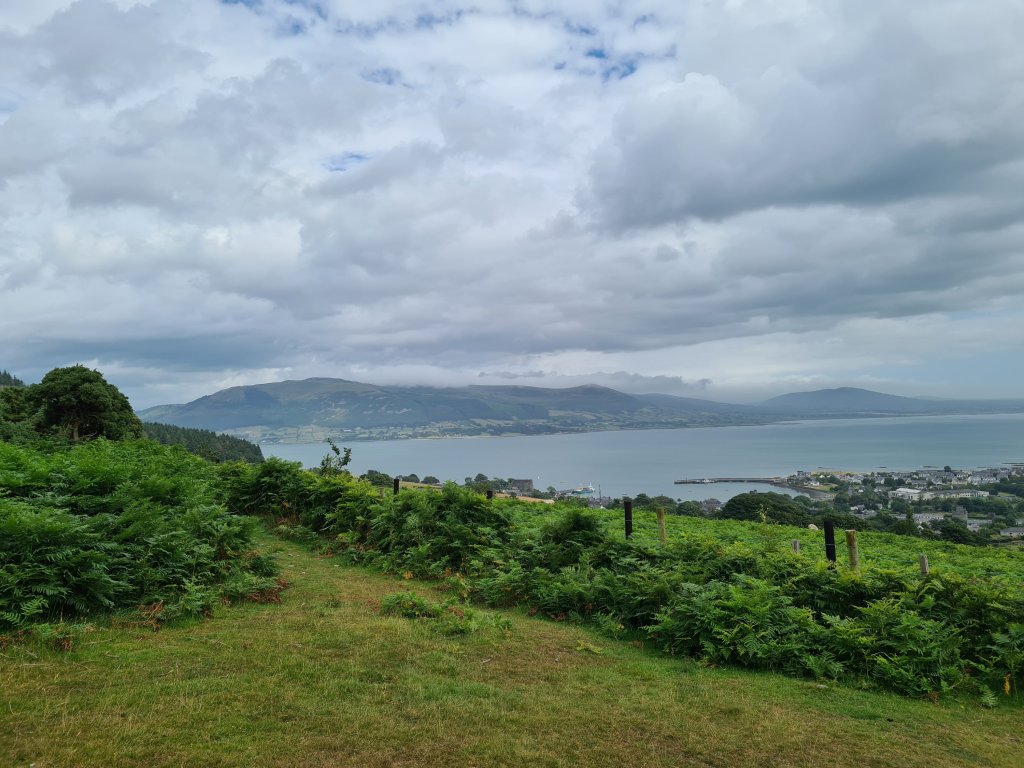
The loch from a hill behind Carlingford
Continue reading “Covid strikes the crew”

Venice’s Vogalonga

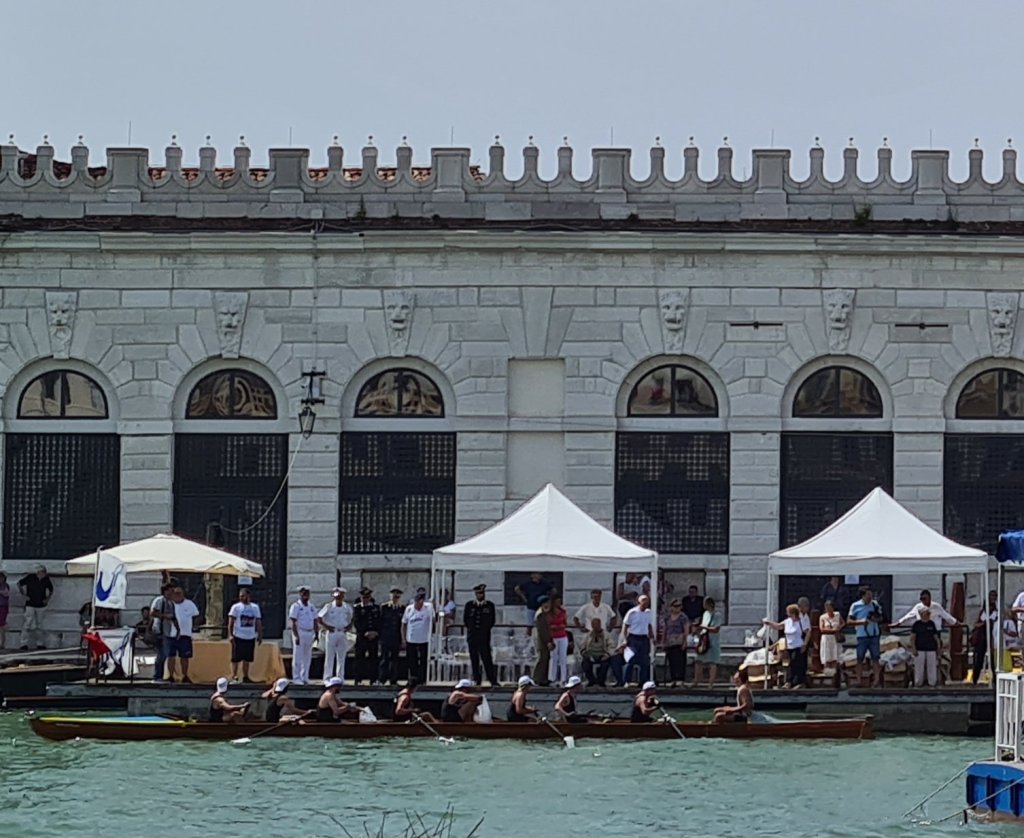
The first boat to appear at the Dogana on the Grand Canal after the 30 km Vogalonga rally round the lagoon and canals of Venice was a coxed eight. It was another 40 minutes before the arrival of the first of the traditional Venetian boats, the ones everyone really wants to see.

All the boats finished further up, beyond the Rialto, and they then paraded down to the official pontoon at the Dogana, which is at the entrance to the Canal.

A coxed eight was the first to arrive
Continue reading “Venice’s Vogalonga”

January – Brexit blues

After years of trying to work out what Brexit means for yachts, there are still some annoying issues yet to be cleared up, a month into the new regime.

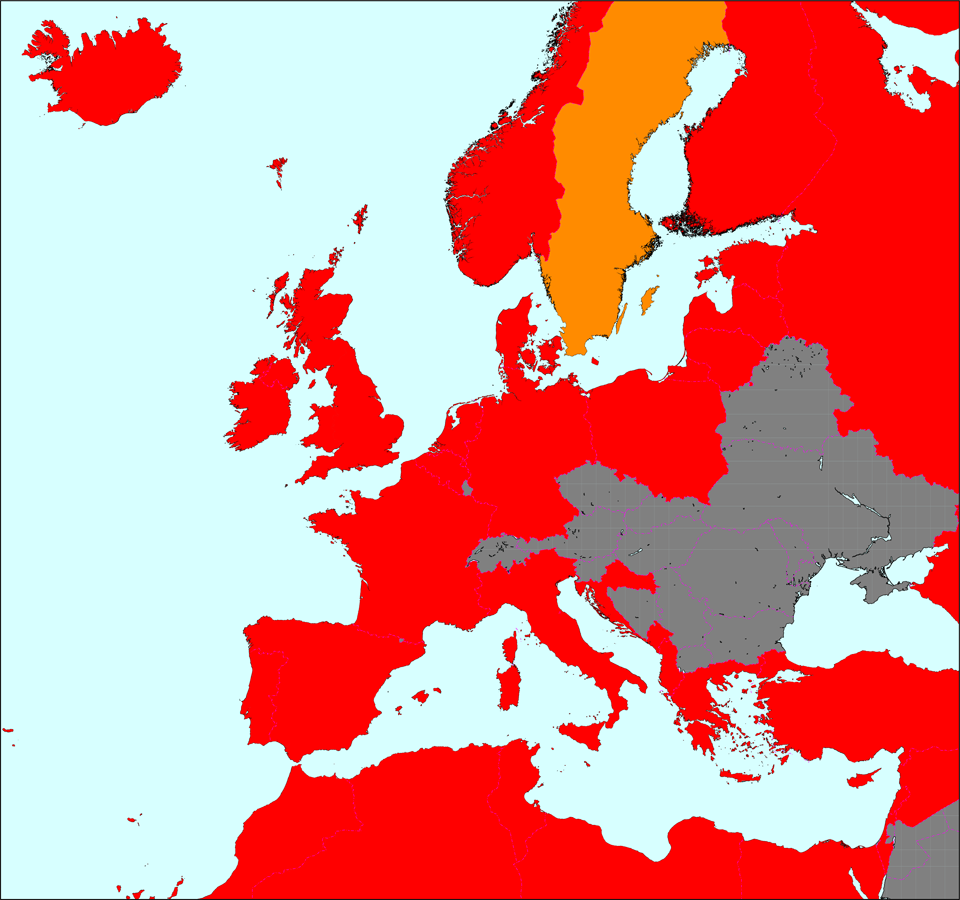
The most vexed question is still VAT. Most of us do have an answer, though not the one we wanted: our boats lost their EU VAT status if they were not moored in a continental port when the transition period ended. That means that in future they can only be temporarily taken to EU countries.

But a minority is still in a potentially expensive limbo. These are the owners who have been away from the UK for more than three years, who may have to pay VAT for a second time if they return with a boat they bought and paid VAT on here.

Continue reading “January – Brexit blues”

New Brexit chaos for yachts

Just when most yacht owners thought they had understood the impact of Brexit, the government has changed the rules on Value Added Tax, with expensive consequences for some.

Last year there were assurances that, after Brexit, a yacht that has been away from the UK on a long term cruise, typically a few years in the Mediterranean, would not have to pay VAT on returning.

Now it looks as if many will have to pay up, even if the boat was bought VAT-paid in the UK before it left – in other words, owners could find themselves paying VAT twice on the same boat. The second charge would be based on its market value at the time of its return.

Needless to say, cruising yacht forums are full of anger and anxiety, though this is not an issue that will get much sympathy anywhere else because yacht owners are not exactly an under privileged minority.

However, many are far from rich, living aboard on tight budgets for much of the year, often after retirement – ‘fulfilling their dreams’ as the yachting magazines love to put it – a far cry from the superyacht owners everybody hates (who in any case probably arrange their affairs so they do not pay European or UK VAT). And while it is very much a minority problem, how many other much more important parts of the economy are being hit by similar administrative chaos 10 weeks ahead of final departure from the EU?

Both the Royal Yachting Association and the Cruising Association are rather desperately seeking clarity from the government. The Treasury’s position seems to be that under EU rules we already charge VAT on a returning yacht after an absence of more than 3 years. It has decided this will continue to be part of the UK rulebook after Brexit.

But until now the practice has been to suspend the rule in many cases, by exempting private yachts that come back after more than 3 years, as long as they are under the same ownership and have had no substantial upgrades (eg a new engine). In these circumstances, the VAT charge has not been levied. The latest indications are that this concession may go.

Just as alarming for many people, the government has changed the point at which the clock starts on the 3 VAT-free years. Last year the RYA was told that a boat currently kept in an EU-27 country such as France or Greece would be treated as if it had left the UK at the point the UK itself finally leaves the EU ie at the end of the transition period on 31 December 2020. That would give a full 3 years to get back.

Now departure has been redefined as the point at which the boat physically left the UK. Any boat already kept abroad for more than 3 years will be liable to VAT if it returns to the UK after 1 January 2021. This led to howls of protest from the RYA and a promise that there would be an extra year – but no clarity about what that meant.

Would it allow a yacht that has already been abroad more than 3 years another year up to the end of 2021 to come home VAT free? Or would it just add one year to the 3 year grace period, so a yacht that has been away 4 years or less will not pay VAT after 1 January next year, but one that has already been away 4 years and a month will pay?

There’s another set of EU rules that make this even more onerous, if the UK imports them into its own post-Brexit system after we leave, as it seems to be doing with the 3 year rule.

Currently, as long as the importer of a yacht is not an EU resident, the yacht can be temporarily imported for up to 18 months without paying VAT. But if the importer is an EU resident, VAT becomes payable on arrival. (Nationality of the importer and registration country of the yacht are irrelevant – it is the country of tax residence of the importer that matters).

In the past, the UK has taken a tough line on this, with no grace period, though there has been at least one exception among EU countries – Greece in the past certainly allowed a month. If the rule is kept by the UK after Brexit, and applied strictly, it would be risky for a UK resident yacht owner to call in for a day at home in a yacht that has been abroad more than 3 years. The VAT would be chargeable immediately.

The rule seems to be aimed at stopping UK residents keeping their yachts VAT-free in tax havens such as the Channel Islands but using them in the UK – an obvious tax loophole if it were left open.

In fact Spring Fever was first registered in Guernsey in 1988. We have the VAT certificate to prove it was paid when the boat was imported into the UK a few years later, a vital document we guard carefully, especially in these new circumstances. With the first owner on the documentation shown as being a Guernsey resident, we may well be asked to prove VAT has been paid.

May – a narrow escape in Venice

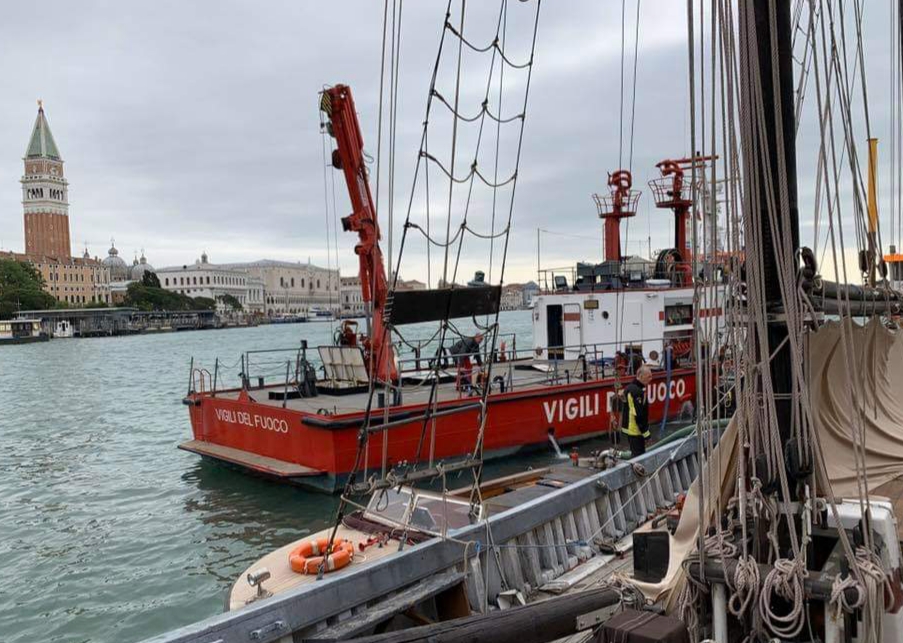
Sad news from Venice, where the historic Trabaccolo trading vessel I went to write about for Classic Boat a few years ago has been swamped and damaged by a bad leak. The vessel was saved by the pumps of firefighters who came alongside Il Nuovo Trionfo where she was berthed near the Salute, at the entrance to the Grand Canal. Apparently the boat’s own pumps had failed, though the reasons for the leak in the first place are not clear. The water flooded the engine, and videos show it swilling around at the level of the saloon table top, submerging much equipment.Firefighters alongside with pumps, St Marks Square in the distance
Il Nuovo Trionfo has now been pumped out and towed to a yard for repairs ashore, where she is now. Continue reading “May – a narrow escape in Venice”

March – Spring and fever

Our plans are changing rapidly, just like everybody else’s in all walks of life in Europe. Sailing now has to be a peripheral concern, but we still have to work out what to do with the boat, and indeed whether we can sail it at all this year.

No sooner had we decided to go to southern Brittany rather than our original destination of Spain than the fight against the Covid 19 virus made that new plan difficult and probably impossible. It is only a couple of weeks since we applied for a 12 month mooring for Spring Fever at Arzal on the lovely River Vilaine: not surprising we haven’t heard back, because southern Brittany has a local concentration of infection, and the marina is now preoccupied with far more urgent matters. It has announced a strict plan to protect its staff and customers. Continue reading “March – Spring and fever”

Is your chart relying on an 1860 survey?

Footnote to cruising the Scillies: piloting there is a reminder of the importance of proper Admiralty charts, because they show the age of the surveys on which they are based, unlike any of the proprietary ‘vector’ charts available on chartplotters.

The Scillies is a mixed area from this point of view. Some of the surveys of the area were last done in 1860 – 1904 by lead line, probably from boats carried on naval survey ships and rowed up and down in straight lines quite a long way apart, so rocks could easily be missed. Other parts of the islands were surveyed at a range of different dates in the 20th century. Continue reading “Is your chart relying on an 1860 survey?”

Round the islands

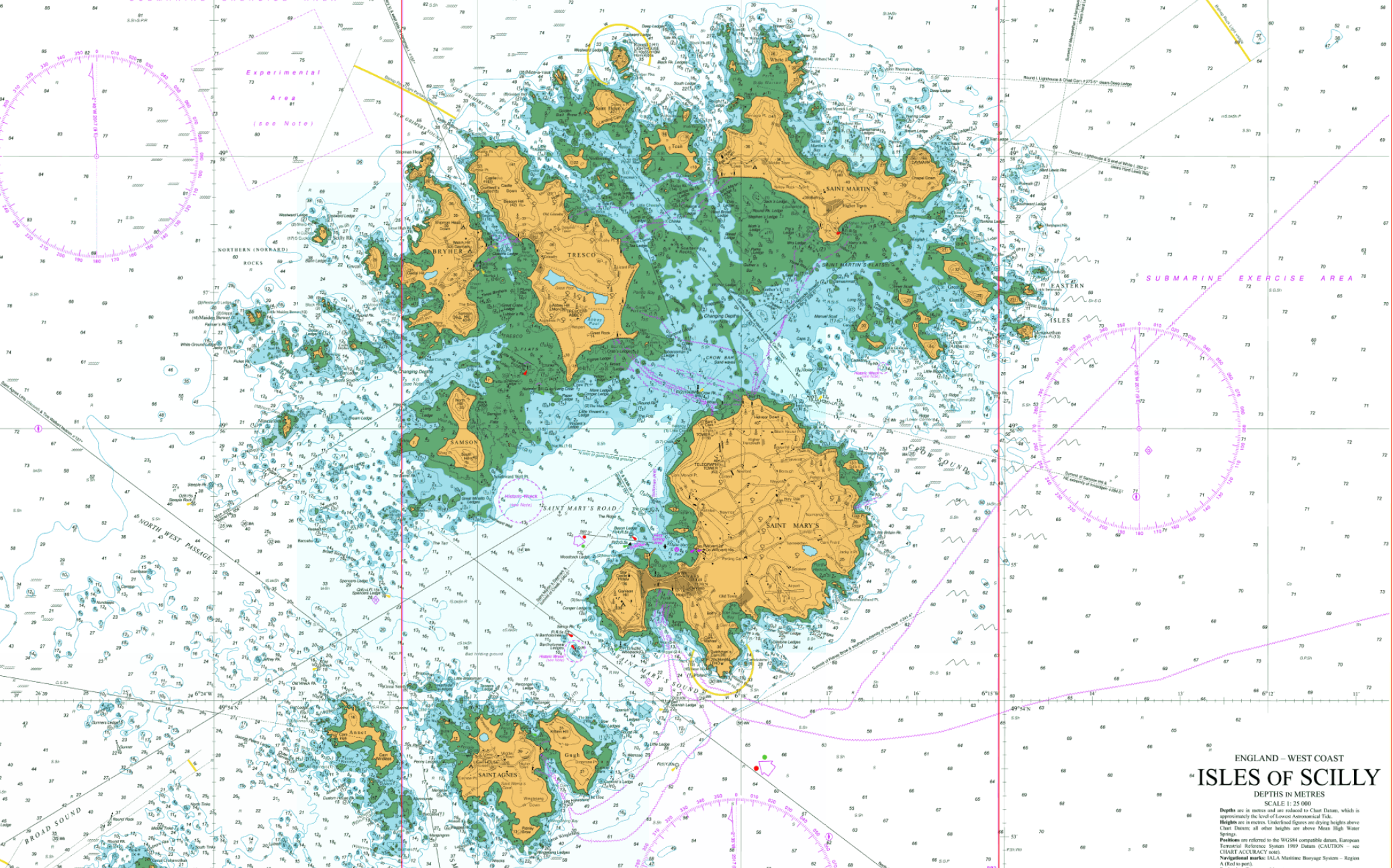
Below is the UKHO large scale chart of the Scillies, with green showing where the bottom is exposed at low spring tides. With careful tide calculations it is straightforward moving between the islands, though you have to be mindful of dangerous rocks scattered around the flats.

The old pilot books for the Scillies, one of which we have, give many complicated bearing lines for finding your way around using pairs of landmarks, which are still very useful to know.

Continue reading “Round the islands”

Three times lucky

The Scillies are beautiful, but they take much effort to visit, even by public transport, because the air and sea links are from Penzance, right at the far end of Cornwall.

I’ve tried to sail to the Scillies half a dozen times, but only managed to arrive after three of those attempts because of bad weather, which makes the islands a rather precarious place to be: there is no all-weather shelter, and it is an area prone to gales and huge swells. Once, the weather forecast was so bad we gave up trying to go west by the time we got to Dartmouth. (I’ve also passed close by the Scillies quite a few times on races without attempting to go there). Continue reading “Three times lucky”

Scillies Vineyard

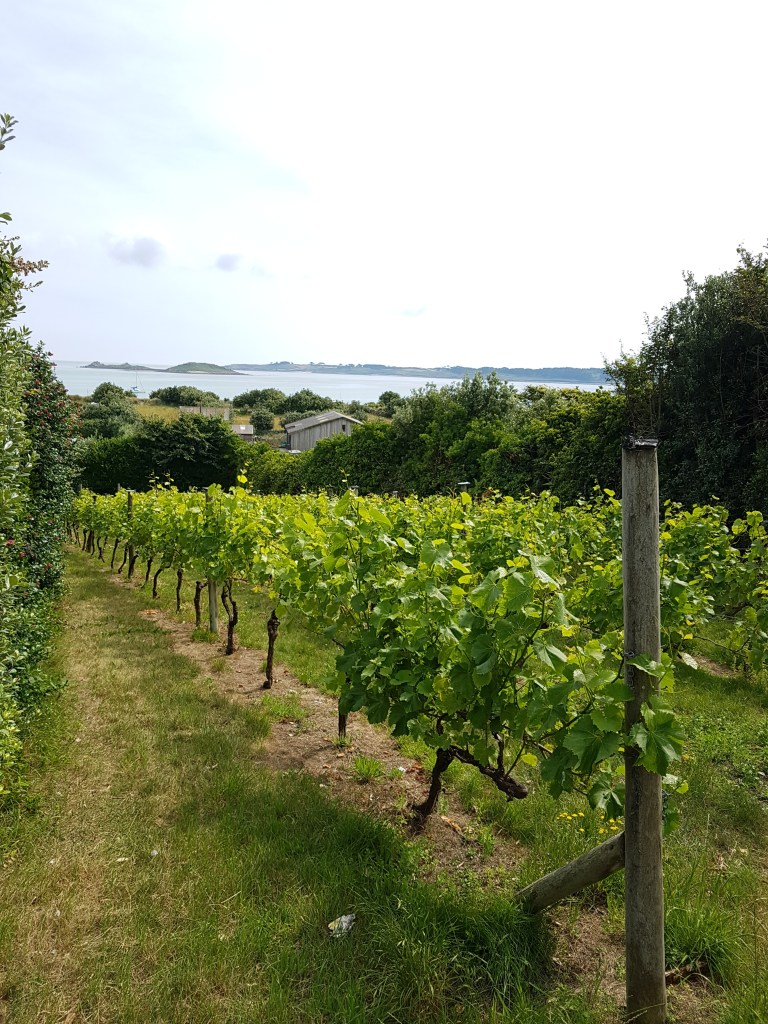
The island of St Martin’s in the Scillies used to specialise in the growing of spring bulbs and flowers. As the old business has shrunk, a new use has been found for some of the tiny fields with tall hedges that protected the plants from Atlantic storms: England’s remotest vineyard and winery.

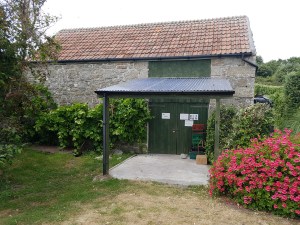
The winery

Continue reading “Scillies Vineyard”